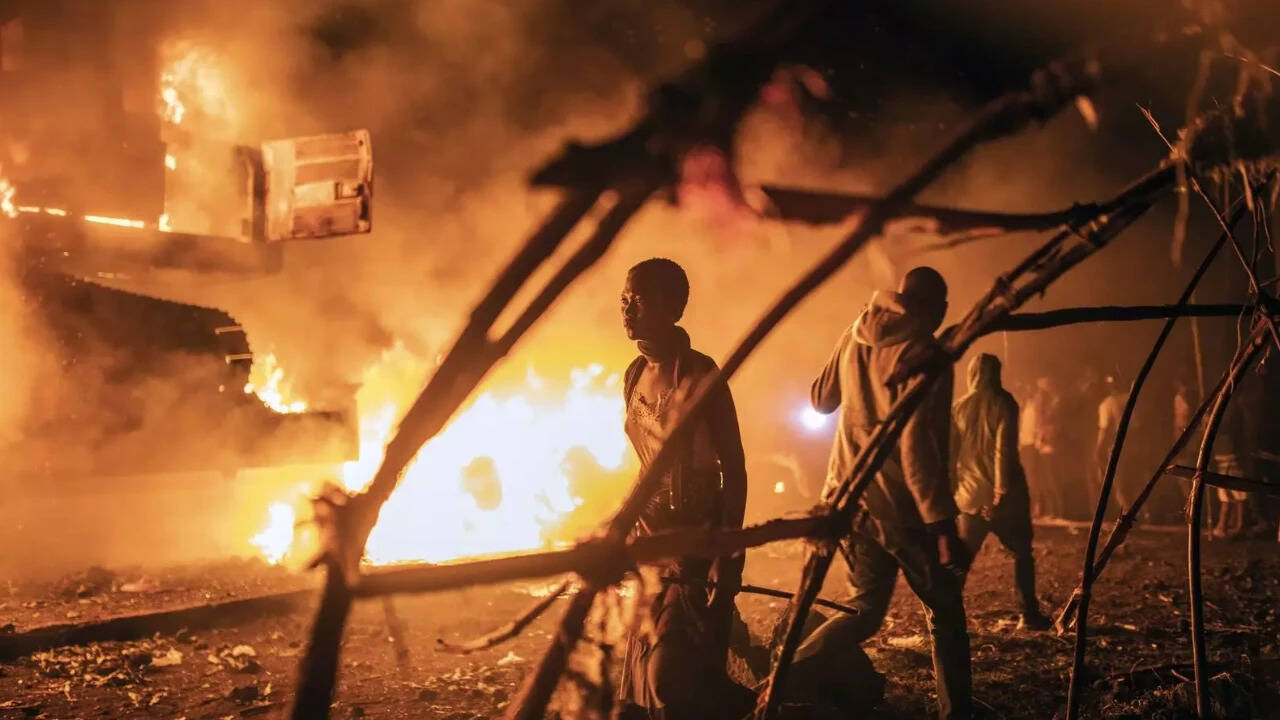
A celebration turned into an absolute nightmare overnight. At least 22 people lost their lives when a fierce fire tore through a wedding party in Kinshasa, the capital of the Democratic Republic of the Congo.
The blaze broke out in a building located in the northern district of Lingwala. It started late Friday night and burned straight into the early hours of Saturday morning. Guests trapped inside faced a terrifying ordeal as narrow hallways severely restricted any chance of a quick escape. Survivors and bystanders pulled bodies and injured victims out to the roadside while waiting for help to arrive. Don't miss our recent post on this related article.
The Grim Reality on the Ground
Norbert Mushinga, the mayor of Lingwala, confirmed the provisional death toll to the Congolese Press Agency. He warned that the final number of casualties could climb even higher as search and recovery efforts continue.
Deputy Prime Minister and Interior Minister Jacquemin Shabani rushed to the site on Saturday morning. He surveyed the damage and told reporters on the scene, "It is a tragedy". Officials have not yet confirmed the exact cause of the fire, leaving investigators to sift through the charred remains of the venue. If you want more about the context here, TIME provides an excellent breakdown.
Why Infrastructure Failures Keep Fueling Disasters
This disaster is far from an isolated freak accident. It highlights a brutal systemic failure plaguing one of Africa's fastest-growing mega-cities.
Kinshasa’s population has exploded over the past few decades. Urban development has raced ahead without matching municipal infrastructure. Dense neighborhoods like Lingwala feature packed buildings, improvised wiring, and narrow access routes. When emergencies happen, public services simply cannot keep up.
- Fire stations are sparse and poorly equipped.
- Response times lag terribly due to heavy congestion and road layouts.
- Dry season conditions make neighborhoods exceptionally vulnerable to rapid-spreading blazes.
Local media notes that multiple destructive fires have already struck various parts of the city this year alone. Without heavy structural investment in fire safety codes, emergency response units, and urban planning, these preventable tragedies will keep happening.
For now, families are mourning loved ones who went out to celebrate a joyous milestone and never came home. Officials face mounting pressure to address the structural dangers hiding in plain sight across the capital.