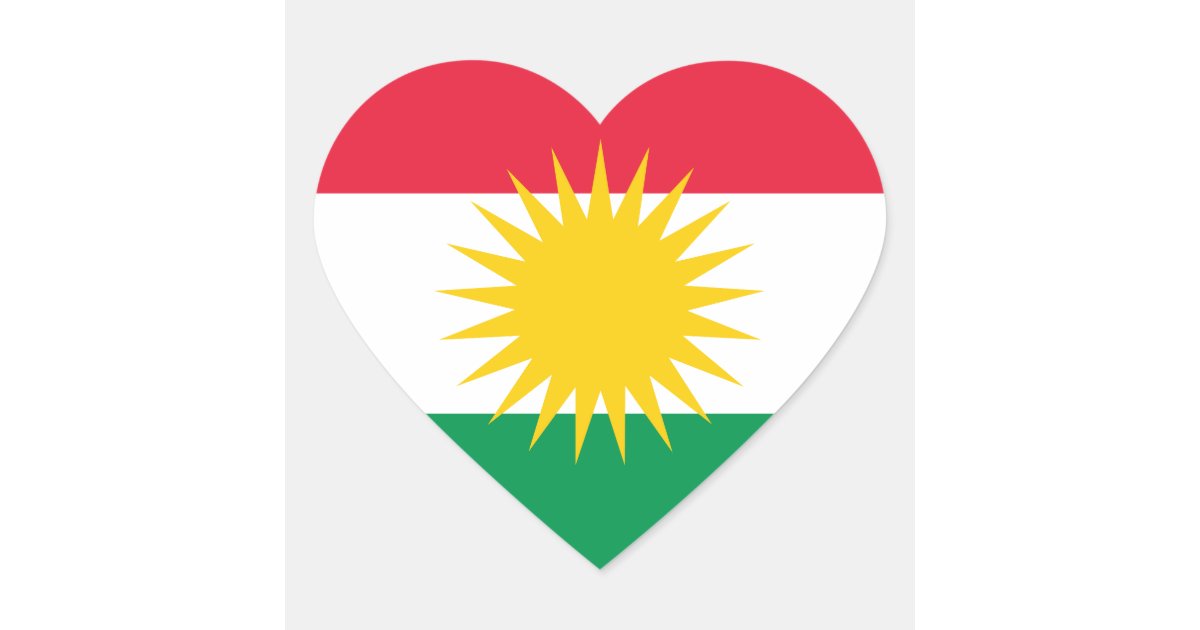
The Western media loves a romanticized David versus Goliath story. When the "Woman, Life, Freedom" movement ignited in late 2022, the narrative was instantly packaged: Kurdistan was the "engine" of the revolution, the vanguard of a feminist awakening that would finally topple the Islamic Republic. It makes for great television. It makes for tidy, black-and-white op-eds. It is also a fundamental misreading of how power, ethnicity, and geography actually function in the Middle East.
If you believe Kurdistan was the driver of a national shift, you’ve fallen for the "Lazy Consensus." The truth is far more cynical. The Iranian regime didn't fear the Kurdish protests because they represented a unified Iranian future. They welcomed them because they provided a convenient, well-worn script for state-sponsored violence. Kurdistan wasn't the spark; it was the designated lightning rod.
The Myth of Unified Insurgency
Standard analysis suggests that Jina (Mahsa) Amini’s Kurdish identity bridged the gap between the periphery and the center. This is wishful thinking. While Tehran’s middle class was posting hashtags, the Kurds in Sanandaj and Mahabad were facing heavy artillery. The regime has spent forty years perfecting the art of "othering" its borderlands. By allowing—and even provoking—increased intensity in the Kurdish regions, the IRGC (Islamic Revolutionary Guard Corps) could frame a national civil rights movement as a "separatist threat."
I have tracked regional insurgencies for over a decade. I have seen how "solidarity" evaporates the moment the bullets start flying. In the cafes of North Tehran, support for the Kurdish struggle is a mile wide and an inch deep. The moment the state propaganda machine starts shouting about "terrorist training camps" in Iraqi Kurdistan, the average urban Iranian nationalist flinches. The regime knows this. They don't need to crush the whole country if they can convince the majority that the minority is trying to tear the country apart.
Why the "Engine" Theory Fails
The "engine" theory posits that the bravery in Kurdistan would embolden the rest of Iran to cross the Rubicon into full-scale armed rebellion. It did the opposite. It served as a cautionary tale.
- Asymmetric Repression: The state utilizes a tiered system of violence. In Tehran, they use paintballs and batons. In Kurdistan, they use the DShK heavy machine gun.
- The Sovereignty Trap: By focusing the heat on a region with a history of autonomy movements, the regime successfully pivoted the conversation from "human rights" to "territorial integrity."
- Economic Insulation: The Kurdish regions are historically under-invested. They have nothing to lose. The merchant class in the Tehran Bazaar, however, still has a stake in the status quo. You cannot run a revolution on Kurdish fervor alone when the economic heart of the country refuses to stop beating for the state.
If the protests were truly a "Kurdish-led" revolution, they would have required a cross-ethnic institutional framework that simply does not exist. There is no shadow government. There is no unified military command between the Komala or PDKI and the secular youth in Isfahan. Without that, you don't have a revolution; you have a series of disconnected tragedies.
The Diaspora Delusion
The loudest voices claiming Kurdistan was the "vanguard" aren't in Saqqez; they are in Berlin, D.C., and London. The diaspora's obsession with framing this as a purely Kurdish-led victory ignored the brutal reality on the ground: the more "Kurdish" the movement looked, the easier it was for Ali Khamenei to justify "securing the borders."
The Western analyst’s penchant for viewing Iran through the lens of "marginalized identities" is a projection of Western academic values onto a brutalist theocracy. The IRGC does not care about your intersectional framework. They care about $F = ma$. Force equals mass times acceleration. They have the mass (the Basij and security apparatus) and they accelerated it specifically toward the Kurdish periphery to bleed the movement dry of its national momentum.
The Logistics of Failed Revolts
Let’s look at the numbers the "experts" ignore. At the height of the 2022-2023 unrest, the number of active protesters in Kurdish cities was proportionally higher than anywhere else. Yet, the strike actions in the vital oil sectors of Khuzestan—the actual "engine" of any Iranian collapse—were sporadic and ultimately contained.
A revolution succeeds when the security forces refuse to fire. In Kurdistan, the security forces want to fire. They are conditioned to view the Kurdish population not as "misguided citizens," but as foreign-backed insurgents. By making Kurdistan the face of the protest, the movement accidentally handed the regime a moral justification for its most brutal elements to stay loyal.
"When you fight a monster, you must be careful not to become the tool it uses to justify its existence."
The "Woman, Life, Freedom" slogan originated in Kurdish circles ($Jin, Jiyan, Azadî$), but its transition into the Persian mainstream stripped it of its radical, communalist roots and turned it into a lifestyle brand. While the West cheered for the branding, the tactical reality remained: Kurdistan was being used as a slaughterhouse to signal to the rest of Iran what happens when you take the "vanguard" seriously.
The Price of Miscalculation
The cost of this "Kurdish Vanguard" narrative has been a generation of Kurdish activists either dead, imprisoned, or forced across the border into an increasingly unstable Iraqi Kurdistan.
The status quo remains because we refuse to admit that the regime's strategy worked. They successfully localized a national crisis. They turned a potential wildfire into a controlled burn in the mountains. If you want to understand where Kurdistan stands, stop looking for "inspiration." Look at the map of IRGC fortifications. Kurdistan stands exactly where the regime wants it: isolated, battered, and used as a boogeyman to keep the rest of the country in line.
Stop asking if Kurdistan will lead the next revolution. Ask why the rest of the country didn't follow them when they had the chance. The answer isn't "lack of courage"—it's a calculated, cold-blooded realization that in the game of Iranian geopolitics, the periphery is always the first to be sacrificed and the last to be heard.
The revolution didn't start in Kurdistan and spread; it started in Kurdistan and was strangled there. Until the "center" of Iran risks as much as the "edge," the Kurds aren't leading a march—they are standing on a gallows built by the indifference of the very people they are supposedly "leading."
Go back to the data. Look at the casualty rates. Look at the sentencing discrepancies in the Revolutionary Courts. If you think this was a unified front, you aren't paying attention to the bodies. You’re paying attention to the hashtags. And hashtags don't stop the IRGC.