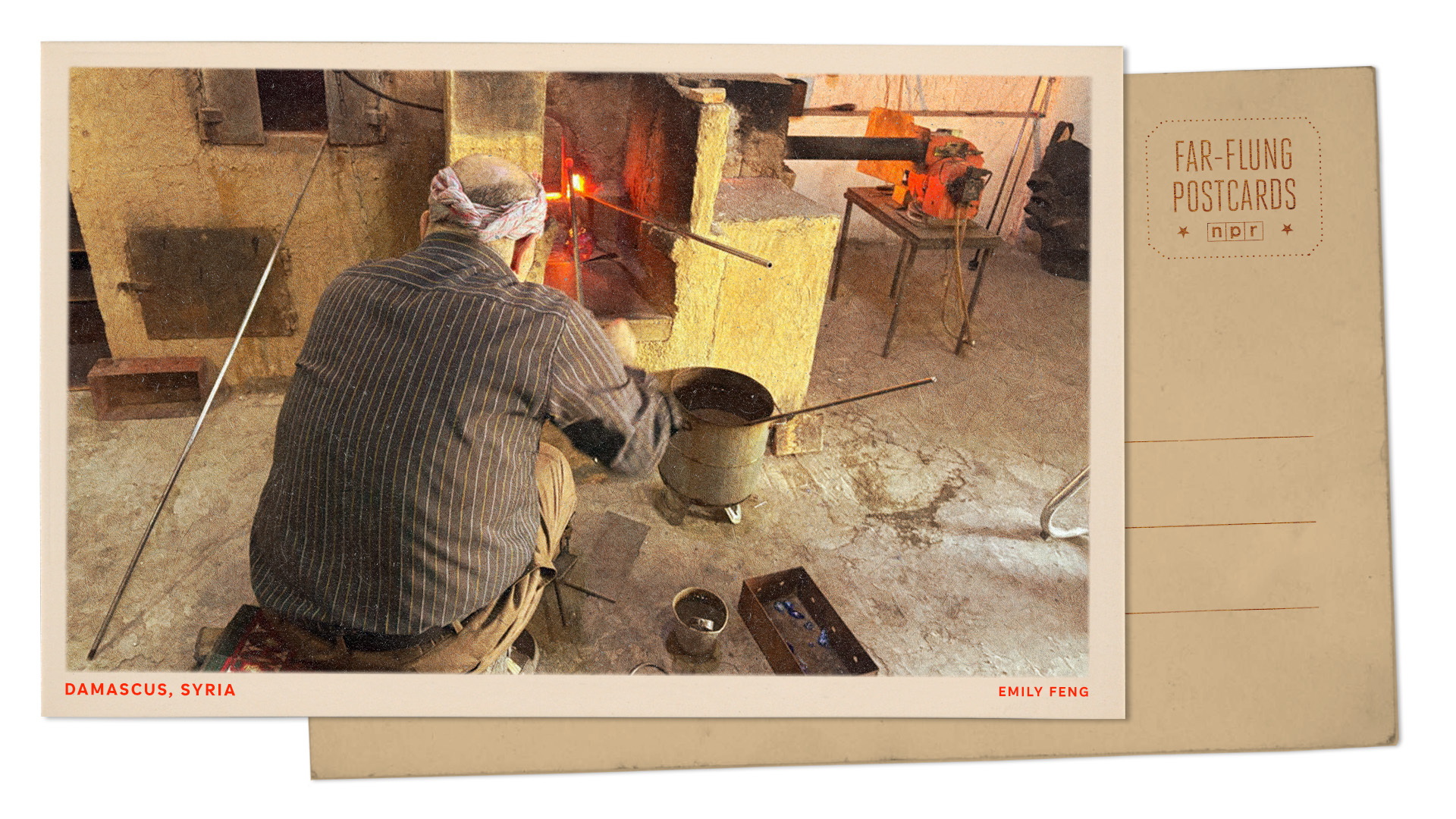
Heat hits you like a physical wall before you even spot the furnace. Inside a cramped, soot-stained workshop in Damascus, the air hovers at temperatures that make breathing feel heavy. Outside, the world moves with the frantic, modern pulse of the twenty-first century. Inside this room, time stopped centuries ago.
A lone Syrian glassmaker stands inches from an open-mouthed kiln blasting over one thousand degrees Celsius. Sweat cuts channels through the ash on his face. He doesn't flinch. With a long iron blowpipe, he gathers a glob of glowing, molten silica that looks less like material and more like liquid honey stolen from the sun. For another perspective, see: this related article.
Most people romanticize traditional crafts until they have to stand in front of a furnace for ten hours straight. It is brutal, punishing physical labor. Yet, this ancient art form survives against staggering odds. While conflict and shifting economies have forced millions to flee or abandon heritage trades, a stubborn few keep the breath of Damascus glass alive.
The Chemistry of Fire and Silica
Glassblowing isn't just a craft. It’s a high-stakes conversation with physics. The artisan has seconds to shape the molten core before it cools, stiffens, and shatters. Related insight on the subject has been provided by Travel + Leisure.
The process starts with raw materials. Crushed scrap glass merges with pure silica sand and natural mineral oxides. Cobalt turns the mixture deep sapphire. Copper brings out emerald greens. Iron yields smoky ambers. The furnace burns night and day. Letting it cool means losing thousands of dollars in fractured firebrick and solidified crucibles.
You watch the master spin the iron pipe. He rolls the glowing mass across a heavy stone slab called a marver. Each rotation must be precise. Hesitate for a heartbeat, and gravity pulls the asymmetrical hot glass downward, ruining the piece.
Modern factories pump out millions of identical glass items using automated machines in controlled, air-conditioned plants. They are cheap. They are uniform. They are completely lifeless. What comes out of this Damascene furnace carries human flaws, fingerprints, and the literal breath of the maker. Every bubble trapped inside the vessel tells a story about the day it was born.
Surviving the Unthinkable
It is impossible to talk about Syrian craftsmanship today without acknowledging the shadow of war. Workshops across Aleppo and Damascus took direct hits during years of intense conflict. Historic souks burned to the ground. Masters of the craft packed up what tools they could carry and joined the vast diaspora of refugees scattered across Turkey, Europe, and beyond.
Those who stayed behind face daily logistical nightmares. Electricity is scarce and unreliable, forcing artisans to rely on expensive, rationed generator fuel just to keep their kilns hot. Raw materials cost triple what they did a decade ago. Finding younger apprentices willing to sweat through a ten-year learning curve for meager wages is nearly impossible when survival takes priority.
Yet, the tradition persists. It is an act of quiet defiance. When you watch a glassmaker coax a delicate pitcher from a fiery blob amidst ruined infrastructure, you realize this isn't just about preserving heritage. It is about holding onto identity when everything else is turning to dust.
How Traditional Glassmaking Works
If you have never watched the technique up close, the sequence looks like magic. But it is pure, hard-earned muscle memory.
First comes the gathering phase. The artisan dips the blowpipe into the furnace, twisting it to pull out a precise amount of molten glass. Next is the marving stage. Rolling the gather on a flat surface cools the outer skin just enough to give the maker structural control.
Then comes the inflation. A gentle, steady breath down the iron pipe blows a bubble into the center of the glowing mass. From here, the tools take over. Wooden blocks, wet newspapers, and metal shears shape the vessel while it spins continuously on a bench armrest.
Finally, the finished piece goes into the annealing oven. This step matters most. If glass cools too quickly, internal thermal stresses shatter it into sharp fragments. Slow, controlled cooling over many hours relieves those stresses, turning a fragile bubble into a durable vessel.
Buying Authentic Pieces
If you manage to acquire a piece of traditional Syrian blown glass, treat it with respect. These items are rare treasures born from extreme conditions.
Look for the subtle irregularities that mark handmade work. Authentic pieces feature pontil marks on the bottom where the punty rod snapped off. They show tiny air bubbles trapped within the walls. They exhibit slight variations in thickness.
Supporting these artisans directly matters. When purchasing crafts from conflict zones or displaced communities, verify that your money reaches the actual makers rather than exploitative middlemen. Organizations and cultural preservation groups occasionally run direct-to-consumer networks that ensure fair compensation for these master craftspeople.
The heat in the Damascus workshop doesn't let up. The glass cools. The day ends. But the breath that shaped the molten earth remains trapped inside the glass, defying the passage of time.