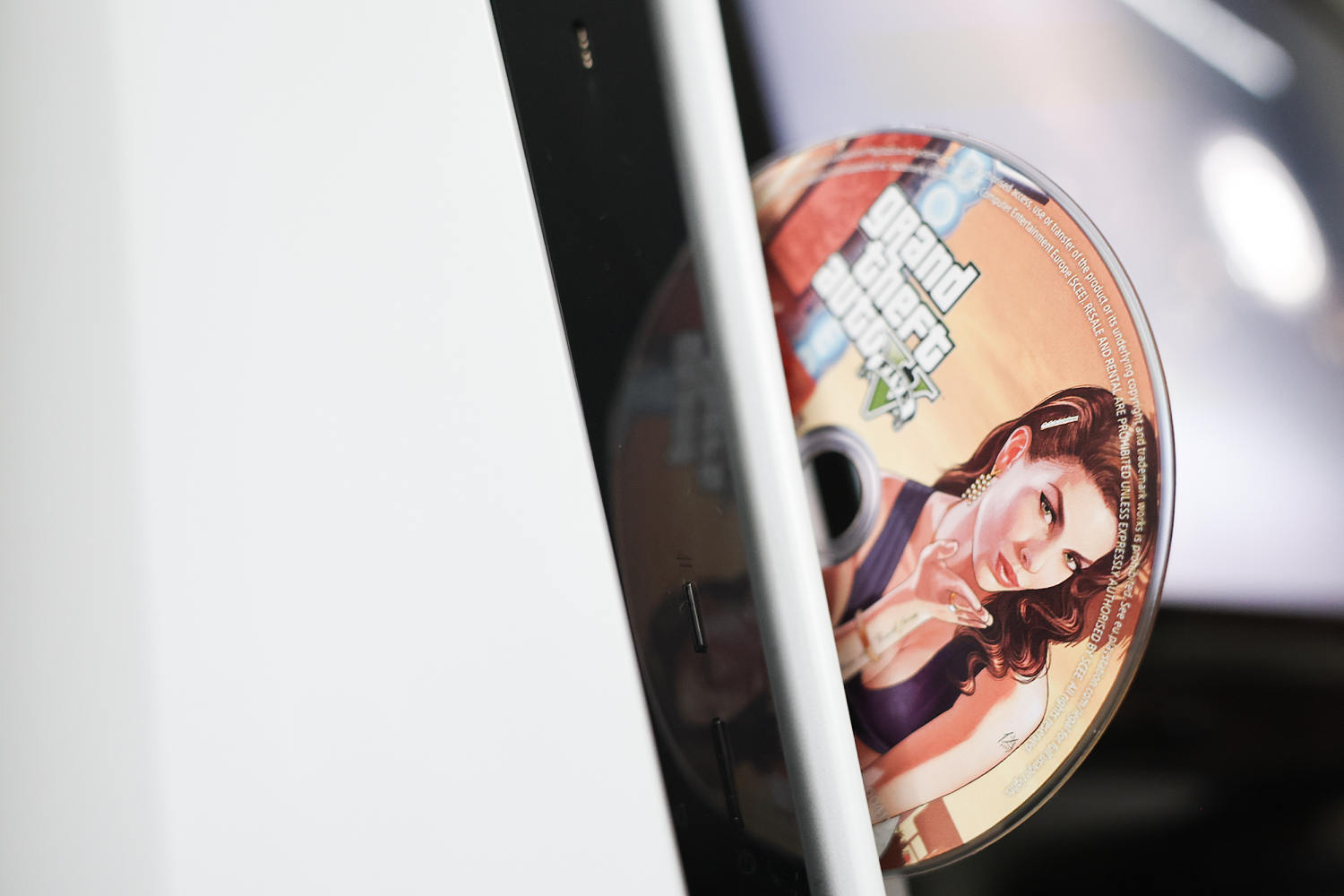
Leo still remembers the smell of the plastic.
It was 2004. He was twelve years old, sitting in the backseat of his mother’s sedan, tearing at the stubborn cellophane wrapper of a brand-new video game copy. His thumbs pried open the blue plastic case with a satisfying, echoing snap. Inside sat a pristine, mirrored disc, and tucked into the left sleeve, a thick, glossy paper map of a fictional city. He unfolded it across his lap, tracing the highways with his finger before he even reached the console. That map was a physical contract. It proved he owned a piece of another world.
Twenty years later, Leo’s younger brother, Marcus, does not own a single piece of plastic. His console is a sleek, silent monolith without a disc slot.
When Grand Theft Auto 6 arrives, it will mark the definitive end of the ritual Leo grew up with. The industry shifting toward an all-digital release for the most anticipated piece of entertainment in human history isn't just a corporate strategy shift. It is the final closing of a heavy door. The physical video game is dying, and the blockbuster release of the decade is about to pull the plug on the life support.
To understand why this is happening, we have to look past the convenience of the digital storefront and examine the cold, hard math of modern distribution.
The Weight of a Billion Gigabytes
Consider a hypothetical retail store in Ohio. A truck pulls up to the loading dock. Inside are thousands of tiny plastic boxes. Each box requires raw petroleum to manufacture, a factory to press the data onto a Blu-ray disc, a printing press for the cover art, a shipping company to move it across continents, and a retail worker to place it on a shelf.
Every single step in that chain costs money. For a publisher, physical distribution eats anywhere from 10 to 15 percent of a game's retail price.
When a game costs hundreds of millions of dollars to develop over the span of a decade, that percentage represents a staggering fortune. By eliminating the disc, the publisher reclaims that margin instantly. The corporate logic is ironclad, but the numbers run deeper than mere corporate greed.
The physical disc itself has become an illusion.
Modern games are too massive for the plastic they are printed on. A standard dual-layer Blu-ray disc tops out at around 100 gigabytes of data. Grand Theft Auto 6 is projected to blow far past that limit, requiring vast seas of data to render its hyper-detailed simulation of modern society. If you bought a physical disc today, it wouldn’t actually contain the game. It would contain a license key—a digital handshake—wrapped in plastic. You would still insert the disc, only to sit and watch a progress bar as your console downloaded 150 gigabytes of data from a server anyway.
The disc has become a key to an empty house.
The Cloud That Can Evaporate
But this transition changes our relationship with the art we love. When you buy a digital game, you do not own a product. You license a service.
This distinction sounds like legal pedantry until the day the servers go dark. We have already seen the early tremors of this shift. Digital storefronts close. Old games vanish from libraries due to expired music licenses or corporate mergers. A physical disc can sit on a shelf for thirty years, and as long as you have the hardware, it will spin, and it will play. A digital license exists entirely at the pleasure of the network.
Marcus doesn't worry about this. To his generation, the cloud is as permanent as the sky. He views the physical disc the way an adult views a dial-up modem: a clunky relic of a slower era.
He values immediacy. The thought of waiting in a midnight line at a local mall seems like an ancient tribal ritual from a history book. He wants to click a button at 11:59 PM, watch the game unlock at midnight, and play instantly.
The industry knows this. The data shows digital sales already account for the vast majority of console software purchases worldwide. The casual audience has already moved on, leaving the collectors and the purists standing on a shrinking island.
The True Cost of Convenience
There is an invisible casualty in this evolution: the local economy of play.
Think of the used game ecosystem. For decades, the ability to trade in an old adventure to fund a new one was the economic engine that allowed millions of working-class kids to keep up with the hobby. You beat a game, you brought it back to the store, you got twenty dollars of credit, and you bought something else.
When the disc dies, the secondary market dies with it.
You cannot trade a digital license. You cannot lend it to a friend down the street. You cannot discover a weird, forgotten gem in a bargain bin for five dollars. The digital ecosystem is a walled garden where the platform holder sets the price, controls the sales, and decides when a piece of history is allowed to remain accessible.
Marcus looks at Leo’s shelf of old games and sees clutter. Leo looks at Marcus’s digital library and sees a collection built on sand.
The march toward an all-digital future is driven by an irresistible force: human nature's preference for convenience over preservation. We gave up compact discs for streaming music. We gave up DVDs for digital video platforms. Now, we are giving up the video game disc for the instant gratification of the download.
The upcoming launch will not be the first to push the boundaries of digital distribution, but because of its sheer scale, it will solidify the standard. When the biggest entertainment launch in the world decides that plastic is obsolete, the rest of the industry will follow without hesitation. The manufacturing plants will spin down. The retail shelves will be reassigned to energy drinks and plastic figurines.
Leo still has that paper map from 2004. The edges are frayed, and the creases are worn white from years of folding and unfolding. It occupies physical space in his drawer, a tangible anchor to a specific summer of his youth.
When the next great digital world launches, millions of players will step into a breathtaking, staggeringly beautiful virtual landscape. They will spend hundreds of hours exploring its streets, making memories with friends across the globe. But when they turn off the console, the room will be completely empty. There will be no plastic snap. There will be no map to unfold. There will only be the quiet hum of a console cooling down in the dark, holding a world you paid for, but will never truly hold in your hands.