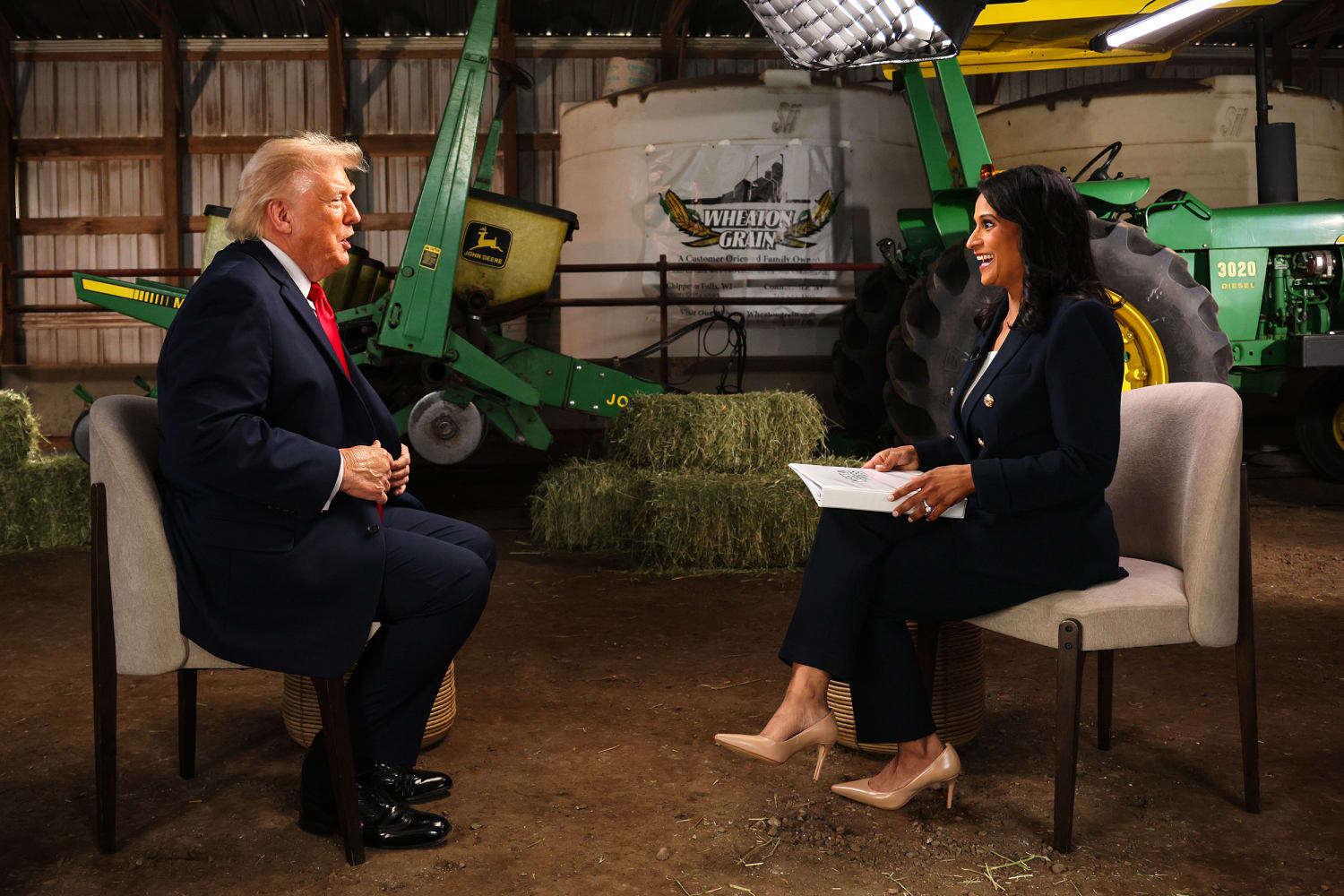
Donald Trump just sat down with NBC News moderator Kristen Welker for another high-stakes appearance on Meet the Press. If you think you've seen this movie before, you're only half right. This latest conversation isn't just another rerun of familiar talking points. It marks a distinct evolution in how the administration handles legacy media press scrutiny during a chaotic legislative cycle.
The typical political interview follows a predictable script. The politician deflects, the anchor interrupts, and nobody learns anything new. This time felt different. Welker pushed hard on the administration's recent policy pivots, specifically focusing on immigration funding fights, executive overreach, and the sudden abandonment of the controversial anti-weaponization fund on Capitol Hill.
The Policy Reversals Left and Right
The biggest takeaway from the discussion wasn't the usual campaign rhetoric. It was the blunt reality of governing. Welker pressed hard on why the administration dropped its highly touted anti-weaponization fund. That fund created a massive impasse among Capitol Hill Republicans, threatening crucial immigration funding.
Trump didn't sugarcoat the legislative gridlock. He shifted the focus back to executive action. He claimed the administration achieved the best border numbers in history without needing congressional permission.
"In fact, Biden, if you remember, said he has to get legislation. And I said, 'No, you just need a new president.' And I guess I was right."
This pivot isn't just about boasting. It reveals a broader strategy. When Congress stalls, the White House leans directly into executive authority, bypassing standard legislative channels entirely.
Taking Credit for the Upside of a Mixed Economy
The economic portion of the interview showcased a fascinating rhetorical tightrope act. When Welker raised the point that the economy actually shrank in the first quarter, Trump countered by pointing directly to job numbers that came in better than expected.
He explicitly divided economic indicators into two distinct buckets. The good parts belong to him. The bad parts belong to his predecessor.
- The Trump Economy: Dropping oil prices, falling gasoline costs, and lower grocery bills.
- The Biden Economy: Persistent inflation issues and supply chain lag.
It's a clever branding trick. Trump even brought up an older interview moment regarding egg prices, claiming they dropped 87% right around the White House Easter celebrations. By grounding macroeconomic theory in everyday breakfast items, he keeps his economic message accessible to average voters who care more about their grocery bills than GDP printouts.
The Tariff Weapon as a Diplomatic Tool
Tariffs remain the administration's favorite weapon. Major retail corporations like Walmart and AutoZone keep warning that massive import taxes will ultimately drive up consumer prices. Trump completely dismissed these corporate warnings.
He views tariffs as a tool for geopolitical leverage rather than a simple tax on goods. He explicitly detailed how he uses a 100% tariff threat to force international compliance or halt foreign conflicts altogether.
He didn't hold back on America's closest neighbors either. He noted that the US is subsidizing Canada to the tune of 100 billion dollars a year and Mexico for nearly 300 billion. His solution? A blunt ultimatum to level the playing field or face economic retaliation. It's an aggressive stance that makes Wall Street nervous but delights his populist base.
Reading Between the Lines of the Broadcast
Why does this specific media appearance matter so much right now? It shows a willingness to step into adversarial territory to control the narrative. Sitting down with legacy networks allows the administration to reach moderate voters who don't tune into friendly cable news bubbles.
Pay close attention to how the administration justifies dropping stalled legislative fights to prioritize immediate executive actions on immigration and trade. Watch how the White House uses regional economic numbers to counter broader national slowdown narratives. You can track the full breakdown of these Sunday political shifts and see the complete broadcast arguments by reviewing the NBC News Exclusive Coverage.
This video provides direct context on the administration's current media strategy and how official policy claims hold up under direct journalistic cross-examination.