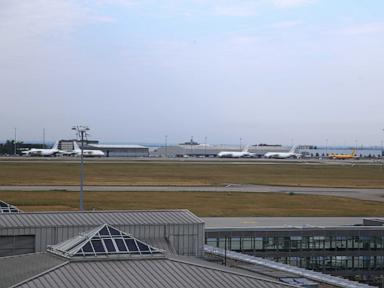
Midnight security alerts don't just mess up travel schedules; they expose how fragile modern transport hubs really are. If you've been tracking European aviation headlines recently, you know that Germany's Leipzig/Halle Airport became the latest flashpoint after a mysterious flying object and a suspicious package triggered emergency shutdowns.
Flights were diverted, anti-explosives robots rolled onto the tarmac, and a major cargo hub ground to a sudden halt. It's a terrifying script we've seen before, yet airports keep getting caught flat-footed.
The Leipzig/Halle Lockdown Explained
Let's look at what actually went down. Right before midnight, authorities spotted an unauthorized flying object near the facility. At roughly the same time, security teams flagged a suspicious object near the southern runway.
The response was immediate and heavy-handed, as it had to be. Police deployed specialized bomb-disposal robots to inspect the ground-level object. Incoming aircraft, including a commercial passenger flight, had to scramble for alternative landing spots. One incoming plane even aborted its approach after a suspected near-miss collision before diverting safely to Hannover.
While the northern runway reopened by two in the morning, the southern corridor stayed shut well into daylight hours. Police and interior ministry spokespeople kept tight lips about specific details, citing ongoing federal investigations. But local reports and context point to a much deeper security headache.
Why This Specific Airport Stes Off Alarm Bells
Leipzig/Halle isn't just some regional airstrip. It's a powerhouse cargo hub and the primary European operating base for Antonov Airlines, the Ukrainian carrier flying massive transport jets. Ever since the war in Ukraine destroyed their home base at Hostomel, these iconic cargo planes have called Leipzig home.
That makes the airport a high-value geopolitical target. Back in 2024, an incendiary device caught fire inside a logistics center right at this facility. Western intelligence agencies quickly linked that fire to wider sabotage plots orchestrated by foreign actors.
When you combine vital Ukrainian logistics infrastructure with a sudden midnight drone sighting and unverified ground objects, you aren't looking at a random prank. You're looking at probing tactics designed to test response times and sow chaos.
The Growing Menace of Unmonitored Skies
You can't talk about modern aviation security without addressing the plague of unauthorized drones. Germany's air navigation service has reported a sharp climb in rogue drone sightings near major airports.
Munich suffered multi-day closures because of mysterious quadcopters hovering where they shouldn't. Berlin Brandenburg faced similar groundstops. Airports spend billions on passenger screening, baggage checks, and cyber defenses. Yet, a consumer-grade drone bought online can still paralyze international commerce in seconds.
Traditional radar systems often struggle to pick up small, low-altitude flying objects. Anti-drone tech exists, but rolling it out across every commercial hub costs a fortune, and bureaucratic red tape slows down procurement.
What Travelers and Logistics Networks Face Now
If you ship cargo through Europe or fly through German hubs, expect more friction. Security protocols are tightening behind the scenes. Authorities are no longer taking chances with unidentified airspace intrusions.
When an object appears near a runway, the playbook demands an immediate shutdown. Airlines lose millions in fuel and rescheduling costs. Passengers miss connections. Supply chains stutter.
The real fix requires a complete overhaul of counter-drone defense grids at civilian airports. Until European regulators treat low-altitude airspace with the same military-grade vigilance applied to terminal buildings, midnight disruptions will remain the norm rather than the exception. Keep an eye on your flight paths, because the skies above Europe's busiest hubs are getting a lot more complicated.