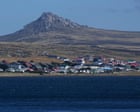
Argentina’s request for Interpol to issue Red Notices against executives and personnel linked to the Sea Lion oilfield project in the Falkland Islands is not a standard law enforcement initiative. It is a calculated exercise in extra-territorial regulatory deterrence. By leveraging national criminal legislation against international commercial operators in contested maritime zones, Buenos Aires aims to increase the cost of capital, operational risk, and personal liability for equity holders.
Understanding this conflict requires examining the systemic mechanisms of sovereign risk, international institutional boundaries, and corporate risk mitigation. Meanwhile, you can find related stories here: The Portal Bridge Replacement Capital Project Mechanics and Infrastructure Bottleneck Analysis.
The Three Pillars of Asymmetric Regulatory Pressure
Argentina’s strategy targets three structural vulnerabilities in cross-border resource development:
- Executive Mobility Restriction: Interpol Red Notices act as global legal alerts that prompt member states to locate and provisionally arrest individuals pending extradition. Even if an Interpol request is ultimately rejected under constitutional neutrality rules, the interim period creates personal risk for corporate officers, contractor managers, and maritime crews traveling through jurisdictions friendly to Argentine diplomacy.
- Capital Cost Escalation: Offshore energy development relies heavily on project finance, syndicated loans, and specialized insurance underwriters. By initiating formal criminal proceedings and pursuing UNCLOS arbitration, Argentina introduces regulatory uncertainty that triggers risk premiums, inflates debt servicing costs, and deters risk-averse institutional capital.
- Supply Chain Friction: Deepwater operations depend on global logistics networks, including support vessels, specialized drilling rigs, and port hubs. Regulatory pressure on third-party contractors creates operational bottlenecks, forcing operators to pay higher spot rates or use longer transit routes to bypass continental South American ports.
Interpol Neutrality and the Article 3 Barrier
The United Kingdom's defense centers on Article 3 of Interpol’s Constitution, which strictly prohibits the organization from undertaking activities of a political, military, religious, or racial character. To understand the complete picture, we recommend the detailed article by NPR.
The conflict rests on a legal distinction:
- The Argentine Legal Mechanism: Domestic criminal charges based on hydrocarbon laws that declare unauthorized resource extraction in claimed territorial waters illegal. Argentina presents these enforcement requests as routine criminal prosecutions.
- The Article 3 Screening Test: Interpol’s Commission for the Control of INTERPOL's Files (CCF) evaluates requests by balancing ordinary law elements against political context. When domestic criminal charges derive directly from an underlying national sovereignty dispute, the political character predominates, rendering the request inadmissible under Interpol rules.
While the UK’s appeal to Article 3 provides procedural protection within Interpol's formal channels, it does not prevent bilateral judicial assistance agreements between Argentina and sympathetic partner nations. This creates a split compliance environment where international red notices may fail, yet regional legal friction remains.
Financial and Operational Impact on the Sea Lion Project
The economics of the Sea Lion project, led by Rockhopper Exploration and Navitas Petroleum, demonstrate how legal risk influences energy infrastructure investments:
- Capital Allocation Decisions: Energy firms assess political and regulatory risk using discounted cash flow models. Elevated sovereign risk scores increase the discount rate applied to future revenue streams, lowering the project's net present value (NPV) and raising the internal rate of return (IRR) hurdle required for final investment decisions.
- Contractor Exposure Management: Primary contractors face potential asset seizures or legal exposure in South American markets. Operators must offer contractual indemnification or risk premium markups to secure specialized deepwater drilling units and support services.
- Corporate Risk Structure: Parent companies mitigate exposure through ring-fenced special purpose vehicles (SPVs), limited-recourse project financing, and specialized political risk insurance (PRI).
Strategic Frameworks for Sovereignty-Linked Commercial Disputes
To operate in contested offshore sectors, commercial ventures rely on three primary risk-management strategies:
- Pre-emptive Institutional Litigation: Submitting formal filings to the Commission for the Control of INTERPOL's Files before notices are circulated ensures active screening and prevents unexpected arrests during international transit.
- Jurisdictional Ring-Fencing: Aligning supply routes, equipment procurement, and corporate holdcos exclusively within jurisdictions that do not recognize claims of extraterritorial jurisdiction reduces operational exposure.
- Multilateral Legal Arbitration: Engaging international dispute resolution frameworks, such as the International Tribunal for the Law of the Sea (ITLOS) or the Permanent Court of Arbitration, creates binding legal benchmarks that reinforce operational legitimacy among international institutional investors.
The escalation of legal measures surrounding the Falklands hydrocarbon sector demonstrates that modern sovereign disputes are increasingly fought through regulatory channels, financial pressure points, and institutional frameworks rather than military means. Operators must treat legal risk not as a secondary compliance issue, but as a core factor shaping project design, supply chains, and capital allocation.


