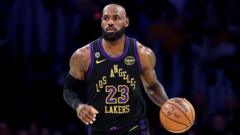
Basketball internet lost its mind on Tuesday night. A scheduled live stream titled "LeBron James Introductory Press Conference" popped up on the official Miami Heat YouTube channel. Fans went crazy. Prediction markets swung wildly. Rumor mills churned at light speed. People assumed an intern clicked the wrong button and spoiled the biggest free agency decision of the summer.
That isn't what happened.
The Heat quickly pulled the video down and issued a standard corporate statement. A spokesperson admitted their social media team uploaded the placeholder while prepping for potential free agency outcomes. They insisted the video carries no current validity.
People want to believe a rogue employee blew the lid off the NBA offseason. The reality is far more boring, yet far more interesting from an operational standpoint. Here is what actually happened behind the scenes, why teams prepare these assets weeks in advance, and why you shouldn't bet your mortgage on LeBron returning to South Beach just yet.
How Sports Media Teams Actually Handle Free Agency
It happened fast. One moment you're scrolling YouTube, and the next you see a scheduled stream with a thumbnail borrowed from Dwyane Wade's statue unveiling. The caption explicitly welcomed LeBron back as a member of the Heat.
Internet sleuths instantly screenshotted the upload. Within minutes, the link blew up on X and Reddit. Kalshi and Polymarket saw massive spikes in volume as bettors rushed to put money on Miami.
Media departments do not wait for news to break before creating content. They build asset libraries for every plausible scenario. When a superstar becomes an unrestricted free agent, digital teams construct graphics, edit highlight packages, and draft press conference livestreams for every outcome.
They build option A, option B, and option C.
If LeBron signs with Miami, the Heat want their media engine running instantly. If he signs elsewhere, those drafts sit quietly in a private folder forever. Someone on the content team accidentally toggled a scheduled stream from private to public. It was a stupid technical error, not a breach of top-secret trade negotiations.
The 2010 Playbook and Why LeBron Kept Miami in the Dark
To understand why Miami was staging YouTube videos in the first place, you have to look back sixteen years.
In July 2010, LeBron famously didn't tell the Heat he was joining them until minutes before he walked onto the set of "The Decision" on ESPN. Pat Riley and the front office were kept guessing right up to the broadcast.
LeBron operates under extreme secrecy. His inner circle guards information fiercely. Rich Paul, his long-time agent and CEO of Klutch Sports, reiterated this posture recently on the "Game Over" podcast. Paul stated clearly that nobody outside their immediate camp knows anything yet, and that they will not be rushed into a decision by league pressure or broadcast timelines.
NBA Commissioner Adam Silver even mentioned publicly that the league wants a resolution soon to finalize next season's schedule. Klutch Sports responded by essentially telling everyone to wait.
When you deal with a player who holds his cards this close to his chest, organizations have no choice but to prep everything in advance. The Heat couldn't afford to spend three hours setting up a YouTube stream after a sudden announcement dropped. They had to have the infrastructure ready to launch at a moment's notice.
Reading the Signals Amid the Noise
Does this mistake mean LeBron isn't going to Miami? No. Does it guarantee he is returning? Absolutely not.
Here is where the betting markets and casual fans get confused. An asset prep does not equal inside knowledge. The Heat media team doesn't sit in on contract negotiations between Pat Riley, Andy Elisburg, and Rich Paul. Social media managers are given lists of potential outcomes to prepare for based on public reports and general management directives.
If the Heat media team created a LeBron graphic, you can bet they also created templates for other available targets. They are covering their bases.
Consider the active contenders in this sweepstakes. The Cleveland Cavaliers offer a sentimental homecoming to wrap up his career where it started. The Philadelphia 76ers offer immediate eastern conference contention alongside established talent. Golden State remains a lingering wild card. Miami offers a familiar culture, tax benefits, and a proven organization where he won two titles.
Miami being a favorite on prediction platforms like BetOnline makes sense based on team fit and cap structure. But a botched YouTube link isn't the smoking gun traders think it is.
The Danger of Chasing Social Media Leaks
This incident highlights a major issue in modern sports consumption. We live in an era where fanbases obsess over micro-details. A player unfollows a team on Instagram, and sports talk radio spends three hours debating a trade request. A YouTube thumbnail goes public for four minutes, and millions of dollars move on betting exchanges.
Most of these triggers are false alarms.
A few years ago, an NFL team's web shop briefly listed jerseys for a quarterback they hadn't signed. The fanbase went wild assuming a deal was finalized. It turned out the e-commerce provider routinely uploaded template SKUs for top free agents to test database limits.
The exact same dynamic applies here. Digital publishing tools are complex. CMS platforms use scheduled staging environments that occasionally bleed into public feeds due to human error or caching bugs.
If you are following this free agency saga, ignore the social media glitches. Pay attention to actual structural clues instead.
What to Track While Waiting for the Real Decision
If social media leaks aren't reliable, what should you actually watch?
- Front office movements: Track executive travel schedules. Pat Riley traveling abroad or staying away from team headquarters usually indicates nothing imminent is dropping that afternoon.
- Cap clearing moves: Watch the wire for secondary trades or roster waives. Teams rarely announce a blockbuster signing without first clearing the necessary roster spots or financial thresholds.
- Official agency channels: Klutch Sports controls the narrative. When LeBron made his moves in 2014 and 2018, the news came through direct, controlled releases—an essay in Sports Illustrated and a succinct press release from Klutch.
The Heat's deleted video was an embarrassing operational blunder that gave fans a temporary rush on a quiet Tuesday night. It made for great memes and hilarious podcast commentary, but it brought us no closer to knowing where the league's all-time scoring leader will finish his career.
Stop refreshing YouTube schedules and waiting for accidental uploads. When the decision actually comes, it won't be leaked by a scheduled livestream thumbnail on a random weeknight. It will come directly from the source, exactly when he is ready.


