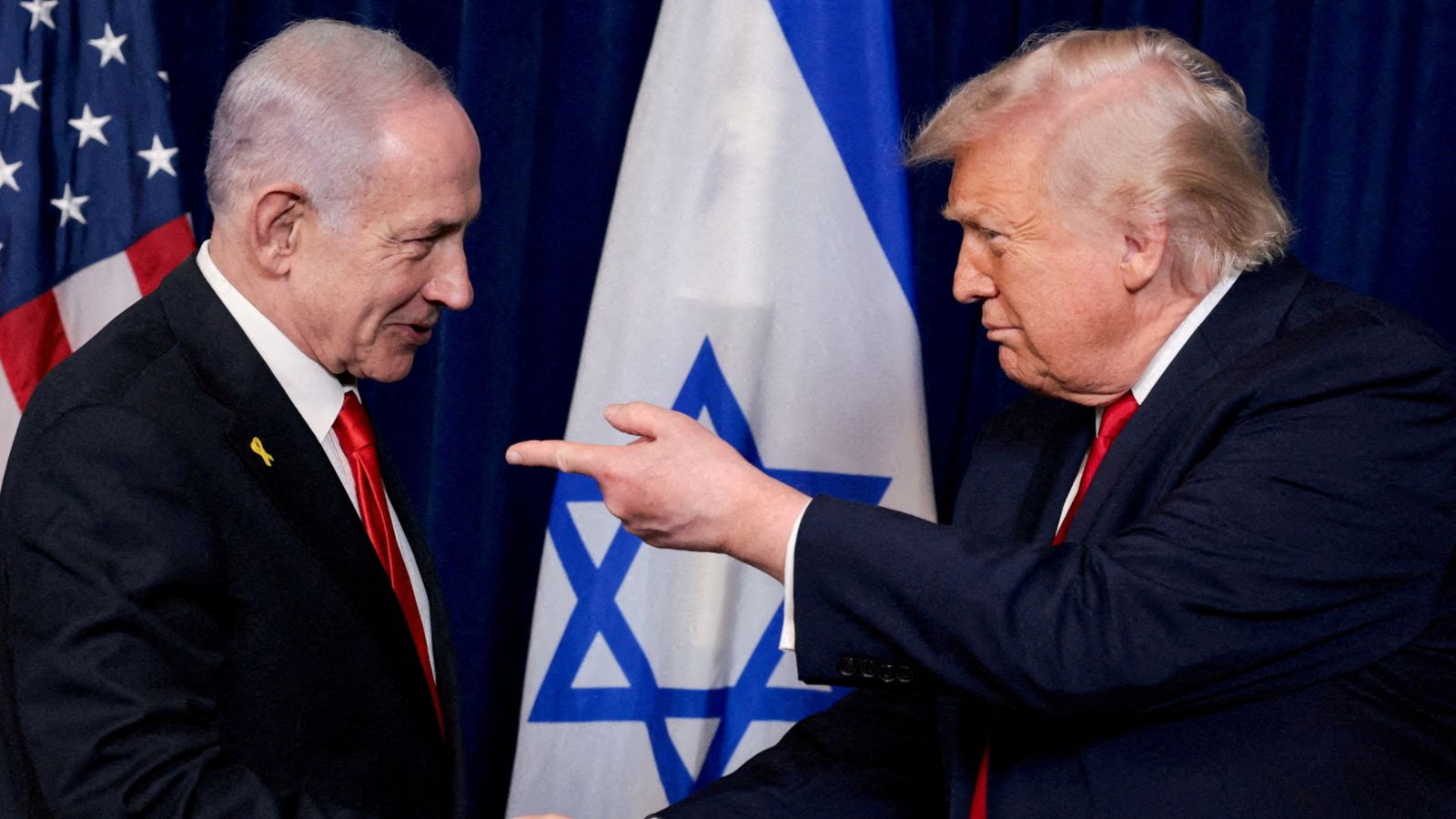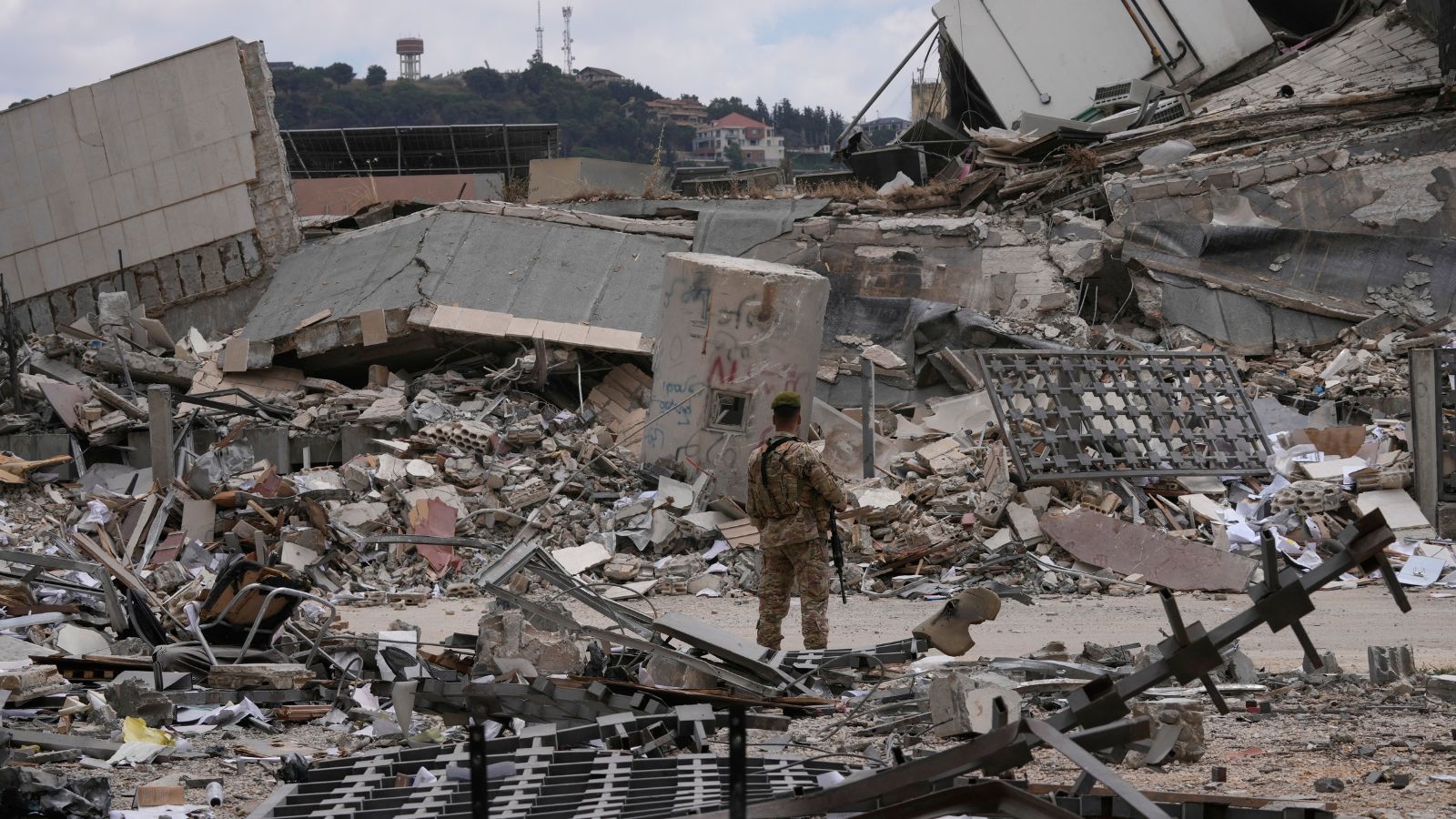
The mainstream media is suffering from a severe case of diplomatic deja vu. Bureaucrats in Washington are dusting off old maps, whispering about "land swaps," and leaked proposals suggest Israel could hand over disputed territory to Lebanon to buy peace.
It is a comforting narrative. It suggests that complex geopolitical conflicts are just real estate disputes waiting for the right broker.
It is also completely wrong.
The Western obsession with drawing lines on a map ignores the fundamental reality of state power and non-state actors in the Levant. You cannot solve a theological and asymmetric proxy war with a property transfer. Treating a heavily armed militia like a rational Westphalian state looking for a better border deal is not just naive; it is dangerous.
The Lazy Consensus of "Land for Peace"
The standard foreign policy analysis assumes that the tension between Israel and Lebanon is rooted in the Blue Line—the UN-recognized border demarcation. The logic goes like this: resolve the thirteen disputed border points, hand over the northern part of Ghajar village or the Shebaa Farms, and the pretext for conflict evaporates.
This thesis completely misunderstands why conflict exists here.
I have spent years analyzing regional security dynamics, watching billions of dollars in Western military aid and diplomatic capital vanish into the sands of the Middle East because policymakers refuse to see what is right in front of them. The dispute is not about geography. It is about legitimacy.
For a non-state actor like Hezbollah, the border dispute is a feature, not a bug. If the border is perfectly settled and recognized by all parties, the primary justification for maintaining an independent army that eclipses the actual Lebanese Armed Forces (LAF) disappears. Total territorial resolution is a existential threat to a resistance narrative. Therefore, any land handed over under a US-backed proposal will simply result in the goalposts being moved. If Shebaa Farms are conceded, the narrative will shift to maritime gas fields, or historical villages lost in 1948.
The Fallacy of the Sovereign Lebanese Partner
Every diplomatic proposal relies on a central, flawed premise: that the government in Beirut has the power to enforce an agreement.
Let us look at the data. United Nations Security Council Resolution 1701, passed in 2006, explicitly mandated that the area south of the Litani River be free of any armed personnel other than the LAF and UNIFIL (the UN Interim Force in Lebanon).
What happened? UNIFIL became a well-funded observation group, documenting violations they were powerless to stop. The LAF operates under a strict confessional system where forcing a confrontation with a major sectarian militia would trigger a civil war.
- Fact: The Lebanese state does not hold a monopoly on the use of force within its own borders.
- Fact: Diplomatic agreements signed by Beirut are functionally useless if a heavily armed veto player decides otherwise.
- Fact: Conceding territory to a weak state does not pacify the militia ruling the border zone; it merely moves their staging ground closer to Israeli civilian centers.
Imagine a scenario where Israel cedes control of strategic high ground in exchange for a signed piece of paper and a promise that the Lebanese army will patrol the area. Within forty-eight hours, the vacuum is filled. The international community expresses "deep concern," but the tactical disadvantage on the ground becomes permanent.
The High Cost of Tactical Retreats
To be fair, there is a counter-argument. Some pragmatists within the Israeli security establishment argue that making minor territorial concessions deprives adversaries of a political pretext, shifting the blame entirely onto the other side if violence escalates. They argue it buys international legitimacy.
But legitimacy cannot stop an anti-tank missile.
The downside of this contrarian view—that Israel should refuse any territorial concessions under threat of escalation—is that it guarantees short-term friction. It requires a permanent, high-alert defensive posture. It means rejecting the applause of the international diplomatic circuit. It is exhausting, expensive, and politically unpopular in Western capitals.
Yet, the alternative is worse. The 2000 withdrawal from southern Lebanon was supposed to end the conflict by removing the occupation pretext. Instead, it was viewed by regional adversaries as a validation of asymmetric warfare. It directly paved the way for the 2006 war. History shows that in this region, unilateral or coerced retreats are rarely interpreted as gestures of peace; they are parsed as signs of exhaustion.
Dismantling the De-escalation Narrative
The public is constantly asking the wrong question. The media asks: "What will it take to make Lebanon sign a peace deal?"
The real question is: "Does a signature in Beirut change the reality on the ground?"
No, it does not. The current US-backed proposals are short-term band-aids designed to score quick diplomatic wins for an administration looking for a foreign policy success. They ignore the broader architecture of regional proxy warfare.
If you want to stabilize the northern border, stop looking at the map and start looking at the supply chains. Peace will not be achieved by moving fences a few hundred meters north or south. It will only be achieved when the cost of maintaining a rocket arsenal on Israel's border outweighs the strategic benefits for the sponsors funding it.
Stop trying to fix the border. Fix the deterrence posture. Build fortifications, enforce red lines with overwhelming force, and accept that some conflicts cannot be bought off with real estate.