The systematic marginalization of the Ahmadiyya community in Pakistan is not merely a product of organic societal friction or localized religious intolerance. It is an engineered institutional output driven by state-level constitutional architecture, statutory criminalization, and an asymmetric socio-political incentive structure. By embedding theological exclusion into the foundational legal framework of the state, Pakistan has created a self-reinforcing ecosystem where vigilante violence, judicial capitulation, and administrative disenfranchisement operate with structural predictability. Understanding this crisis requires moving beyond emotional narratives of victimhood and examining the cold mechanics of state-sponsored ostracization.
The Legal Triad of State Exclusion
The disenfranchisement of Pakistani Ahmadis rests on three distinct legal pillars enacted over a ten-year period. These interventions transformed what was a theological dispute into a strict statutory crime, transforming the apparatus of the state into an enforcement arm for sectarian homogeneity.
The Constitutional Stratification of Citizenship
In 1974, under the civilian administration of Zulfikar Ali Bhutto, the Parliament of Pakistan passed the Second Constitutional Amendment. This amendment explicitly defined who is and is not a Muslim for legal and constitutional purposes, declaring members of the Ahmadiyya movement to be non-Muslims.
[Constitutional Definition (1974)] ──> [Statutory Criminalization (1984)] ──> [Administrative Exclusion (Electoral Rolls)]
This constitutional intervention fundamentally altered the relationship between the citizen and the state by establishing a state-mandated theological test for citizenship rights. It codified a dual-tier citizenship structure, creating a permanent legal vulnerability for a specific minority group.
The Criminalization of Religious Identity via Ordinance XX
While the 1974 amendment established the status of Ahmadis, it did not fully criminalize their daily existence. That operational gap was closed in 1984 through Presidential Ordinance XX, enacted during the military regime of General Muhammad Zia-ul-Haq. Ordinance XX inserted Sections 298-B and 298-C into the Pakistan Penal Code (PPC).
These statutes criminalized the public and private practice of the Ahmadiyya faith. Under these provisions, an Ahmadi face up to three years in prison for:
- Referring to their place of worship as a masjid (mosque).
- Reciting the Islamic call to prayer (azan).
- Using standard Islamic greetings or terminology.
- Posing as a Muslim or propagating their faith.
The statutory construction of Ordinance XX is absolute. It treats the mere expression of identity as an inherent act of blasphemy and public disruption. The law shifts the burden of offense from the perpetrator of violence to the individual practicing their faith, establishing a legal reality where the victim's existence is the primary provocation.
The Expansion of Blasphemy Laws
The introduction of Section 295-C of the PPC in 1986 mandated the death penalty for defiling the name of the Prophet Muhammad. Because the core tenets of the Ahmadiyya faith differ on the nature of prophethood, any standard articulation of Ahmadi theology is legally interpreted as a direct violation of Section 295-C. The structural linkage between Ordinance XX and Section 295-C transforms basic religious practice into a capital offense, providing a statutory pipeline that leads from identity to state-sanctioned execution or vigilante assassination.
The Political Economy of Extremism
The persistence and intensification of Ahmadi persecution cannot be explained solely by religious conviction. It functions within a rational political economy where political actors, religious organizations, and state institutions optimize for power, legitimacy, and survival.
The Extradition of State Authority to Vigilante Networks
The Pakistani state has consistently outsourced ideological enforcement to hardline sectarian organizations, most notably the Tehreek-e-Labbaik Pakistan (TLP) and the Khatm-e-Nubuwwat movement. For mainstream political parties and military establishments, acquiescing to the demands of these groups functions as a low-cost mechanism to secure conservative votes and maintain public order without enacting systemic economic or structural reforms.
The political utility of this dynamic creates a specific feedback loop:
State Grants Impunity ──> Extremist Mobilization Escalates ──> Judicial and Administrative Systems Capitulate
State concessions to religious hardliners validate extremist rhetoric, which increases the mobilization capacity of these groups, leading to further state capitulation.
The Theological Premium and Moral Licensing
Vigilante violence against Ahmadis is driven by an asymmetric incentive structure described by perpetrators as an entry ticket to paradise. This "theological premium" removes the standard moral and legal deterrents against violence. When the state apparatus validates the premise that a group is sub-human or treasonous, it reduces the social and psychological cost of killing them. Perpetrators do not view themselves as criminals but as executioners of divine and state law.
The Operational Mechanics of Administrative Erasure
The persecution of Ahmadis extends beyond spectacular acts of violence into the mundane administrative processes of daily life. This bureaucratic erasure effectively removes the community from the economic and political life of the nation.
Electoral Disenfranchisement
Pakistan operates on a joint electorate system for all citizens except Ahmadis. To register to vote, citizens must sign a declaration regarding the finality of prophethood. For an Ahmadi, signing this declaration requires denouncing their own faith.
The state maintains a separate, supplementary voter list specifically for Ahmadis, explicitly labeling them as non-Muslims. Because the community refuses to accept this forced categorization, they choose to boycott elections. The operational outcome is total political disenfranchisement; the community has no representation at the local, provincial, or federal levels, removing any legislative channel to address their grievances.
Systematic Bureaucratic Hurdles
The requirement to denounce the Ahmadiyya faith or accept non-Muslim status is embedded in critical state documentation, including:
- National Identity Cards (CNIC) and Passports: Applicants must state their religion and sign a declaration denouncing the founder of the Ahmadiyya movement to obtain a Muslim passport.
- Public Sector Employment: High-ranking military and civil service positions require oaths that effectively exclude practicing Ahmadis.
- Educational Progression: Admission to professional universities and the awarding of academic credentials frequently involve religious declarations, subjecting students to institutional harassment and exclusion.
The Breakdown of Judicial and Law Enforcement Protections
The judiciary and law enforcement agencies, designed to protect citizens, frequently operate as multipliers of persecution due to institutional intimidation and systemic bias.
Judicial Capitulation under Intimidation
The lower courts in Pakistan operate under direct physical intimidation from extremist lawyers and crowds. When an Ahmadi is charged under Ordinance XX or Section 295-C, courtrooms are routinely occupied by sectarian activists who threaten judges with violence if bail is granted or if an acquittal is handed down.
Judges routinely defer justice by denying bail and passing the burden of acquittal to appellate courts or the Supreme Court, ensuring that accused Ahmadis face years of pre-trial detention in high-security facilities.
Police Complicity and Proactive Desecration
The police force acts as an active participant in harassment rather than a neutral arbiter. Under pressure from local religious leaders, police forces routinely:
- Preemptively demolish the minarets and domes of Ahmadi places of worship to comply with Ordinance XX.
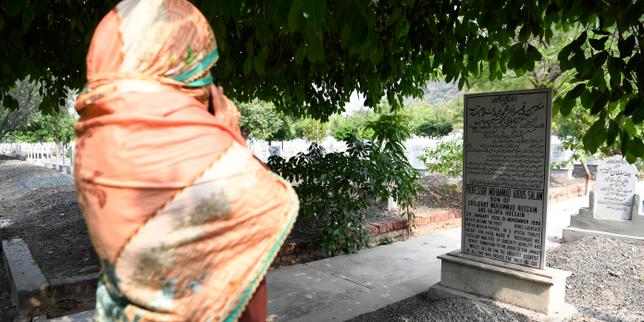
- Desecrate Ahmadi grave sites by erasing Islamic inscriptions from tombstones.
- File First Information Reports (FIRs) based on flimsy, unverified accusations of preaching or distributing literature.
This proactive enforcement is driven by institutional self-preservation. A police station chief who refuses to register a case against an Ahmadi risks being labeled a blasphemer himself, which carries a high risk of career termination or assassination.
Structural Trajectory and Systemic Risk
The current trajectory points toward an escalation of structural violence. The lack of institutional countervailing forces means the systematic erasure of the Ahmadiyya community will proceed along predictable lines.
The Destruction of Social Cohesion
The state-sanctioned dehumanization of Ahmadis creates a template for the treatment of other sectarian and religious minorities. The legal and rhetorical tools honed against the Ahmadis are increasingly deployed against Shia Muslims, Hindus, and Christians. The state’s inability to defend its constitutional monopoly on violence has created a fragmented security environment where localized religious actors dictate law and order.
Economic De-platforming and Migration
As physical safety declines and bureaucratic exclusion thickens, the Ahmadiyya community faces systemic economic de-platforming. Businesses owned by Ahmadis are boycotted, marked for extortion, or targeted for arson. This economic strangulation forces a continuous brain drain, driving the educated, professional core of the community to seek asylum in Europe, North America, and Australia. The long-term forecast is the near-total depletion of the community’s domestic leadership, leaving the remaining impoverished population vulnerable to intensified exploitation.
Strategic Alternatives and Policy Realities
Addressing this institutional crisis requires identifying the structural limitations of standard human rights interventions and recognizing that domestic political changes are highly unlikely in the short term.
The Failure of External Diplomatic Pressure
International condemnation and human rights resolutions have yielded negligible results. The Pakistani state views domestic stability and the pacification of religious groups as higher priorities than compliance with international human rights treaties. Diplomatic pressure is routinely dismissed as foreign interference or Western bias, which domestic actors leverage to rally conservative support.
Operational De-escalation Through Administrative Reform
Because constitutional amendments are politically impossible in the current climate, realistic reform must focus on administrative adjustments rather than grand legislative shifts.
- Evidentiary Threshold Reform: Amending procedural law to require high-level judicial review before a First Information Report (FIR) under Section 295-C or Ordinance XX can be registered would reduce frivolous, malicious, and vigilante-driven prosecutions.
- Decoupling Civil Documentation from Theological Oaths: Removing religious declarations from standard civil administrative tasks—such as passport issuance or educational enrollment—would restore basic economic mobility without triggering a direct theological confrontation with religious hardliners.
- Judicial Protection Units: Establishing dedicated security protocols for lower-court judges handling sectarian and blasphemy cases would mitigate courtroom intimidation, allowing decisions to be made based on statutory merit rather than immediate physical duress.
Without these targeted structural interventions, the state-sanctioned apparatus will continue its trajectory toward the complete social, economic, and legal eradication of the Ahmadiyya community from Pakistan's public sphere.