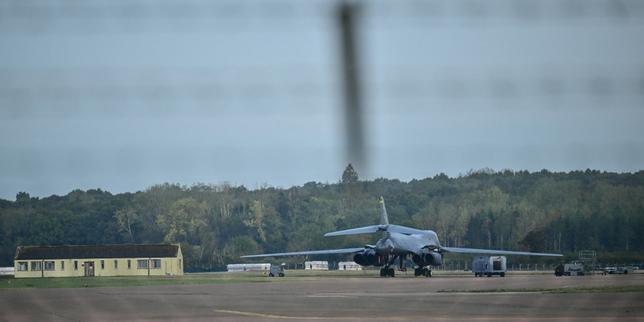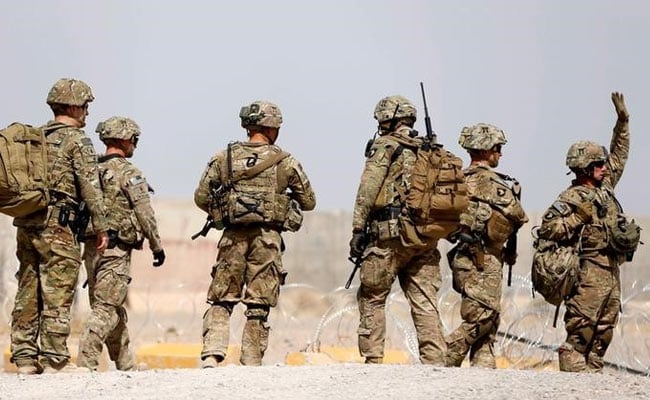
At 02:14 in the morning, the hum stops.
If you have ever spent a night on a forward operating base—or even lived near a major airfield—you know that hum. It is the low, dental-filling vibration of diesel generators, liquid oxygen plants, and server racks cooling ten thousand miles of fiber-optic cable. It is the sound of American military dominance, a lullaby of endless fuel and unbreakable supply chains.
Silence, out there, is terror.
Consider a hypothetical scenario, one currently keeping Pentagon planners awake in windowless rooms beneath the Potomac. Picture a twenty-two-year-old avionics technician—let us call her Specialist Maya Lin—standing on a rain-slicked tarmac in Guam or Okinawa. Seconds ago, her tablet flashed red. Not a local power dip. Not a blown transformer. The regional electrical grid just vanished, swallowed by a coordinated cyber-attack timed to the exact millisecond the first hypersonic salvos cleared the horizon.
No power means no fuel pumps. No fuel pumps mean the $100 million stealth fighters sitting in their hardened shelters are suddenly nothing more than extraordinarily expensive lawn ornaments.
For thirty years, the United States fought wars from sanctuaries. We built sprawling, brightly lit cities in the desert with Burger Kings, fiber internet, and uninterrupted electricity borrowed from local grids. We assumed the rear area was safe. We assumed the lights would always stay on.
We were wrong.
The Glass Jaw of Modern Warfare
To understand why the Pentagon is frantically rewriting its survival playbook, you have to stop looking at aircraft carriers and start looking at copper wire.
Modern warfare is an addiction to electrons. A single forward base consumes as much electricity as a small American city. Yet, according to Defense Department assessments, roughly ninety-nine percent of the electrical energy military installations use at home—and a staggering majority abroad—comes from commercial grids. Those grids were built for efficiency, not war. They are fragile webs of substations, aging transformers, and exposed transmission lines.
Think of a modern airbase not as a fortress, but as a deep-sea diver. The fighters, the radar arrays, the missile batteries—those are the diver’s muscles. The commercial power grid and the fuel tankers are the breathing hose snaking up to the surface. For decades, America’s adversaries watched us flex our muscles while ignoring the hose. Now, they have brought knives.
In a high-end conflict—specifically a clash in the Indo-Pacific—the first blows will not look like Pearl Harbor. They will look like a blackout. Precision ballistic missiles will crater runways in minutes. Cyber weapons will scramble logistics networks, blinding commanders to where spare parts actually sit. Submarines will hunt the slow, vulnerable tankers carrying millions of gallons of JP-8 jet fuel across the ocean.
If the base dies, the fleet dies. The strategy collapses before a single dogfight occurs.
Burying the Heartbeat
So how do you keep a military base breathing when the sky is falling? You stop acting like a city and start acting like a submarine.
Across the Pacific and the continental United States, engineers are quietly executing one of the most ambitious infrastructure overhauls since the Cold War. They are severing the umbilical cord to the civilian grid.
The centerpiece of this quiet revolution is the microgrid—self-contained, islanded energy ecosystems buried beneath concrete and earth. Instead of relying on a single vulnerable power plant, bases are wiring together disparate energy sources: hardened diesel generators, massive utility-scale battery banks, solar arrays, and, in the near future, transportable nuclear microreactors.
Imagine a spiderweb where cutting ten strands still leaves the center intact. If a missile takes out the eastern generator bank, automated switches reroute power from the western batteries in less than a cycle of alternating current—a blink so fast a radar screen does not even flicker.
By 2030, the Pentagon aims to have these resilient microgrids operational across dozens of critical installations. It is unglamorous work. Nobody writes songs about switchgear and lithium-iron-phosphate battery storage. Yet, in the brutal arithmetic of attrition, a buried transformer is worth more than a squadron of bombers.
The Ghosts in the Machine
Power is only half the equation. Even with the lights on, a modern base is useless if its brain is scrambled.
Walk into any tactical operations center today and you will see walls of screens fed by satellites orbiting twenty-two thousand miles overhead. Those satellites tell pilots where the enemy is, guide smart bombs to their targets, and let generals in Hawaii talk to sergeants in the Philippines.
And every single one of them is a sitting duck.
Anti-satellite missiles, dazzling lasers, and orbital jammers have turned space from a sanctuary into a shooting gallery. If the satellites go dark, how does Maya Lin’s base know an incoming raid is ten minutes out? How does a commander order a counterstrike when the internet is dead?
The answer lies in a deliberate, almost nostalgic regression. The military is relearning how to fight blind and deaf.
Planners are dusting off high-frequency radios that bounce signals off the ionosphere, bypassing satellites entirely. They are laying thousands of miles of redundant, deeply buried fiber-optic cables that cannot be jammed from the sky. More radically, they are changing how humans make decisions.
Under a doctrine known as Agile Combat Employment, the Pentagon is abandoning the idea of the giant "mega-base." You cannot hide a base with ten thousand troops and a two-mile runway. You can hide twenty Marines, four fighter jets, and a mobile fuel bladder on an abandoned World War II airstrip on a remote coral atoll.
Consider what happens next when the big base gets hit. Instead of a catastrophic knockout blow, the force scatters like mercury hitting a floor. Small teams hop from island to island, refueling from portable bladders, rearming planes out of the backs of cargo aircraft, and taking off from stretches of civilian highway.
To make this work, junior officers—captains and lieutenants in their twenties—are being trained to fight without waiting for permission from Washington. If communications go dead, they do not freeze. They execute pre-planned "mission-type orders," relying on local instinct and paper maps if the screens go black. It is a terrifying relinquishing of control for a hierarchy built on rigid top-down command, an admission that in the chaos of a real war, the headquarters might not survive the first hour.
The Arithmetic of Dirt and Concrete
Still, you cannot outrun physics. Missiles leave craters. Craters stop airplanes.
During the Cold War, the Air Force kept fleets of bulldozers and rapid-setting concrete crews stationed in West Germany, ready to fill holes in runways while Soviet MiGs screamed overhead. After the Berlin Wall fell, we let those skills atrophy. Why pave a crater when nobody has the missiles to make one?
Today, the bulldozers are back, and they have evolved.
The Pentagon has poured hundreds of millions of dollars into Rapid Airfield Damage Recovery. New polymer-modified concretes can cure to full aircraft-bearing strength in under two hours—a process that used to take days. Autonomous, remotely operated excavators are being tested to clear unexploded ordnance and push rubble out of craters without exposing human crews to cluster munitions or chemical agents.
At the same time, engineers are building hardened aircraft shelters—thick, steel-reinforced concrete arches covered in earth—across the Pacific. A shelter will not stop a direct hit from a massive bunker-buster, nor is it meant to. Its job is to force the enemy to waste three or four expensive precision missiles on a single hangar, rather than wiping out an entire flight line of parked jets with one cheap cluster warhead.
Combine real shelters with inflatable, radar-reflecting decoys that emit heat signatures just like a real F-35, and suddenly the enemy’s targeting math becomes a nightmare. Are they shooting at a $100 million jet, or a $5,000 rubber balloon heated by a portable generator?
The Limits of Iron
I have spent years studying military logistics, and there is a sobering truth that rarely makes it into Pentagon press releases: you can harden the concrete, bury the wires, and scatter the planes, and the system can still break.
Because bases are not machines. They are ecosystems of terrified, exhausted human beings.
No war game fully captures the psychological weight of living under a constant missile threat for weeks on end. What happens to the twenty-two-year-old technician when the air-raid sirens wail every forty minutes, day after day, turning sleep into a memory? What happens when the desalination plant takes a hit and water is rationed to two canteens a day in hundred-degree heat? What happens when the cargo ships carrying spare hydraulic seals and antibiotics are sitting at the bottom of the Philippine Sea?
We are testing technologies—3D printers on the front lines that can fabricate metal parts from raw powder, atmospheric water generators that pull drinking water out of humid island air, autonomous drones that ferry blood plasma between islands. They are brilliant. They are necessary.
Yet they are also a gamble. We are betting that American ingenuity can outpace the sheer, overwhelming mass of an adversary firing thousands of missiles from their own backyard, where their factories sit safely beyond the ocean’s reach. Logistics, as the old saying goes, is the ball and chain of armored warfare. Stretching a supply line across six thousand miles of open water while someone shoots at it is the hardest problem in military history. Nobody, not even the sharpest four-star general in the Pentagon, knows with certainty if the chain will hold.
The Sound of the Generator
Return, for a moment, to that rain-slicked tarmac at 02:14 in the morning.
In the new reality the Pentagon is building, when the civilian grid collapses and the sky lights up with incoming warheads, Specialist Maya Lin does not stand in the dark waiting for rescue.
Deep beneath her boots, buried under twelve feet of reinforced concrete, a bank of solid-state switches snaps shut. The base severs itself from the dead city outside. Half a mile away, camouflaged under netting and earth, three containerized generators roar to life, seamlessly picking up the load alongside a subterranean wall of lithium batteries.
The tarmac stays dark—no lights to guide an enemy pilot—but inside the hardened shelter, the diagnostic screens glow a steady, unbroken green. Outside, unmanned dozers are already rolling toward the smoking craters at the north end of the runway, buckets lowered, mixing quick-set polymer concrete in the dark.
Four miles away, on a narrow strip of coastal highway, a four-ship flight of fighters is already taxiing out from beneath the trees, fueled from rubber bladders, guided by burst transmissions bouncing off the upper atmosphere.
The hum returns. Lower now. Tighter. Stripped of every comfort, every luxury, every ounce of fat accumulated over thirty years of unchallenged peace. It is no longer the sound of a superpower taking its dominance for granted. It is the sound of a cornered machine refusing to die.