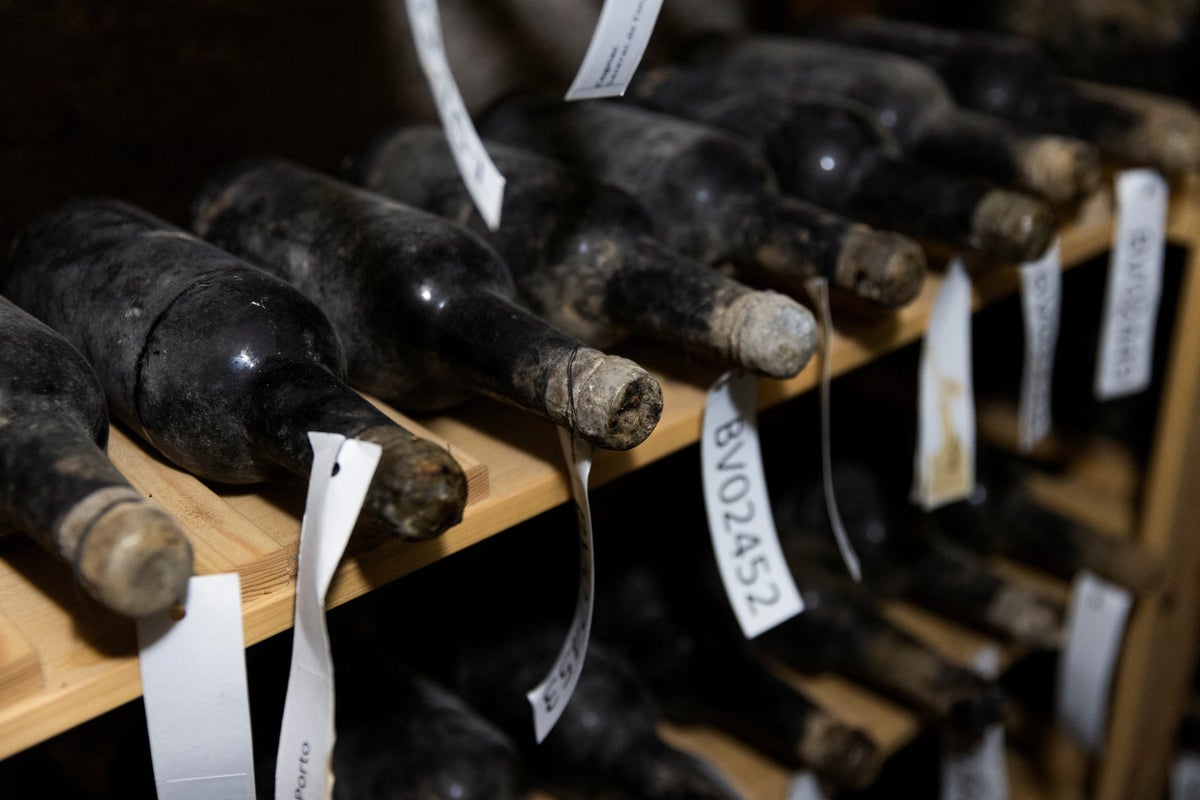
The floorboards of a Renaissance castle do not usually yield to the gentle pressure of a crowbar without a fight. Oak, seasoned by centuries of damp European winters and baked by summers of aristocratic excess, hardens into something resembling iron. When the wood finally cracks open, it releases an odor. It is not just the smell of dry rot or trapped moisture. It is the scent of a forgotten vault, the stagnant breath of a moment in time that someone desperately tried to erase.
A few months ago, a team of restorers stood in the dim light of a castle cellar, watching dust motes dance in the beam of a flashlight. They expected to find structural decay. Instead, they found a void. Beneath the rotting wood lay a meticulously concealed subterranean chamber, a space deliberately scrubbed from the architectural blueprints.
Inside, stacked like cordwood in the dark, were hundreds of bottles of wine and champagne.
This was no ordinary vintage collection left behind by a careless count. The dust on the glass was thick, but the labels remained chillingly legible. They bore the stamps of occupied France, the marks of prestigious vineyards strip-mined by the Third Reich, and the distinct inventory codes of a dark network. This stash belonged to men who believed they were building a empire that would last a millennium. When that dream collapsed in smoke and artillery fire, they hid their liquid gold, closed the floorboards, and vanished into the chaos of a defeated continent.
They left behind a ghost that took decades to speak.
The Anatomy of a Hoard
To understand why someone hides six hundred bottles of high-end French wine beneath a castle floor, you have to understand the economy of collapse.
Imagine it is the spring of 1945. The Red Army is advancing from the east. Allied bombers are turning German transport hubs into craters. The paper currency of the Reich is rapidly becoming worthless, good for little more than starting fires. In a world where the social contract has utterly shattered, what holds value?
Not promises. Not paper. Only objects of absolute, undeniable luxury.
For the high-ranking sympathizers and officers occupying the grand estates of Central Europe, wine was more than a beverage. It was a universal currency. A bottle of 1937 Bordeaux could buy a counterfeit passport. A case of vintage champagne could secure a truck, a cache of gasoline, or the silence of a border guard. It was compact wealth, liquid capital that could be bartered when the world burned.
The individuals who concealed this specific cache were not chaotic looters. The precision of the hideout suggests an eerie level of calculation. The bottles were laid down with the corks kept wet, protected from the vibrations of the surrounding world. They were treating this hidden room as a temporal life raft. They fully intended to return.
But they never did.
The mystery of their absence hangs over the discovery. Did they die in the final, desperate defense of the region? Were they captured and sent to the gulags, their secrets dying with them in the frozen wastes? Or did they slip away through the ratlines to South America, changing their names and forcing themselves to forget the fortune rotting beneath the floor of the castle they once called home?
The Spoil of War
The labels on the bottles tell a parallel story of theft and subjugation. During the occupation of France, the Nazi regime appointed Weinführer—official wine procurement officers—to every major wine-producing region. Men like Louis de Debonair or Otto Klaebisch were not crude thugs; they were sophisticated connoisseurs who knew exactly which cellars held the finest treasures of Champagne, Bordeaux, and Burgundy.
They systematically drained France of its heritage. Millions of bottles were shipped eastward to fuel the parties of the Nazi elite, to stock the private cellars of Adolf Hitler at the Berghof, and to reward loyal collaborators.
Consider the psychological weight of this plunder. To the French winemaker, a bottle of wine is not a factory product. It is a manifestation of terroir—the specific soil, the weather of a single year, the generational sweat of a specific family. Stealing it was an attempt to consume the very identity of the conquered nation.
The stash discovered under the castle floor is a physical manifestation of that grand theft. Walking through the damp cellar today, looking at those rows of glass, one can almost hear the clinking of glasses at dinners where guests toasted to a brutal future. It is a grotesque juxtaposition: the highest peak of human culinary refinement utilized to bankroll and celebrate the lowest depths of human depravity.
The Burden of Discovery
When a discovery like this hits the headlines, the initial reaction is often one of romantic curiosity. We think of treasure hunts, of hidden passages, of the thrilling uncovering of the past. But for the people who actually find these relics, the emotion is far more complicated.
There is a profound discomfort in touching something that was last handled by a war criminal or a collaborator. The glass is cold. The dust smudges your fingers. You realize you are holding the physical evidence of a conspiracy.
It raises questions that historians and curators struggle to answer. Who owns this wine now? Does it belong to the state? Does it belong to the descendants of the castle’s post-war owners? Or should it, by some measure of historical justice, be returned to the vineyards in France where the grapes were pressed by hands that have long since turned to dust?
Selling it feels like profiting from a crime against humanity. Drinking it feels like a bizarre, macabre communion with the perpetrators. Destroying it feels like erasing history.
So, the bottles sit in a limbo of our own making, transitioned from a secret stash to a museum problem.
The Silence of the Stones
History is not just found in textbooks or monuments. It is trapped in the fabric of the places we inhabit. We walk across old floors, completely unaware of the secrets suspended just inches beneath our feet.
The castle where the wine was found had been used for decades after the war. It held events, welcomed tourists, and housed families. Children played in the rooms above. People argued, fell in love, and lived their mundane, peaceful lives, entirely oblivious to the fact that a massive symbol of wartime corruption was resting in the dark below them.
That is the true power of this discovery. It disrupts the comfortable distance we keep from the past. It reminds us that the eras we think of as dead and buried are actually just waiting to be uncovered by a routine renovation or a shifting floorboard.
The men who hid that wine thought they could outsmart time. They believed they could bury their complicity and their wealth, waiting for a day when it would be safe to dig it up. They were wrong. Time always wins, and the earth eventually rejects what we try to hide within it.
The flashlight beam moves across the final row of bottles. The restorers begin the slow, methodical process of cataloging each piece of evidence. The air in the cellar is clearing now, the old, trapped breath of the mid-twentieth century fading as it mixes with the wind of the present day. The secret is out. The liquid ghosts have been dragged into the light, leaving nothing behind but an empty hole under the floor and the chilling realization of how close the dark past always is.