The clock on the kitchen wall ticks with an aggressive, rhythmic indifference. It is two in the morning. Thomas sits at the edge of his bed, staring at a blank document on his laptop screen, the cursor blinking like a tiny, mocking eye. Inside his skull, forty different radio stations are playing at maximum volume simultaneously. A memory from five years ago clashes with a song he heard ten minutes ago, which bleeds directly into an anxious calculation about a tax form due next week.
He wants to write a sentence. Just one. Instead, he has spent three hours organizing his desk drawers by color, rearranging his desktop icons, and researching the mating habits of deep-sea squid.
Exhaustion is a heavy wool blanket soaked in ice water.
Across the Atlantic Ocean, a quiet bureaucratic milestone has just been crossed. The United States Food and Drug Administration has given the green light to a brand-new medication designed to quiet this exact internal storm, adding yet another tool to an American pharmacotherapy cabinet that already boasts a diverse array of options for attention deficit hyperactivity disorder. A new molecule. A fresh chemical key designed to fit the jagged locks of distracted neurochemistry.
Thomas does not live in America. Thomas lives in France.
And in Paris, Lyon, and Marseille, medical specialists are looking at the news from overseas not with excitement, but with a familiar, crushing weight in their chests. They are shaking their heads. They know the truth of the pharmacy shelves. They know that while the world marches forward, the French medical landscape remains frozen behind a moat of administrative inertia, regulatory red tape, and a heartbreakingly narrow selection of molecules.
To understand what it feels like to navigate adult neurodivergence in France, you have to understand the sheer loneliness of the waiting room.
Imagine standing in front of a vast, elaborate lockbox containing fifty different keys, each shaped to fit a slightly different variation of a complex mechanism. Now imagine being handed a ring that holds only two keys. If neither of them turns the tumbler, you are told to force it, or worse, that the lock does not actually exist.
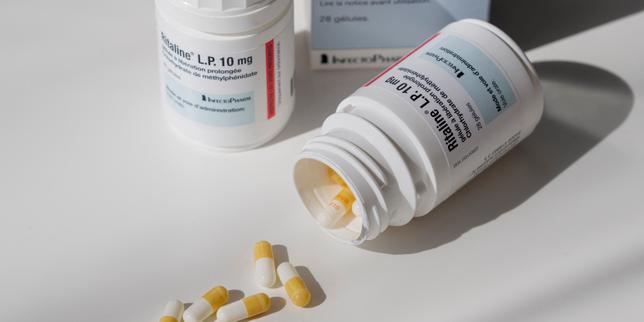
That is the French therapeutic reality for ADHD. While countries like the United States, Canada, and several European neighbors utilize a rich palette of pharmacological interventions—varying release mechanisms, distinct chemical classes, tailored dosages that account for the wild biochemical diversity of human brains—France remains remarkably restricted. The approved options are painfully few. Methylphenidate is essentially the undisputed monarch of the French market, available in a couple of formulations, while alternatives like atomoxetine or lisdexamfetamine are either vanishingly difficult to access, heavily restricted, or entirely absent from standard clinical practice.
The medical establishment in France has long maintained a cautious, sometimes overtly skeptical posture toward the condition, particularly when it presents in adults. For decades, the prevailing psychoanalytic currents viewed behavioral and attentional struggles through a lens of childhood trauma, parenting styles, or emotional distress. Even as modern neuroscience shattered those archaic assumptions, proving beyond a shadow of a doubt that ADHD is a deeply rooted neurodevelopmental divergence characterized by dysregulated dopamine and norepinephrine pathways, the bureaucratic structures lagged behind.
They moved at the speed of glaciers while human lives moved at the speed of broadband.
When a specialist in Paris prescribes medication, they are playing a high-stakes game of trial and error with a severely limited deck. If the primary treatment causes intolerable side effects—heart palpitations, severe anxiety, crushing appetite suppression, or emotional flattening—the physician faces a grim reality. There is almost nowhere else to go.
It is a profound medical paradox. We possess the scientific understanding to diagnose the condition with nuance, recognizing that no two brains process stimuli in the exact same way. Yet, we treat the chemical intervention with a blunt, one-size-fits-all rigidity.
Consider the ripple effects of this scarcity.
A university student fails out of engineering school not because he lacks brilliance, but because his working memory resembles a sieve, and the only available medication turns his hands cold and spikes his blood pressure into the danger zone. A mother loses her job because her executive dysfunction makes project management an insurmountable mountain, and the singular drug option available to her leaves her feeling like a ghost trapped inside her own skin.
They are not failing because they are weak. They are failing because the system refuses to acknowledge the biological reality of their needs.
When American regulators approve a new molecule, it is not merely a corporate milestone or a pharmaceutical victory. It represents a new architectural design for human potential. It means a teenager might finally be able to sit through a math test without feeling like their skin is made of static electricity. It means an artist might organize their creative chaos long enough to pay their rent.
When French specialists sound the alarm, they are screaming into a cultural wind that still whispers old stigmas. They are saying: We are falling behind. Our patients are suffering needlessly. The rest of the world has recognized that neurodiversity requires a diverse pharmacy, and we are still handing out aspirin for a broken leg.
The air in Thomas's apartment grows cooler as the night bleeds into dawn. The cursor on his screen still blinks.
He closes the laptop without writing a word. He turns off the kitchen light, climbs back into bed, and stares at the ceiling, listening to the hum of the refrigerator. Somewhere out there, across the sea, a molecule exists that might quiet the noise, that might help him catch a single, unbroken thread of thought. But the ocean is wide, the borders are bureaucratic, and the pharmacy shelves down the street remain stubbornly, heartbreakingly bare.