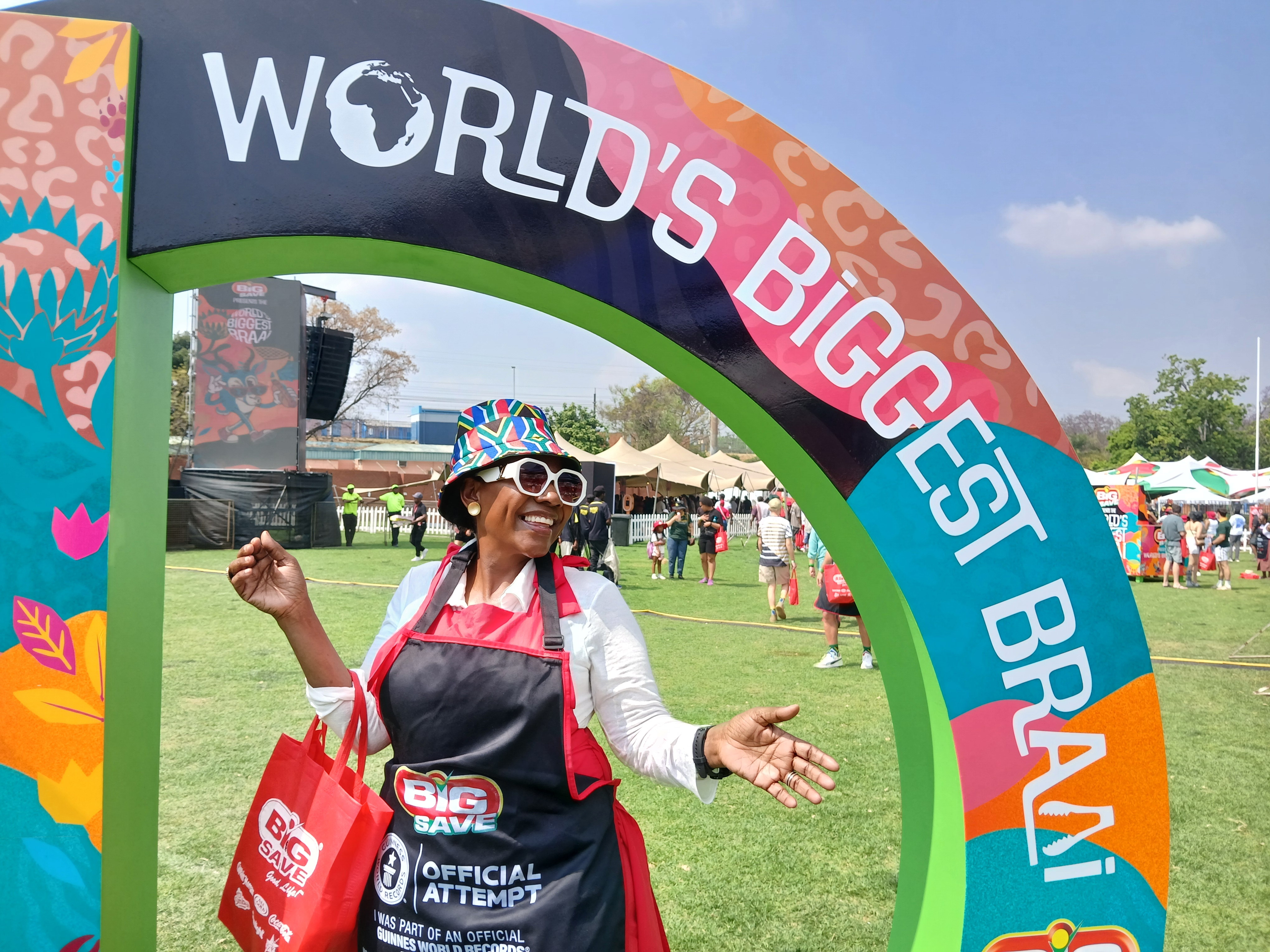
When thousands of individuals congregate around a single continuous fire line to pursue a collective numerical milestone, the operation ceases to be a social gathering and transforms into a complex exercise in industrial engineering. Mass culinary events, such as large-scale South African braai attempts, expose the severe friction points between cultural tradition and operational physics. Preparing thousands of kilograms of meat simultaneously over open coals requires a rigorous matrix of thermal management, supply chain synchronization, and crowd control protocols that standard event planning methodologies fail to address.
The Thermal Economics of Mass Grilling
The primary constraint in any large-scale cooking operation is not human appetite, but thermal energy distribution. A standard domestic grill relies on localized convection and radiation. When scaled to thousands of linear meters, the thermodynamics shift dramatically.
The heat output equation depends on three primary variables:
- Fuel density (kilograms of wood or charcoal per square meter)
- Oxygen influx rate (ventilation geometry)
- Thermal mass retention (refractory materials or metal gauge thickness)
When thousands of participants ignite fires concurrently, local atmospheric conditions shift. Ambient temperature spikes directly above the cooking zone, creating localized updrafts that draw in cold air from the periphery. This creates an erratic oxygen supply, resulting in uneven combustion. Operators must account for BTU variance across different sections of the cooking line. Without pre-calculated fuel distribution models, portions of the food array risk undercooking due to starved combustion zones, while adjacent zones experience thermal runaway, charring the exterior before the internal temperature reaches safe pasteurization thresholds.
The energy input required to cook meat for thousands of people demands a calculated supply chain for charcoal or wood. A single ton of hardwood produces a finite amount of usable thermal energy over a three-hour window. Multiplying this across a massive site requires synchronized staging areas where fuel is distributed at precise temporal intervals to prevent premature burnout before the protein even reaches the grill surface.
Supply Chain Integrity Under Field Conditions
Perishable inventory management represents the highest financial and operational risk in mass record attempts. Raw meat cannot sit at ambient temperatures in open-air environments without breaching food safety standards. The cold chain must remain unbroken from the abattoir to the exact moment of thermal transfer onto the grill.
The supply chain cost function is dictated by three vectors:
- Perishability windows (time-to-spoilage curves under ambient heat)
- Transport velocity (fleet turnaround times from staging warehouses to individual cooking stations)
- Inventory variance (accounting for waste, drop rates, and thermal shrinkage)
When handling tens of thousands of individual portions, tracking meat inventory using manual tallies introduces fatal error rates. Organizers must implement serialized batch tracking, ensuring that every crate of protein is logged, temperature-verified, and assigned to a specific cooking quadrant. If a delivery truck experiences a delay in traffic, the entire downstream cooking schedule collapses, leaving hundreds of meters of active fire pits starved of raw materials while burning through expensive fuel.
Meat undergoes a moisture loss of fifteen to twenty-five percent during cooking due to rendering fats and evaporating water. In a record-breaking context, this shrinkage introduces a significant accounting problem. Weighing the raw input does not equal the final product weight. Official adjudication bodies require strict verification methods that account for this mass reduction, demanding pre-cook and post-cook audit trails that separate water weight loss from actual consumable yield.
Crowd Engineering and Spatial Flow
Managing thousands of participants introduces severe pedestrian traffic bottlenecks. When public enthusiasm intersects with open flames, heavy sharp implements, and hot grease, safety protocols must supersede festival atmosphere dynamics.
The spatial layout of a massive culinary event operates on a hub-and-spoke distribution model. Centralized supply depots feed linear cooking lanes, which radiate outward from administrative checkpoints. If the lanes are too narrow, congestion occurs, increasing the risk of thermal burns and logistical gridlock. If the lanes are too wide, supervision becomes impossible, leading to compromised food safety standards and unregulated cooking practices.
Crowd density limits must be calculated using square meter occupancy rates per person. In active cooking zones, each participant requires a minimum operational envelope to maneuver tongs, manage ash, and interact with neighboring participants without causing kinetic interference.
Emergency egress routes must remain entirely clear of fuel staging zones and smoke plumes. Wind direction dictates smoke dispersion patterns. If a sudden gust forces dense wood smoke across an evacuation corridor, visibility drops to near zero, creating panic risks among dense crowds. Event architects use real-time meteorological data to predict wind shear and adjust barrier placements before the event commences, rather than reacting to shifting weather mid-operation.
Cultural Capital and Economic Externalities
While public discourse frames these record-breaking gatherings as celebrations of national identity and social cohesion, the underlying mechanics rely on calculated economic exchanges. Shared culinary rituals serve as potent vehicles for brand equity, municipal tourism marketing, and corporate sponsorship alignment.
The cultural value of the braai lies in its decentralized, egalitarian nature. However, scaling this tradition into a centralized, regulated Guinness World Record attempt requires formal hierarchy. Guinness regulations demand strict evidentiary standards, including independent witness verification, video surveillance of every cooking station, and certified scale measurements. This formalization strips away some of the organic spontaneity of the traditional practice, replacing it with bureaucratic compliance.
From an economic standpoint, the return on investment for corporate sponsors is measured in media impressions and foot traffic generation. The cost per impression drops significantly when a brand aligns itself with a culturally resonant mass event. Yet, the reputational risk is equally high. If the event suffers from logistical failures—such as running out of food, long queues, or sanitation breakdowns—the negative sentiment transfers directly to the sponsoring entities.
Municipalities absorb substantial infrastructure costs for policing, waste management, and traffic redirection. The financial justification rests on the multiplier effect of tourism spending. Out-of-town visitors book accommodations, patronize local commerce, and generate taxable economic activity that outpaces the municipal outlay for event support.
Risk Mitigation and Operational Failure Modes
Every large-scale public project contains predictable failure vectors. Recognizing these failure points before execution separates professional event orchestration from amateur disorganization.
- Thermal exhaustion of volunteers: Participants attempting to maintain fires for hours under direct sunlight face heatstroke and dehydration. Rotational shift scheduling is mandatory to maintain operational safety.
- Waste accumulation vectors: Thousands of participants generate massive quantities of packaging, ash, and food waste. Without pre-positioned industrial compactors and rapid-clearance teams, sanitation systems collapse within the first two hours.
- Regulatory non-compliance: Failing to secure environmental health permits or fire department clearances can result in immediate shutdown by authorities, rendering months of logistical planning void.
To eliminate these vulnerabilities, operations teams run stress-tested simulations prior to the live event. Every variable—from the burn rate of local acacia wood to the average time required to flip a standard cut of meat—is timed, recorded, and optimized.
Strategic Execution Playbook
To execute a mass culinary gathering without operational degradation, deploy a phased command structure. Establish an independent logistics command separate from the marketing and public relations teams. Implement digital inventory tracking for all perishables down to the batch level. Mandate a three-to-one ratio of volunteer backup personnel to active grill operators to absorb fatigue attrition. Deploy continuous thermal monitoring arrays along the entire cooking line to provide real-time alerts on fuel decay or localized hot spots. Treat the entire exercise as an industrial supply chain deployment disguised as a cultural festival.