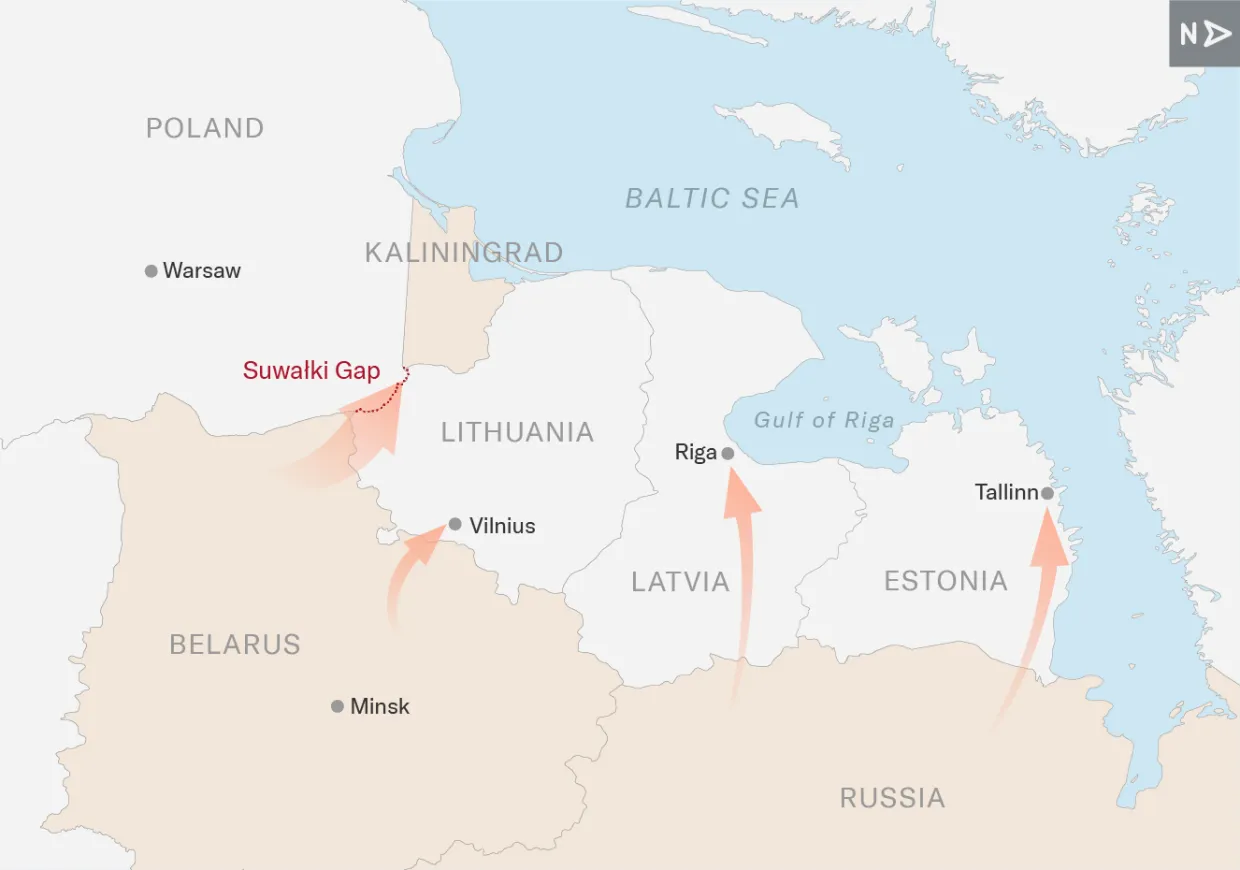
The wind off the Belarusian plain carries a specific kind of cold. It is an old cold, flat and unyielding, smelling of damp concrete and ancient pine. On the tarmac of Minsk National Airport, a solitary aircraft sits with its engines ticking into silence. A door opens. Metal stairs unfold against the gray belly of the sky.
A man steps down.
His name is Coale. He is an envoy, though titles feel thin and fragile in an environment carved by decades of frozen suspicion. He is carrying a leather briefcase that holds no weapons, no gold, and no treaties of grand alliance. It holds something far heavier. It holds names. Dates of birth. Prison numbers scribbled on marginalia. The quiet, desperate prayers of families sitting three thousand miles away in suburban kitchens, staring at silent landlines.
We rarely think about the geography of a cage. We picture iron bars and damp stone, but political imprisonment is built of something much harder to touch: time. It is measured in skipped birthdays, unlit candles, and the terrifying elasticity of silence. When a government locks away an American or a foreign national in the deep forests of Eastern Europe, they are not merely detaining an individual. They are holding a hostage of statecraft, a human pawn moved across a board where the squares are painted in blood and economic sanctions.
To understand why Coale's boots are crunching on the frost of Minsk right now, you have to look past the cable news chyrons. You have to look at the anatomy of modern quiet war.
Consider a hypothetical household in Dayton, Ohio. Let us call her Sarah. Her husband left for a routine consulting trip six hundred days ago and simply vanished into the bureaucratic black hole of a foreign penal system. Every morning, Sarah wakes up at 5:00 AM. She does not turn on the news because the news only offers noise, and noise is a cruel substitute for a voice. She watches her phone. She keeps it charged to one hundred percent, resting face-up on the kitchen counter like a sleeping bird waiting to startle. That phone is the tether. Coale is the man walking down the other end of that invisible thread.
Diplomacy at this level is rarely a matter of grand banquet tables and champagne toasts. It is a slow, grinding war of attrition conducted in windowless rooms where the air conditioning hums at a low, maddening frequency.
The state apparatus of Belarus operates with a heavy, visible inertia. Under the long shadow of President Alexander Lukashenko’s administration, the penal system is not merely a place of correction; it is an instrument of political posture. When Western sanctions tighten like a tourniquet, Minsk looks for pressure points. Foreign nationals—journalists, travelers, dual citizens, corporate consultants—become those pressure points. They are caught in the crossfire of geopolitical friction, turned into currency in an economy governed by isolation.
Enter the envoy.
Coale represents a specific, highly pressurized strain of American foreign policy. Not the bombastic theater of televised summits, but the backroom mechanics of human extraction. This is a quiet craft. It requires the patience of a stone and the stomach of a gambler. You sit across from men who do not blink. You offer concessions that cannot be printed in the morning papers. You trade abstract political breathing room for flesh and bone.
The mechanics of a prisoner release are notoriously counterintuitive. To the uninitiated, it looks like capitulation. Why bargain with a regime that violates human rights? Why offer a seat at the table to an administration standing under international censure?
The answer lies in the human cost of ideological purity.
If you refuse to negotiate, the cell door stays shut. If you refuse to speak, the calendar turns another year, and another winter settles into the joints of an innocent person wasting away in solitary confinement. Statecraft requires a cold calculus, yes, but real diplomacy demands the radical mercy of getting your hands dirty in the mud of authoritarian reality. Coale did not fly to Minsk because he admires the regime. He flew there because a human being cannot survive another year in the dark.
The talks themselves are excruciatingly procedural. They begin with posture. Coffee is poured into small porcelain cups that are never quite warm enough. Translators sit between the delegations, their faces neutral as stone, translating insults disguised as diplomatic protocol into polite, bureaucratic English. Hours bleed into days. Every sentence is weighed for hidden traps. Does a concession on a trade restriction imply validation of a crackdown? Does a refusal to compromise on an asset freeze mean a father will spend another Christmas eating gray soup off a tin tray?
This is the burden Coale carries in that leather briefcase.
It is worth examining the machinery of these exchanges. When a state detains a foreign citizen, it creates a synthetic crisis—a human hostage converted into diplomatic currency. The calculus of release is brutal. Governments do not bargain out of sudden charity; they bargain because the cost of holding exceeds the value of the pressure point.
Let us trace the invisible web of consequences that surrounds these negotiations. When an envoy secures the release of a prisoner, the transaction ripples outward across the globe. It signals to other hostile capitals that channels remain open, that backchannels are not entirely burned. But it also creates a dangerous moral hazard. Critics argue—and with a valid, biting logic—that every successful swap invites the taking of the next hostage. It is a cycle as old as nation-states: capture, trade, ransom, repeat.
Yet, standing in the freezing drizzle of Minsk, abstract theories of political science evaporate. Theory does not keep a man from going blind in a cell where the light bulb burns twenty-four hours a day. Theory does not warm the hands of a wife waiting in Ohio.
When we talk about international relations, we often use the language of machinery. We talk about alliances, deterrents, spheres of influence, and economic corridors. We treat countries as monolithic blocks sliding across a map. But history is made of individuals. It is made of the specific, agonizing weight of a single second ticking by in a room where nobody speaks your language.
Coale knows this. Every envoy who walks into these lion's dens knows the asymmetry of the trade. They are trading the clean conscience of moral standing for the messy, vital salvation of a living soul.
As the talks progress behind closed doors in the heart of Minsk, far away from the cameras and the frantic typing of geopolitical analysts, the quiet work of rescue continues. It is unglamorous. It is exhausting. It is often frustratingly slow.
Consider what happens when the breakthrough finally arrives. It rarely comes with a dramatic flourish or a signed proclamation flashed across the screens of the world. It usually happens in the middle of the night. A quiet knock on a heavy oak door. A code word whispered in a hallway. A car ride to an airfield where a propeller plane waits with its door unlatched.
The journey home is long. The air inside the cabin smells of stale coffee and old upholstery, but to the person stepping aboard, it smells like ozone and resurrection. They look out the small, scratched window as the runway lights of Minsk recede into the black velvet of the Eastern European night. They touch their own hands, marveling at the simple reality of skin and bone that can move without permission.
Back in Ohio, or wherever a kitchen light has burned through the dark hours of years, the phone finally rings.
Not a text. Not an email. A voice.
The screen stops glowing with the cold light of waiting. It becomes a bridge. And somewhere over the Atlantic, moving westward against the spin of the earth, an envoy closes an empty leather briefcase, watching the stars turn slowly over the dark curve of the world, knowing that for today at least, the machinery of statecraft managed to save a life.