The studio lights in Tel Aviv are bright enough to bleach the shadows out of a man’s face, yet somehow, every politician sitting beneath them manages to look haunted by a ghost.
Watch them on a Tuesday night. A former general leans forward, his knuckles white against the polished veneer of a news desk, promising fire. Across from him, a coalition minister—a man whose tailored suit has never known the dust of a checkpoint—interrupts to promise something worse. They are not debating tax policy. They are not arguing over the price of cottage cheese in Haifa or the failing infrastructure of suburban rail lines. They are locked in a high-stakes auction where the currency is human endurance, and the winning bid goes to whoever sounds the most merciless.
Election season has arrived in Israel. And as it always does, the campaign trail runs straight through the living rooms of Palestinians who cannot cast a single ballot.
To understand the madness of this ritual, you have to step away from the television screens and listen to the hum of a refrigerator in Ramallah at three in the morning. That hum is the sound of holding your breath. When Israeli politicians vie to look the toughest before an election, the headlines treat it like a horse race—a tactical shift to the right, a strategic play for swing voters, a calculated mobilization of the base. Dry ink on cold paper.
It is never just ink.
The Architecture of the Audition
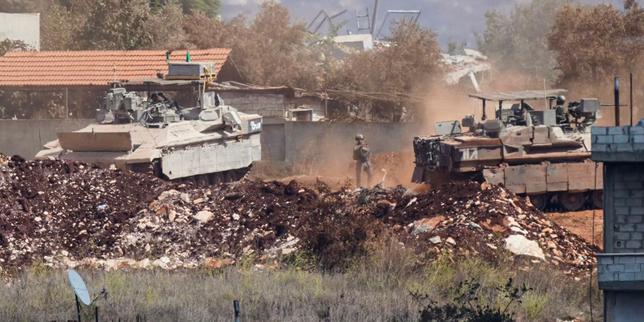
Imagine a stage play where the actors are auditioning for the role of the strongest protector, except the props are armored bulldozers and the extras are real families trying to get to a hospital before a curfew drops.
This is not a metaphor for what happens; it is the literal mechanic of pre-election politics in the region. Historically, whenever the Israeli Knesset fractures and the country marches toward another round of voting—a cycle that has repeated with exhausting frequency over the past decade—the political center of gravity lurches violently toward security hawkishness. According to long-standing polling patterns tracked by institutions like the Israel Democracy Institute, security anxieties consistently override economic grievances the moment campaign ads begin airing.
Politicians know the math. Empathy does not win a parliamentary majority. Nuance does not survive a thirty-second clip on the evening news.
So, the bidding war begins. One candidate vows to expand settlement construction in the West Bank before the ink on the election decree is even dry. Another demands harsher military rules of engagement in Gaza or Jenin, framing basic restraint as a fatal weakness. A third threatens to withhold tax revenues collected on behalf of the Palestinian Authority—money that pays the salaries of nurses, garbage collectors, and schoolteachers—simply to prove he will not be pushed around.
Each declaration is a performance aimed at a domestic audience. Yet the blast radius of every soundbite lands miles away, in places where the voters do not live.
Two Kitchen Tables, Forty Miles Apart
Let us make this real. Consider two hypothetical people—invented to stand in for millions of real lives, though every detail of their days is drawn from the documented reality on the ground.
First, meet Tariq. Tariq is forty-two, a civil engineer in Nablus who spends his evenings helping his daughter memorize multiplication tables by the glow of a battery-powered lamp whenever the grid falters. Tariq does not watch Israeli campaign debates for entertainment. He watches them the way a farmer watches storm clouds gathering over a ridge.
When an Israeli cabinet minister announces on Monday that security forces will "take off the gloves" ahead of the upcoming vote, Tariq knows what Tuesday looks like. It means the flying checkpoint at the Huwara junction will stay closed for six hours instead of two. It means the asphalt contracts his firm bid on will freeze because international donors are spooked by the sudden spike in rhetoric. It means his daughter will ask him, quietly, why the helicopters are flying lower tonight than they did last week.
Now, drive forty miles west to a kitchen in Ashkelon, where Miriam is packing school lunches. Miriam is fifty-five, a bookkeeper who has spent two decades voting for whoever promises to keep the sirens silent. She is tired. She is scared of rockets, scared of stabbings on crowded buses, and deeply skeptical of promises that sound too gentle. When she sees a candidate pounding the podium, swearing that only an iron fist will bring quiet to her street, she does not hear cruelty. She hears a life preserver being thrown into choppy water.
Here is the tragedy that political pundits consistently miss: Miriam and Tariq are trapped in the exact same machine.
Miriam’s fear feeds the politician’s rhetoric. The politician’s rhetoric dictates the military orders on the ground. The military orders on the ground tighten the vise on Tariq’s life, breeding despair and fury in his neighborhood. That fury eventually erupts, sending Miriam back into her reinforced safe room, terrified all over again, ready to vote for an even louder man in the next election.
It is a closed loop. A perpetual motion engine fueled by adrenaline and grief.
The Currency of Toughness
Why does this pattern hold so stubbornly, even when data shows that performative toughness rarely produces long-term calm?
Think of it like an over-prescribed antibiotic. In the short term, a massive dose suppresses the visible symptoms, giving the patient the illusion of a cure. Over time, however, the underlying infection adapts, grows resistant, and returns stronger than before, leaving the doctor with fewer options and a sicker patient.
In Israeli election cycles, "deterrence" has become that antibiotic. Over the past twenty years, successive campaigns have turned military escalation and punitive administrative measures into standard campaign promises. Whether it is the rapid approval of thousands of new housing units in contested territory, the revocation of work permits that tens of thousands of Palestinian families rely on to buy bread, or high-profile raids timed suspiciously close to party primaries, the message is always the same: Look at how strong I am. Look at what I am willing to do.
I remember walking through the Old City of Hebron during a previous campaign season, listening to shopkeepers talk about the sudden appearance of new concrete barriers blocking an alleyway that had been open for months. Nothing had happened in that alley that week. No incident. No warning. Just a sudden tightening of the screws.
"They have an election coming," an older merchant told me, gesturing toward the welded steel with his chin, his voice entirely devoid of surprise. He didn't sound angry. He sounded like someone explaining the changing of the seasons. "Every time they want votes, they close another door on us."
That resignation is the invisible casualty that never shows up in polling aggregates. When human beings realize that their freedom of movement, their economic survival, and their physical safety are merely bargaining chips in someone else’s domestic popularity contest, something quiet breaks inside the social fabric. Diplomacy stops looking like a bridge and starts looking like a trap.
What the Pundits Refuse to Admit
If you ask the campaign strategists in Jerusalem why they push their candidates toward maximalist rhetoric, they will tell you it is simply survival. To sound moderate in a polarized electorate is political suicide. They will point to focus groups, to rival parties nipping at their heels from the far right, to the unforgiving math of coalition building where a single radical faction can topple a government overnight.
And to be honest, it is easy to sit thousands of miles away and judge a frightened electorate. Fear is a visceral, blinding emotion. If you have ever had thirty seconds to herd your children into a concrete stairwell while an air-raid siren wails outside, you do not want a philosopher on the television screen. You want a bodyguard.
That admission matters. Ignoring the genuine terror felt by ordinary Israelis makes it impossible to understand why the strongman routine works every single time.
Yet acknowledging the fear does not excuse the cynical exploitation of it. There is a vast difference between protecting citizens and using vulnerable populations as a live-fire proving ground to boost approval ratings by three percentage points.
Consider what happens when rhetoric becomes policy:
- Economic strangulation becomes a talking point. When politicians boast about freezing Palestinian clearance revenues—funds guaranteed under the Paris Protocol—they rarely mention that those missing millions translate directly into medicine shortages in West Bank clinics and unpaid municipal workers.
- Land becomes a campaign poster. Fast-tracking settlement expansions right before an election isn't about housing shortages; it is about creating irreversible facts on the ground to win over ideological kingmakers before ballot boxes open.
- De-escalation becomes taboo. Any leader who suggests talking, easing permit restrictions, or strengthening moderate institutions is immediately branded a traitor or a weakling by opponents eager to score cheap points on evening talk shows.
Once those promises are made under the glare of campaign lights, they cannot easily be walked back after the ballots are counted. The newly elected government finds itself chained to its own bravado. To govern sensibly would mean admitting the campaign slogans were a lie—and no politician survives admitting that.
Beyond the Broadcast
Step outside the studio again. Walk past the campaign posters plastered onto concrete walls in West Jerusalem, peeling at the corners in the autumn wind. Keep walking east, past the checkpoints, past the olive groves dusted gray with road grit, until the radio stations shift from Hebrew talk shows to Arabic news broadcasts covering the exact same speeches with a chillingly different translation.
In both languages, the word "security" is repeated like a prayer.
One side hears it as a promise that tomorrow will be safe. The other hears it as a warning that tomorrow will hurt.
The cameras in Tel Aviv will eventually power down. The ballots will be dropped into blue cardboard boxes, counted through the night, and tallied into neat parliamentary seats. Some men in tailored suits will pop champagne; others will blame their advisors and begin plotting their comeback.
Four days after the election, in a quiet apartment in Nablus, Tariq will wake up at five in the morning, brew strong cardamom coffee in the dark, and check his phone to see if the road to work is open today.