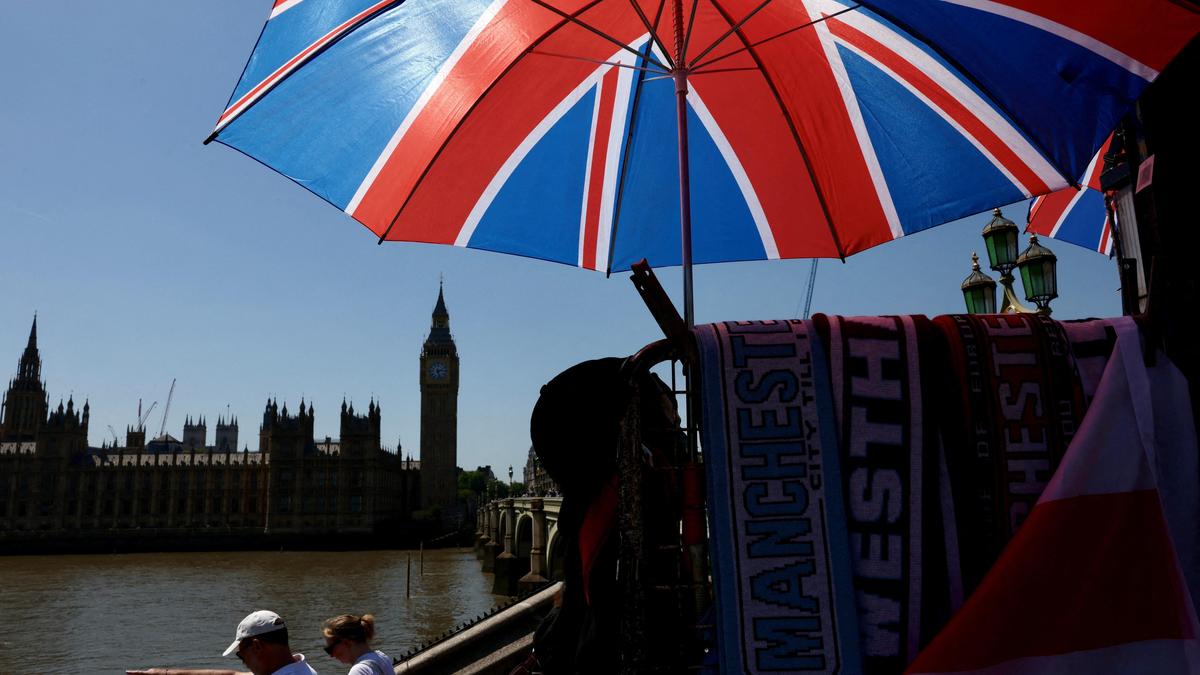
Anomalous meteorological events are routinely mischaracterized as isolated ecological crises. When an exceptionally early heatwave shatters historical baselines across the European continent, public discourse gravitates toward immediate casualties and localized infrastructure strain. This superficial analysis obscures a more volatile reality: early-season thermal anomalies function as systemic risk multipliers. They disrupt labor productivity, accelerate grid depreciation, and permanently alter hydrological cycles before mitigation frameworks can deploy.
Understanding the full scope of an unseasonal heatwave requires moving past sensational headline metrics and instead evaluating the phenomenon through a structured, multi-tier failure matrix.
The Compounding Physics of Early-Season Thermal Stress
The timing of a thermal anomaly dictates its net destructive capacity. A $40^\circ\text{C}$ threshold breached in July occurs within an environment already adapted to high baseline temperatures. The same threshold breached in late spring or early summer triggers a cascade of acute failures due to three distinct physical and behavioral mechanisms.
1. The Ecological Lack of Phenological Adaptation
During early spring and summer transitions, flora and regional hydrology remain in high-moisture, rapid-growth phases. Sudden extreme heat induces rapid evapotranspiration, stripping topsoil moisture and forcing vegetation into premature dormancy or cellular death. This rapid desiccation creates an immediate, highly combustible fuel bed, shifting the wildfire season forward by months and compressing the window for controlled land management.
2. Physical Infrastructure Thermal Expansion Delays
Civil engineering standards rely on historical seasonal ramps. Railway lines, bridge expansion joints, and high-voltage transmission cables are maintained under the assumption of gradual thermal adjustment. Sudden, non-linear temperature spikes cause rapid material expansion before structural adjustments or cooling protocols can be executed, leading to mechanical buckling and localized grid failures.
3. Biological Lack of Acclimatization
Human physiology requires roughly 7 to 14 days of exposure to elevated temperatures to trigger homeostatic adaptations, such as increased plasma volume and elevated sweat rates. When extreme heat arrives without a transitional buffer, the biological threshold for heat exhaustion and heatstroke drops drastically. The resulting mortality spikes are not merely a function of absolute temperature, but of the rate of change over time.
The Three Pillars of Thermal Infrastructure Strain
An accurate assessment of a heatwave's economic and societal cost requires analyzing the systemic load placed on interconnected infrastructure. This load can be disconstructed into three primary pressure points.
                              [Thermal Anomaly]
                                      │
         ┌────────────────────────────┼────────────────────────────┐
         ▼                            ▼                            ▼
[The Baseload Paradox]      [The Efficiency Decay]     [The Mechanical Burden]
  - Peak cooling demand       - Transformer degradation  - Thermal expansion buckling
  - Dropping hydro capacity   - Transmission line sag    - Cooling fluid depletion
The Baseload Paradox
Extreme heat simultaneously drives energy demand to annual peaks while systematically degrading generation capacity. Air conditioning utilization forces a vertical spike in electricity consumption. Concurrently, thermal power plants (nuclear, coal, and gas) face strict operational limits. Because these facilities rely on ambient river water or specialized cooling towers to condense steam, elevated water temperatures drastically reduce thermodynamic efficiency. If river temperatures breach regulatory ecological thresholds, plants must legally curtail output or shut down entirely, starving the grid exactly when demand peaks.
Transmission and Distribution Efficiency Decay
The physical laws governing electrical grids dictate that as ambient temperature rises, the electrical resistance of aluminum and copper conductors increases. This creates a feedback loop of structural degradation:
- High ambient temperatures increase line resistance.
- Increased resistance converts a higher percentage of moving electricity into waste heat.
- This internal heat causes transmission lines to expand and sag, risking ground-fault shorts with underlying vegetation.
- To prevent catastrophic failure, grid operators must artificially throttle transmission capacity, restricting the movement of power from rural generation zones to high-demand urban centers.
Hydrological Compounding and Supply Chain Contraction
Early heatwaves deplete mountain snowpacks prematurely, altering the downstream water volume for the entire calendar year. The immediate macroeconomic casualty is inland maritime logistics. When major European river arteries drop below critical draft thresholds early in the season, commercial barges are forced to reduce cargo loads by 50% or more to avoid grounding. This slows the transport of industrial raw materials, petrochemicals, and coal, fracturing supply chains long before winter energy reserves can be replenished.
The Economic Cost Function of Extreme Heat
To quantify the systemic damage of these anomalies, economists and risk strategists utilize a specialized cost function. The total financial liability ($C_{total}$) of an unseasonal thermal event is expressed as a function of direct labor degradation, infrastructure asset depreciation, and agricultural capital destruction.
$$C_{total} = f(L_d + I_m + A_k)$$
Where:
- $L_d$ represents the total loss in labor productivity across non-climate-controlled sectors.
- $I_m$ represents accelerated infrastructure maintenance and emergency grid stabilization costs.
- $A_k$ represents immediate agricultural yield write-downs due to localized crop desiccation.
Labor Productivity Degradation ($L_d$)
The impact on labor is heavily concentrated in outdoor and heavy-industrial environments, such as construction, agriculture, logistics, and manufacturing. When wet-bulb temperatures reach critical thresholds, human cognitive and physical capacity drops non-linearly. The loss manifests as mandatory operational slowdowns, increased workplace injury frequency, and extended rest cycles required to prevent systemic organ failure across the workforce.
Accelerated Asset Depreciation ($I_m$)
Substation transformers are engineered to cool down during nocturnal hours. During an intense heatwave, elevated nighttime temperatures prevent these assets from dissipating trapped internal heat. Running transformers continuously at peak thermal capacity accelerates the degradation of internal insulating paper, condensing decades of planned equipment lifespan into a matter of days and demanding capital expenditure allocations for premature replacement.
Structural Deficiencies in Contemporary Mitigation Frameworks
Current municipal and corporate emergency playbooks are fundamentally reactive. They treat extreme heat as an acute, short-term natural disaster rather than a permanent structural shift in environmental baselines.
The primary operational bottleneck is the reliance on historical weather averages to dictate emergency resource allocation. Budgetary frameworks for water distribution, public cooling centers, and emergency medical staffing are typically backloaded into late summer. When an anomaly manifests in early season, bureaucratic inertia delays the re-allocation of capital, leaving vulnerable demographics and critical supply chains exposed without a prepared safety net.
Furthermore, urban architecture actively intensifies the crisis via the urban heat island effect. Dark asphalt surfaces, concrete structures, and a lack of dense canopy cover absorb shortwave solar radiation during the day and re-radiate it as longwave thermal energy at night. This architectural reality ensures that urban centers maintain a thermal baseline up to $10^\circ\text{C}$ higher than surrounding rural zones, rendering standard regional meteorological warnings dangerously inadequate for city administrators.
The Strategic Imperative for Capital Realignment
Managing the escalating risk of early-season thermal anomalies requires public and private entities to abandon reactive emergency management in favor of structural, preventive resilience.
Organizations must immediately integrate dynamic thermal stress modeling into their long-term capital allocation strategies. For asset managers and industrial operators, this means decoupling risk assessments from historical baselines and stress-testing infrastructure against sustained, early-season temperature extremes. Industrial cooling systems, grid connections, and supply chain dependencies must be re-engineered to operate at peak efficiency under a broader thermal envelope.
On the municipal level, urban design must pivot from thermal absorption to thermal mitigation. This demands immediate investments in high-albedo cool pavements, widespread retrofitting of green roofs, and the aggressive expansion of urban forestry to interrupt the urban heat island feedback loop. Simultaneously, labor policies must shift to flexible, climate-adjusted scheduling, legalizing early-morning or split-shift frameworks for outdoor workers to preserve human capital without sacrificing industrial output. Capital deployed proactively to adapt assets today is the only mechanism available to prevent catastrophic structural devaluations tomorrow.