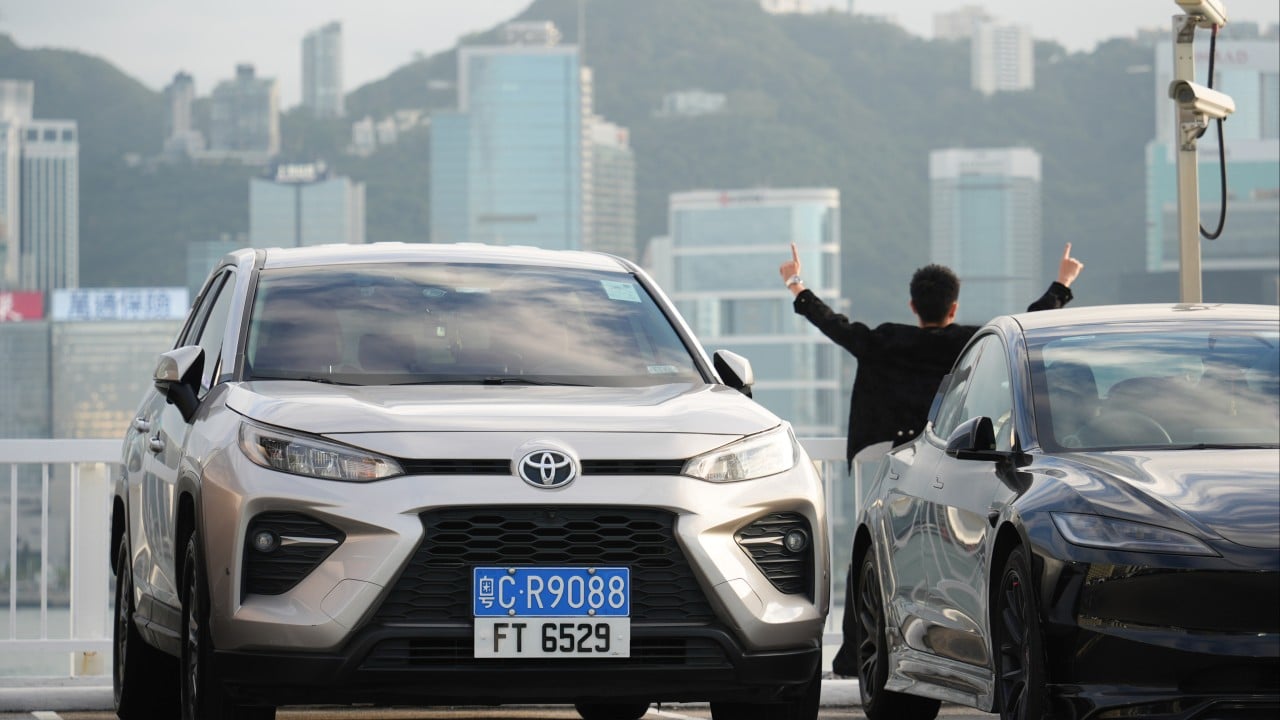
The expansion of the Southbound Travel for Guangdong Vehicles scheme to all 21 Guangdong cities by the first quarter of 2027 represents a structural shift in cross-border logistical integration, moving beyond a simple tourism initiative. By doubling the urban entry quota to 200 vehicles per day and introducing the Park and Visit infrastructure at the Hong Kong-Zhuhai-Macao Bridge (HZMB) port, the HKSAR government is adjusting its regulatory valves to manage a asymmetric supply-demand curve.
During the May Golden Week, consumer demand for urban entry allocation exceeded available supply by 200% to 300%. This severe supply constraint highlights a deeper economic reality: the rapid convergence of the Greater Bay Area (GBA) is outpacing the physical and legal infrastructure designed to manage it.
The Dual-Channel Inflow Framework
To understand the operational and financial impact of this expansion, the policy must be broken down into two distinct logistical channels. Each channel targets a different type of consumer spend and carries separate operational bottlenecks.
                  ┌─────────────────────────────────────────┐
                  │ Southbound Travel Expansion Channels    │
                  └────────────────────┬────────────────────┘
                                       │
         ┌─────────────────────────────┴─────────────────────────────┐
         ▼                                                           ▼
┌─────────────────────────────────┐                         ┌─────────────────────────────────┐
│  Channel 1: Direct Urban Entry  │                         │ Channel 2: Port Carpark Transit │
├─────────────────────────────────┤                         ├─────────────────────────────────┤
│ • Daily Cap: 200 vehicles       │                         │ • Sub-channels: Park & Fly /    │
│ • Duration: Max 3 days          │ │   Park & Visit                  │
│ • Impact: High-value commerce & │                         │ • Impact: High-volume transit & │
│   hospitality sector premium    │ │   regional aviation hubbing     │
└─────────────────────────────────┘                         └─────────────────────────────────┘
Channel 1: Direct Urban Entry
This channel allows private vehicles to drive directly into the urban core of Hong Kong for up to three days. It targets high-net-worth individuals and corporate travelers whose spending habits favor luxury retail, fine dining, and premium hospitality.
By increasing the cap from 100 to 200 vehicles per day, the policy injects highly mobile, affluent spenders directly into commercial hubs. The main limiting factor here is not consumer demand, but urban road capacity and parking infrastructure compatibility.
Channel 2: Port Carpark Transit
This channel relies on the automated parking facilities at the HZMB artificial island and operates through two separate services:
- Park and Fly: This service positions Hong Kong International Airport (HKIA) as the primary international gateway for mainland GBA residents, capturing long-haul outbound aviation spend.
- Park and Visit: This framework allows drivers to park at the port, clear customs, and use local public transit to enter the city. This approach captures high-volume retail and leisure spend without adding vehicles to Hong Kong's congested urban roads.
Capital Incompatibility and Infrastructure Bottlenecks
While the expansion reduces regulatory friction, it reveals structural mismatches between Hong Kong's commercial infrastructure and the operational habits of mainland consumers. Organizations looking to capitalize on this demographic must address three clear operational bottlenecks.
The first limitation involves left-hand-drive (LHD) physical mechanics vs. right-hand-drive (RHD) infrastructure. Hong Kong's commercial parking garages are optimized for RHD vehicles, placing ticketing machines and contactless readers exclusively on the right side of the entry lane.
When an LHD vehicle enters, the driver faces immediate physical friction, requiring them to stretch across the cabin or exit the vehicle to interact with the terminal. This delays entry times from an average of 3 seconds to over 15 seconds per vehicle, causing localized congestion at commercial entry points during peak hours.
The second bottleneck is the payment gateway divide. The local parking ecosystem relies heavily on the Octopus card system and traditional credit card processing. Conversely, mainland drivers operate almost exclusively within digital wallet ecosystems, specifically Alipay and WeChat Pay.
Facilities that fail to integrate dynamic, multi-currency QR code payment systems at exit barriers create transaction failures, requiring manual intervention and reducing asset turnover rates.
The third issue centers on vehicle charging infrastructure. The mainland Chinese electric vehicle (EV) ecosystem relies on the Guobiao standard (GB-standard) charging interface. While Hong Kong possesses over 1,600 GB-standard compatible charging points, these are highly concentrated in specific districts.
The lack of geographic density in tourist and commercial zones creates a form of range anxiety that limits where southbound visitors choose to spend.
Strategic Real Estate and Fleet Adaptation
To capture this shifting consumer base, commercial landlords, hospitality groups, and logistics operators must upgrade their physical and digital assets systematically.
Step 1: Deploy Dual-Plat LPR Systems
└── High-accuracy optical character recognition (OCR) engines capable of processing dual alphanumeric arrays (Guangdong + HK plates) simultaneously.

Step 2: Reconfigure Point-of-Sale (POS) & Gate Architecture
└── Integrate native WeChat Pay and Alipay APIs linked to exit-gate displays, generating unique transaction QR codes dynamically.

Step 3: Align EV Charging Port Allocations
└── Convert a minimum of 15% to 20% of premium parking inventory to high-output GB-standard DC fast chargers.
Commercial real estate portfolios that implement these upgrades early will see higher asset utilization. Property managers can leverage frictionless parking to secure preferred merchant status with mainland travel agencies and digital commerce platforms, directing high-value shoppers straight to their venues.
Greater Bay Area Integration Timeline
The expansion follows a clear regional timeline designed to balance economic integration with local infrastructure capacity:
- Late 2025: The initial pilot launched, limiting direct urban access to four primary municipalities: Guangzhou, Zhuhai, Zhongshan, and Jiangmen.
- June 15, 2026: Park and Fly access opened to the remaining five core GBA cities: Shenzhen, Foshan, Dongguan, Huizhou, and Zhaoqing.
- July 25, 2026: Direct urban entry quotas double to 200 vehicles daily, alongside the official launch of the Park and Visit service for all nine GBA cities.
- First Quarter 2027: The project achieves full scale, expanding eligibility to all 21 cities across Guangdong Province and integrating a population of over 126 million people.
Economic Forecast and Strategic Play
This policy shift will likely alter regional consumption patterns. By the close of 2027, the HZMB port will transition from a traditional border crossing into a high-velocity transit hub.
As the Park and Visit infrastructure scales up, expect a decoupling of visitor volume from urban traffic density. This allows retail sales to grow without causing the political friction often associated with urban gridlock.
The final strategic move belongs to enterprise operators in Hong Kong's retail, hospitality, and aviation sectors. Success requires shifting capital from traditional local marketing toward cross-border infrastructure compatibility.
Firms that upgrade their digital systems, payment processing, and physical parking assets to match mainland consumer habits will capture a larger share of GBA economic growth. Those that treat this as merely a transport update will find themselves bypassed by smarter, more integrated competitors.