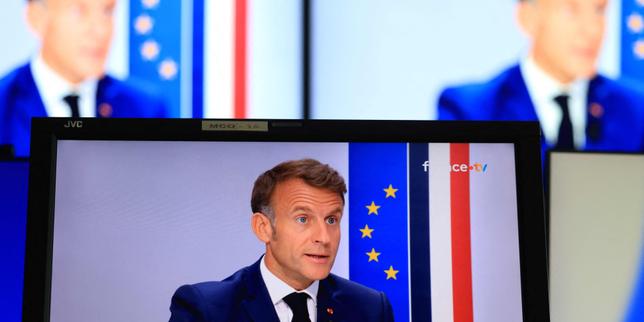
The ink is barely dry on the provisional agreement signed by Donald Trump and Massoud Pezeshkian, but the geopolitical chess board is already moving fast. While Washington celebrates a massive diplomatic breakthrough and oil markets breathe a sigh of relief, French President Emmanuel Macron is throwing a bucket of cold water on the global euphoria. Interviewed on France 2, the French leader made it plain. It is far too early to declare mission accomplished.
If you are looking at the sudden drop in crude prices and thinking the Middle East crisis is solved, you are missing the bigger picture. Macron used his television appearance to layout a cautious, fiercely independent French foreign policy that sets Paris apart from Washington. Between the reopening of the Strait of Hormuz, the fragile state of Lebanon, and the ongoing shadow of the war in Ukraine, France is positioning itself as the ultimate guarantor of regional balance, rather than a cheerleader for a rushed American deal.
The Sixty Day Clock is Ticking on the US Iran Pact
The heart of the issue lies in the temporary nature of what was signed. This isn't a definitive peace treaty. It is a 60-day protocol aimed at halting hostilities, lifting the American naval blockade, and restarting the flow of oil through the world’s most critical choke point.
Macron flatly refused to join the triomphalist narrative coming out of the White House. He explicitly noted that we will only know if the deal actually worked at the end of this two-month negotiating window. The French calculation is simple. Is Iran actually less dangerous today than it was last week?
"It's always better to have an agreement than war," Macron noted during the interview, defending the concept of a diplomatic exit while remaining completely clear-eyed about the lack of long-term guarantees.
France, alongside Germany and the United Kingdom, is refusing to sit on the sidelines for the next phase. Since Paris wasn't a direct party to the text signed by Trump and Pezeshkian, Macron reminded viewers that the European powers hold the keys to the wider international sanctions regime. Any permanent deal concerning Iran's nuclear program and ballistic missile capabilities will have to go through Paris, Berlin, and London.
No Iranian Toll Booths in the Strait of Hormuz
The immediate economic impact of the protocol is the planned reopening of the Strait of Hormuz. For months, hundreds of tankers and container ships have been stuck, paralyzing global energy supply lines and driving inflation through the roof.
While the markets are already reacting positively to the news of the first Iranian tankers moving through, a major point of friction remains. Tehran has hinted at charging "service fees" to passing vessels. Macron’s response was sharp. France won't tolerate an Iranian toll booth in international waters.
To back this up, Paris is ready to move its military assets. The aircraft carrier Charles de Gaulle, along with its full strike group, can deploy to the region within two to three days of confirmation. Working alongside the British Royal Navy and American forces, France aims to ensure the strait opens peacefully and stays open. The goal isn't just to clear the immediate backlog of ships but to establish a maritime framework that prevents future blockades.
The Hidden Battle to Rebuild Lebanon
You can't decouple the US-Iran deal from the reality on the ground in Beirut. While Israeli operations have heavily impacted regional factions, Macron called on Israeli Prime Minister Benjamin Netanyahu to act with rationality. True security isn't achieved by the endless conquest of neighboring territory.
The French strategy for Lebanon doesn't rely on the goodwill of outside militias. Instead, Macron announced a rapid international initiative to support and finance the Lebanese Armed Forces. The idea is to give the official state military the teeth it needs to reclaim control of its own borders and enforce a real, lasting ceasefire.
This is where theory meets a messy reality. For the Lebanese state to function, the issue of non-state weapons must be addressed directly. France is betting that a stronger central army can fill the vacuum, but it requires massive, coordinated financial backing from the G7 and regional partners.
Connecting the Dots from Evian to Ukraine
The timing of this diplomatic breakthrough overlaps directly with the G7 summit in Evian, exposing how deeply interconnected these global crises really are. The economic shockwaves from the closure of Hormuz threatened to break Western industrial transitions and complicate ongoing financial support for Ukraine.
By pushing for immediate maritime security and lower energy prices, European leaders are trying to stabilize their domestic economies so they can maintain a long-term strategic stance against Russian aggression in Europe. For Macron, a stabilized energy market means Europe keeps its economic leverage.
If you are tracking how these shifting alliances affect your pocketbook or global stability, the next step isn't just watching oil tickers. Watch the upcoming naval deployments in the Gulf. Follow the funding flow to the Lebanese army over the next few weeks. That is where you will see whether this temporary truce turns into actual regional stability or dissolves back into conflict before the 60 days are up.


