Donald Trump’s political DNA doesn't travel across the Atlantic as well as his supporters hoped. While the media often paints a picture of a global "populist wave" mirroring the 2016 MAGA movement, the reality on the ground in Europe is far more complicated. Many European voters who share Trump’s concerns about immigration or national sovereignty are actually recoiling from his specific style of leadership. It turns out that what plays well in a rally in Ohio often feels like a threat to the stability of a suburban neighborhood in Munich or Lyon.
The "toxic" label isn't just a slur from political opponents. It’s a reflection of a fundamental cultural disconnect. European right-wing movements are finding that to actually win power, they have to distance themselves from the chaotic, unpredictable energy that defines the Trump era. If they don't, they stay stuck in the fringes.
The Polish and Hungarian Exception
You can't talk about European populism without mentioning Viktor Orbán in Hungary or the Law and Justice party in Poland. These are the closest things to "MAGA equivalents" that actually held the reins of a country. But even here, the similarities are surface-level.
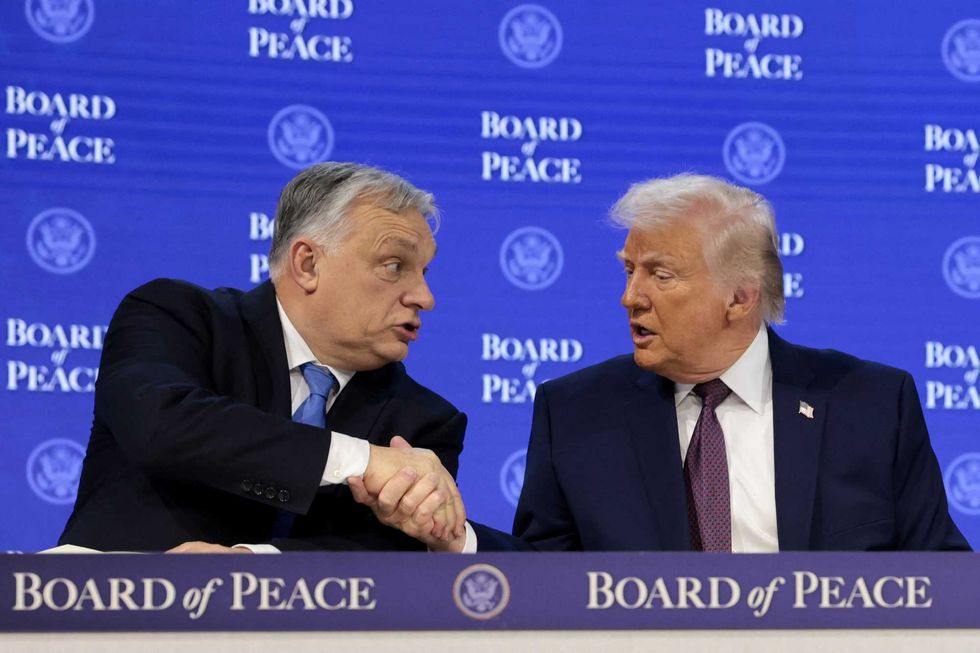
Orbán has built a sophisticated illiberal state by working within the machinery of the European Union while simultaneously attacking it. He’s a career politician, not an outsider. When Trump tries to claim these leaders as his "brothers in arms," he misses the fact that they are often far more disciplined. They don't tweet their way into legal corners. They pass laws that slowly dismantle judicial independence. It’s a quiet, surgical strike on democracy compared to Trump’s loud, blunt-force trauma approach.
In Poland, the backlash was even more pronounced. After years of hard-right governance that mirrored Trump’s rhetoric on "traditional values" and "national greatness," the voters simply got tired. The 2023 election saw a massive surge in turnout, specifically among young people and women who were exhausted by the constant conflict. It was a clear signal. You can only keep the "us vs. them" engine running for so long before the people in the middle decide they just want a functioning government.
Marine Le Pen and the Art of De-toxification
France provides the most striking example of why the Trump brand is a liability. Marine Le Pen spent a decade trying to "de-demonize" her party, the National Rally. She knew that as long as she was associated with the radical, skinhead-adjacent rhetoric of her father—or the unpredictable aggression of someone like Trump—she would never be President of France.
When Trump won in 2016, it initially gave European populists a shot of adrenaline. But that quickly turned into a hangover. By 2024, Le Pen was leaning into a more professional, statesman-like persona. She traded the firebrand speeches for sensible suits and talked about the "cost of living" rather than "draining the swamp."
The data shows why this shift happened. In French polling, Trump’s favorability ratings are consistently abysmal. Even among voters who want stricter borders, Trump is seen as a symbol of American instability. For a European voter, "stability" is a core value. They want the benefits of a social safety net and the protection of the state. Trump’s brand of libertarian-leaning, wrecking-ball populism scares them.
The Ukraine Factor Changed Everything
If there was a single moment when the MAGA brand became truly toxic in Europe, it was February 24, 2022. Before Russia’s full-scale invasion of Ukraine, right-wing leaders like Matteo Salvini in Italy could get away with wearing Putin t-shirts. They saw Putin and Trump as two sides of the same "strongman" coin.
That game ended the moment the tanks rolled in.
Europeans suddenly remembered why they liked alliances. The "America First" rhetoric, which implies the U.S. might abandon NATO or leave Europe to fend for itself against a nuclear-armed aggressor, isn't a spicy political take to a Pole or a Latvian. It’s an existential threat. Trump’s continued praise for "strongmen" and his wavering support for Ukraine have forced European populists to make a choice. They can either be pro-Trump or they can be relevant. Most are choosing relevance.
Giorgia Meloni in Italy is the perfect case study. She came from a post-fascist background, causing panic in Brussels. But since taking office, she’s been one of Ukraine's staunchest supporters. She’s played the "good student" in the EU. She realized that the path to long-term power in Europe isn't through burning the house down; it's through taking over the guest room and making yourself indispensable.
Why the Rhetoric Fails in Translation
American politics is built on the cult of personality. European politics is built on parties and coalitions. This is a massive distinction.
- The Multi-Party Reality: In most European countries, you need 50% plus one to govern, usually through a coalition. Trump’s "base-only" strategy doesn't work when you need to make nice with two other parties to pass a budget.
- The Welfare State: Even the most right-wing Europeans generally like their universal healthcare. Trump’s rhetoric about cutting "entitlements" sounds like a horror story to a working-class voter in the UK or Scandinavia.
- Cultural Secularism: The heavy religious undertones of the MAGA movement don't translate to a largely secular Europe. Hardline stances on abortion or "God in schools" are often vote-losers, even for conservative parties in countries like France or the Netherlands.
The British Experience with Trumpism
Look at the UK. Nigel Farage is perhaps the only European politician who truly "gets" the Trump vibe and embraces it. He’s a friend of the former president and uses similar rhetorical flourishes. But notice his ceiling. While Farage was instrumental in Brexit, his Reform UK party still struggles to become a mainstream governing force.
British voters, even those who voted for Brexit, are increasingly wary of the "culture war" imports from the U.S. They see the polarization in America—the gridlock, the riots, the contested elections—and they want no part of it. The 2024 UK general election showed a country desperate for "boring" politics. The chaotic energy that MAGA thrives on is exactly what the British public voted to end.
Lessons for the Future of Global Populism
If you're watching the polls for the next few years, don't look for the next "Trump of Europe." He doesn't exist. Instead, look for the "Normalized Populists." These are leaders who will take the core grievances of the MAGA movement—immigration, globalization, and national identity—and package them in a way that doesn't feel like a 3:00 AM social media rant.
The backlash isn't necessarily against the ideas. It’s against the messenger. European voters are proving that they can be angry at the establishment without wanting to dismantle the entire concept of the state. They want a tighter border, sure. But they also want their pension checks to arrive on time and their streets to be quiet.
To stay informed on how this shift affects global policy, start looking at the policy platforms of the "New Right" in Europe. Stop comparing them to Trump and start comparing them to the traditional center-right parties they are replacing. That’s where the real power shift is happening. Follow the voting patterns in the European Parliament elections rather than just the headlines of national leaders meeting at Mar-a-Lago. The real movement is much quieter, much more professional, and ultimately, much more likely to last than the MAGA firestorm.