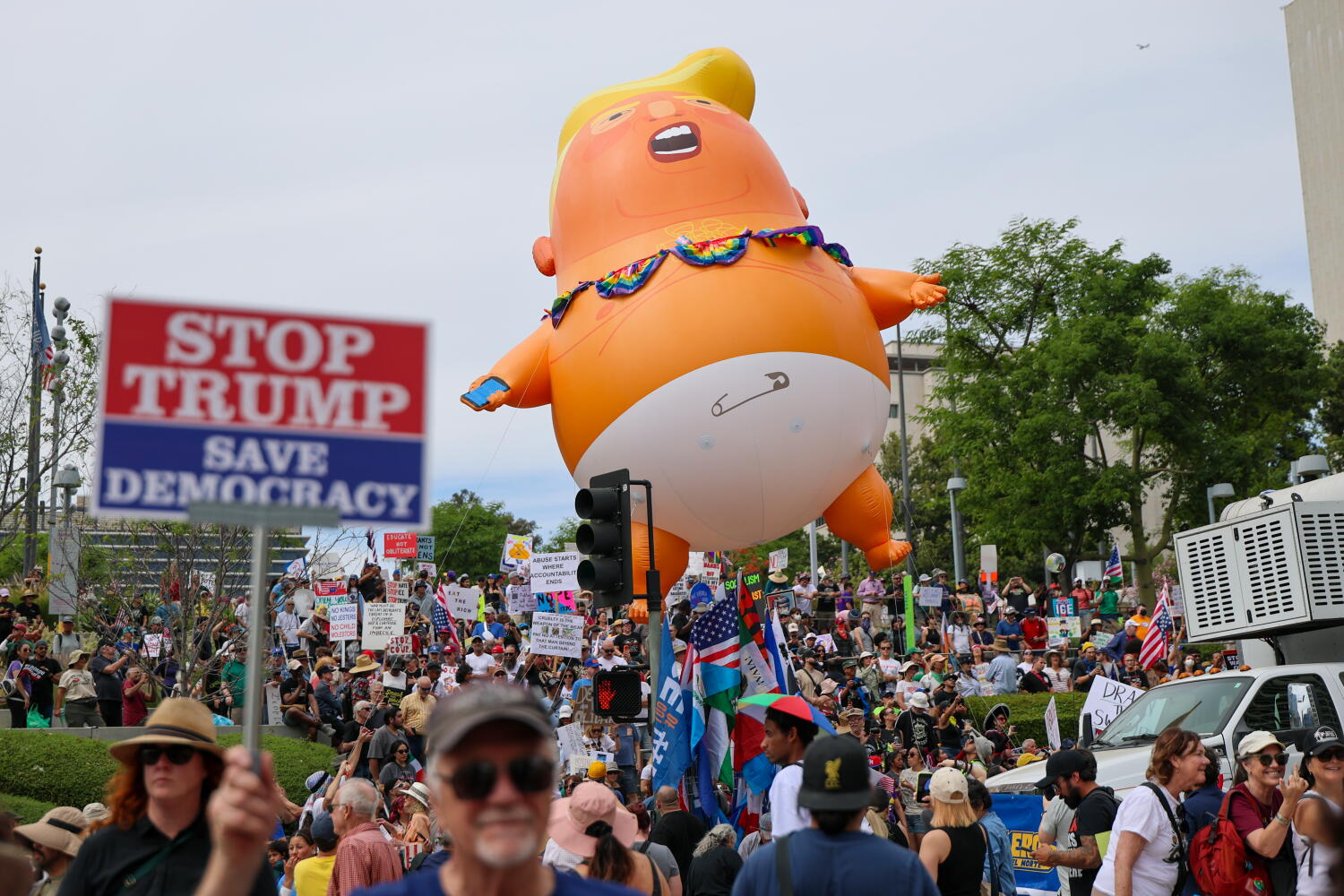
We love our weekends. We love carrying clever signs, buying artisanal coffee on the walk to the plaza, and chanting catchy slogans into megaphones while wearing color-coordinated t-shirts. What we do not love is admitting that weekend street pageantry is a safety valve designed by the establishment to let off steam without ever turning the boiler off.
Every time a massive mobilization like the No Kings Day demonstrations fills city blocks from coast to coast, media pundits rush to declare it a historical turning point. They look at crowd sizes running into the millions, marvel at the logistical footprint spanning thousands of zip codes, and write breathless columns about the rebirth of civic engagement. They treat mass street marches as the ultimate weapon of political accountability.
They are wrong. In fact, they are selling you a comforting fantasy that keeps the machinery of state power running smoothly.
I have watched organizations blow millions of dollars and countless hours coordinating weekend rallies under the impression that sheer visibility equates to structural leverage. It does not. Power does not yield because millions of polite citizens inconvenience local traffic on a Saturday afternoon when government offices are closed, politicians are playing golf, and financial markets are shuttered.
To understand why traditional street protest has been hollowed out, we must define terms. True political leverage requires the ability to impose costs on decision-makers. A strike imposes a cost on capital. A coordinated boycott imposes a cost on corporations. A targeted disruption of administrative functions imposes a cost on bureaucrats. Standing in a designated free-speech zone holding a piece of poster board on a Saturday morning imposes a cost on absolutely nobody except the local public transit cleaning crew.
The political elite long ago mastered the art of absorbing harmless dissent. When millions march on a weekend, security perimeters are drawn, police departments collect overtime, news networks broadcast sanitized clips of placards, and by Monday morning, legislative sessions resume without a single vote altered. The protest functions less like an insurrection and more like an officially sanctioned release valve. It keeps frustrated populations busy, organized, and trapped in a loop of symbolic performance.
Look at the underlying mechanics of modern mass movements. Organizers frequently lean on Gene Sharp’s theories of nonviolent action, citing the famous three-and-a-half percent rule—the notion that if three and a half percent of a population actively participates in sustained resistance, political regimes inevitably crack. But modern protest movements routinely misinterpret what "active participation" means. Sharp was not talking about weekend strolls. He was talking about non-cooperation: general strikes, tax refusals, economic boycotts, and the total withdrawal of labor and compliance.
When a movement reduces the three-and-a-half percent rule to a recurring Saturday afternoon photo-op, it abandons the core mechanism of disruption. You cannot negotiate with a government that treats your resistance as a scheduled weekend event on its calendar. If politicians know you will pack up your signs by sundown, go home for dinner, and return to work on Monday, they have zero incentive to change course.
Admitting this downside is deeply unpopular within activist circles because it invalidates the comfort of collective validation. Marching shoulder-to-shoulder with thousands of like-minded people feels powerful. It provides an intoxicating rush of community and moral clarity. But feeling righteous is not the same thing as shifting power dynamics.
If you want to challenge executive overreach or shift stubborn policy paths, stop asking permission to march on designated routes on weekends. Shift the focus from visibility to friction. Real disruption looks like economic withdrawal, targeted administrative gridlock, and sustained non-cooperation that hurts the people in charge where it actually registers: their balance sheets and operational stability.
Stop treating resistance like a recurring community festival. Stop measuring success by how many people showed up to wave flags when nobody in power was even in the building. Until we abandon the comforting delusion that weekend pageantry equals political leverage, those in charge will keep watching from their office windows, smiling at the free entertainment.