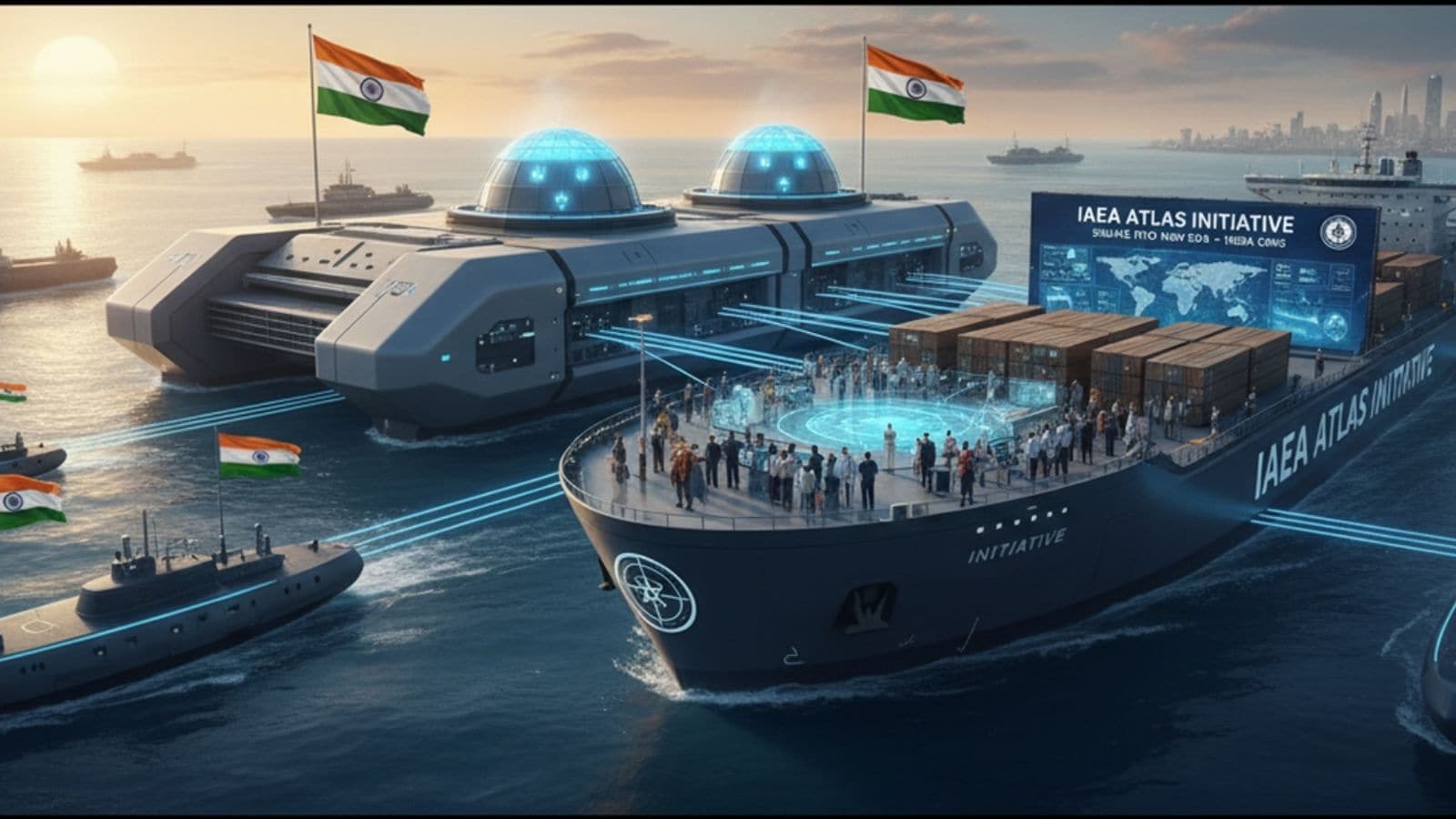
The defense tech echo chamber is losing its mind over a shiny new toy. The current headline obsession is simple: a large maritime drone rolls out smaller sub-drones while bobbing around in the open ocean. Tech journalists and defense analysts are hyperventilating about motherships of the sea, autonomous swarms, and the death of traditional blue-water naval power.
It sounds like a sci-fi blockbuster. It also happens to be a tactical delusion.
I have spent years watching defense contractors and VC-backed maritime startups burn through billions of dollars building complex, fragile mechanical nesting dolls for saltwater environments. Everyone wants to talk about the tactical flexibility of deploying a smaller drone from a larger unmanned surface vessel. Nobody wants to talk about the brutal physics of marine engineering, seawater corrosion, and the catastrophic single-point-of-failure economics of putting expensive toys inside other expensive toys.
Stop treating naval warfare like a Russian nesting doll problem. The obsession with hierarchical drone deployment at sea ignores every hard lesson learned from decades of unmanned systems development.
The Mechanical Fallacy of the Floating Mothership
The lazy consensus in modern naval tech says that scale solves vulnerability. Build a big autonomous hull, pack it with smaller underwater or surface drones, send it thousands of miles from port, and let it spawn a fleet of tactical assets on demand.
It sounds efficient on a PowerPoint slide. In the punishing reality of a four-meter swell in the North Atlantic, it is a mechanical nightmare.
Saltwater is an industrial-strength solvent and abrasive. It eats seals, jams actuators, coats optical sensors in salt crust, and degrades electrical connections faster than you can update firmware. When you design a large maritime surface vehicle to act as a mechanical launcher for smaller drones, you introduce hundreds of new moving parts directly exposed to the harshest environment on Earth.
Every hatch, ramp, winch, and magnetic grapple is a point of failure. If the deployment mechanism jams because a barnacle grew inside the track or a wave tweaked the chassis by two millimeters, your multi-million-dollar mothership is suddenly an expensive piece of floating scrap metal holding hostages it cannot release.
Simplicity wins wars. Complexity wins venture capital funding.
The defense sector loves hierarchical systems because they allow prime contractors to bill for integration complexity. Every extra layer of autonomy required to tell a big drone how to launch a little drone adds code paths, latency, and failure modes.
Imagine a scenario where an autonomous surface vessel drops a micro-drone in contested waters. To retrieve it or communicate with it, you need acoustic modems or line-of-sight RF links. In a contested electronic warfare environment, your tiny spawned drone is blind, deaf, and stranded the second the mothership has to take evasive maneuvers against an incoming threat.
The Economics of Attrition Do Not Care About Your Swarm
Let us address the financial delusion driving this trend. Proponents claim that launching small drones from big drones keeps sailors out of harm's way while keeping costs low.
That math only works if the assets are genuinely cheap and disposable. But the moment you build a large autonomous surface vessel capable of long-range transit, heavy power generation, satellite communications, and mechanical launch-and-recovery infrastructure, you have built a high-value asset. You have built a target.
If you sail a twenty-million-dollar autonomous mothership into a theater to deploy fifty-thousand-dollar surveillance drones, you have inverted the logic of naval defense. You have put all your eggs in a very expensive, highly detectable basket. An adversary does not need to waste a torpedo on every tiny drone you spawn. They just need to find and kill the mothership.
Once the primary hull goes down, the entire brood dies with it.
We saw this movie play out in aviation. The air force realized years ago that putting all your combat power into massive, centralized platforms creates strategic bottlenecks. That is why the focus shifted toward distributed, redundant, low-cost nodes that can operate independently without relying on an airborne aircraft carrier.
Yet naval architects are repeating the exact same mistakes the Air Force is trying to unlearn. They are building battleships for the robot age.
The Autonomy Myth at Sea
We are also pretending that autonomy on the water is anywhere near where it needs to be to manage complex multi-vehicle operations.
In the air, drones have three dimensions of freedom and relatively predictable physics. At sea, you deal with surface currents, rogue waves, shifting winds, commercial shipping lanes, and unpredictable marine mammal traffic. Managing station-keeping for a large vessel while simultaneously orchestrating the physical launch, tether management, or acoustic handoff of a secondary vehicle requires an extraordinary amount of onboard compute and energy.
Energy is the ultimate constraint that tech evangelists always conveniently forget. Moving water is eight hundred times denser than air. Every watt spent running hydraulic launch rails, internal charging bays, and mechanical retention latches is a watt stolen from propulsion and range.
If your mothership burns half its fuel just running internal robotics to push smaller drones into the water, your operational radius collapses. You wanted a trans-oceanic scout, but you built a coastal delivery van that runs out of gas before it reaches the theater.
What Actually Works
If we want resilient maritime dominance, we need to abandon the nesting doll delusion.
Stop building massive floating garages for tiny robots. Instead, build swarms of single-purpose, mass-producible, federated nodes that do not rely on motherships to enter the fight.
- Decouple the platforms: Launch small drones from fixed shore installations, commercial cargo ships, or simple coastal ramps where maintenance is cheap and easy. Do not waste hull volume trying to make one hull do the job of three.
- Design for absolute disposability: If a maritime drone costs more than a family home, it is too expensive for routine frontline scouting. Build hulls that are cheap enough to abandon when missions go sideways.
- Embrace distributed mesh networks: Instead of relying on a hierarchical parent-child data link, use peer-to-peer acoustic and RF meshes where every drone in the water acts as an equal relay. If one node dies, the network heals instantly.
The next naval conflict will not be won by the side with the most complicated mechanical toys. It will be won by the side that can lose ninety percent of its fleet and still keep fighting because its systems were too cheap to mourn and too simple to break.
Drop the multi-tiered marine gadgets. Build fleets of dumb, brutal, unstoppable metal.