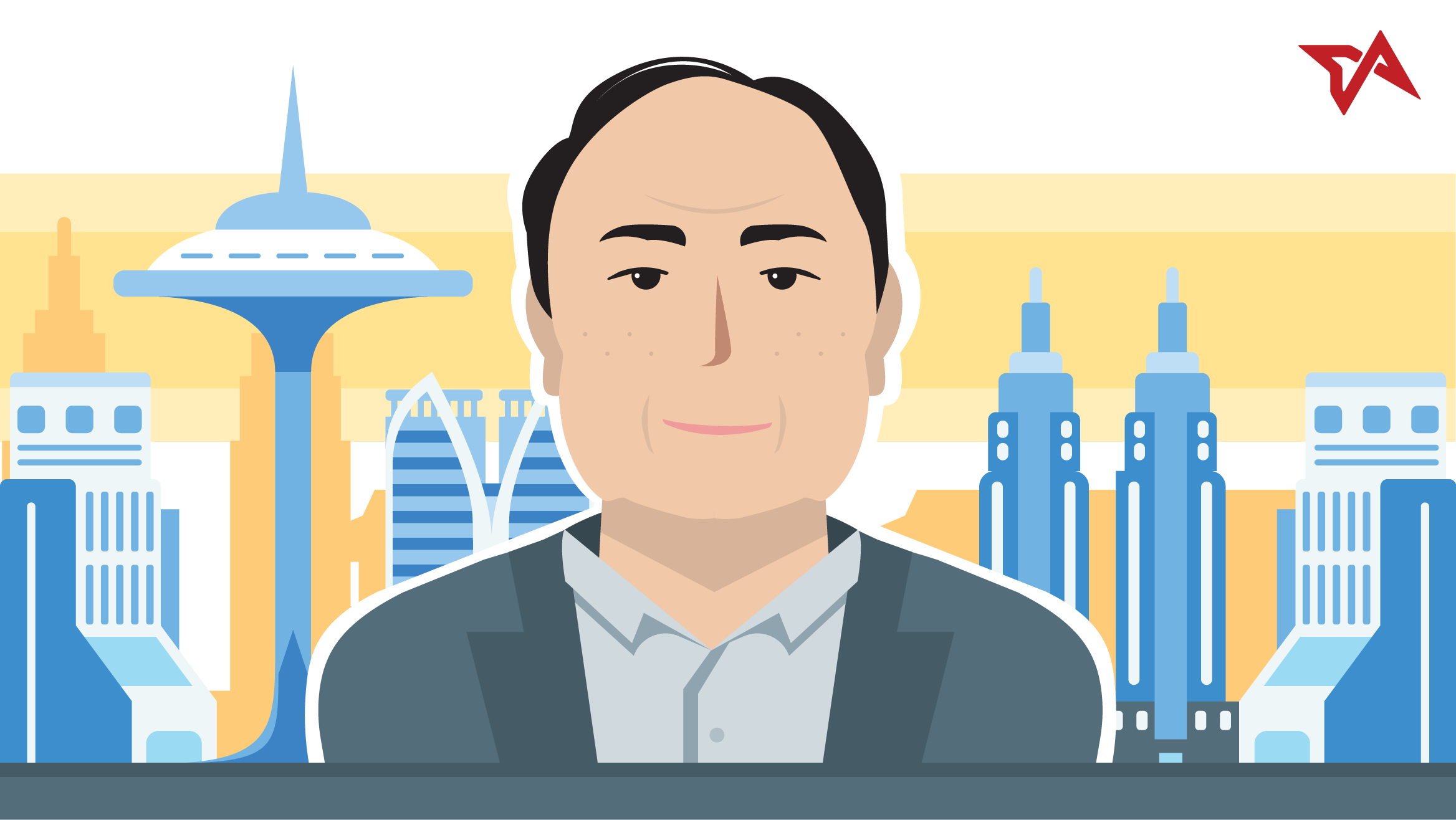
Masayoshi Son doesn't do small. If you've followed the trajectory of SoftBank over the last decade, you know the playbook by heart. Find a massive, era-defining trend, write a check so large it makes the founders blink, and then wait for the world to catch up. Usually, this happens through the Vision Fund. But the latest move into OpenAI feels different. It feels desperate, calculated, and incredibly risky all at once.
SoftBank is currently pumping billions into the very heart of the generative AI boom. It's a move that seeks to rectify the biggest mistake in Son’s career: missing out on the early rounds of the AI race. He’s admitted he cried when he realized he’d sat on the sidelines while Nvidia and OpenAI rewrote the rules of the global economy. Now, he's making up for lost time with a vengeance. You might also find this related coverage insightful: Why Trump is Right About Tech Power Bills but Wrong About Why.
The High Cost of Catching Up
The numbers involved in OpenAI’s recent funding rounds are staggering. We’re talking about a valuation hovering around $157 billion. For SoftBank to get a meaningful seat at that table, they aren't just dipping into pocket change. They’re committing capital at a time when their previous "big bets" like WeWork are still fresh wounds in the minds of institutional investors.
Investing in OpenAI at a $100 billion-plus valuation isn't the same as getting into Alibaba in the early 2000s. Back then, Son was buying potential for pennies. Today, he's buying a piece of a company that is already priced for perfection. For this to "work" in the way SoftBank needs it to, OpenAI doesn't just need to be successful. It needs to become the most valuable entity on the planet. As highlighted in recent articles by The Wall Street Journal, the results are widespread.
There's a massive difference between being a visionary and being a late-stage liquidity provider. When you enter a trade this late, your margin for error disappears. If OpenAI hits a regulatory wall or if the "scaling laws" of large language models start to plateau, SoftBank is the one left holding an incredibly expensive bag.
Arm is the Real Engine and the Real Risk
You can't talk about SoftBank’s AI strategy without talking about Arm. Since taking the chip designer public again, Arm has become the crown jewel of Son’s empire. It’s the collateral. It’s the proof of concept. It’s the only reason the markets are still giving SoftBank a pass on its more eccentric ventures.
Arm’s architecture is inside almost every smartphone and is rapidly taking over data centers. SoftBank owns roughly 90% of it. On paper, this makes Son look like a genius. But look closer. He’s using that Arm equity to fuel his other ambitions. It’s a giant game of financial Jenga.
If the AI hype cycle cools even slightly, chip stocks are the first to feel the burn. A 20% drop in Arm’s share price doesn't just hurt SoftBank’s balance sheet; it cripples their ability to borrow and invest in companies like OpenAI. They’ve essentially tied their entire future to a single technological pivot.
The OpenAI Burn Rate Problem
OpenAI is a black hole for cash. Training GPT-5, GPT-6, and whatever comes after requires an ungodly amount of compute power. We’re talking about billions of dollars in annual spend just to keep the lights on and the GPUs humming. Sam Altman has been vocal about the need for trillions—yes, trillions—of dollars to reshape the global semiconductor supply chain.
SoftBank is stepping into this furnace. Unlike a traditional software company with 90% margins, OpenAI has massive recurring costs. They have to pay Nvidia every time a user asks a question. While the revenue is growing fast, the expenses are growing just as quickly.
Son is banking on the idea of Artificial General Intelligence (AGI). He believes that once we hit that milestone, the costs won't matter because the value created will be infinite. It’s a beautiful theory. It’s also a theory that relies on everything going right in a world where things usually go wrong.
Why the Vision Fund Structure is Struggling
The original Vision Fund was a beast. It had outside LPs like the Saudi Public Investment Fund. Those partners have become a lot more cautious. They saw the volatility. They saw the headlines. As a result, much of the new money flowing into AI is coming directly from SoftBank Group’s own balance sheet.
This shifts the risk entirely onto the shareholders. You’re no longer just managing other people’s money for a fee; you’re betting the company’s actual cash reserves. This is why the "weight" of the OpenAI bet is starting to show. The market is looking at SoftBank and wondering if they have the stomach for another decade of "burn now, profit later."
Investors want stability. Son wants a revolution. That friction is why SoftBank’s stock often trades at a significant discount to the value of its underlying assets. The "Son Discount" is real because the market is afraid of what he’ll do with the cash next.
Silicon Valley is No Longer a Cheap Date
A few years ago, SoftBank could walk into a room and dictate terms because they had the biggest checkbook. That’s not true anymore. Microsoft is all-in on OpenAI. Thrive Capital is leads rounds. MGX in Abu Dhabi is throwing around sovereign wealth.
OpenAI doesn't need SoftBank in the way that Uber once did. This puts SoftBank in a weak bargaining position. They’re paying a premium just to be included. When you're the "dumb money" at the table—even if you're the most famous tech investor in history—you don't get the best terms. You get the leftovers.
The competitive landscape for AI dominance is also getting crowded. Google isn't sleeping. Meta is open-sourcing Llama and trying to undercut the entire proprietary model business. If the future of AI is open-source, OpenAI’s valuation could evaporate. If that happens, SoftBank’s bet goes from a bold masterstroke to a historical footnote of the second tech bubble.
The Strategy for Investors Watching This Fold
If you're holding SoftBank or even just tracking the AI sector, you have to watch the debt-to-equity ratio. That’s the real heartbeat of this operation. Don't get distracted by the flashy demos of Sora or the latest GPT update. Watch how much SoftBank is borrowing against its Arm shares.
The real danger isn't that AI fails. It's that AI takes longer to monetize than SoftBank has runway. We saw this with the dot-com crash. Most of the ideas were right—e-commerce, streaming video, social media—but the companies were ten years too early. They went bankrupt before the world was ready.
SoftBank is betting that the world is ready right now. They're betting that OpenAI is the Google of this era, not the Netscape. It's a binary outcome.
What to do next
Audit your own exposure to the AI "infrastructure" trade. If you're heavily invested in the companies that are funding these models, you're essentially an indirect investor in OpenAI's burn rate. Check the LTV (Loan-to-Value) ratios on SoftBank’s latest filings to see exactly how much pressure the Arm shares are under. If that ratio creeps above 30%, start worrying.
The era of cheap capital is over, and the era of "prove it" has begun. SoftBank has made its move. Now we see if the rest of the world follows their lead or watches them hit the wall. It’s going to be a wild ride, and honestly, it’s probably going to get a lot uglier before it looks like a win.