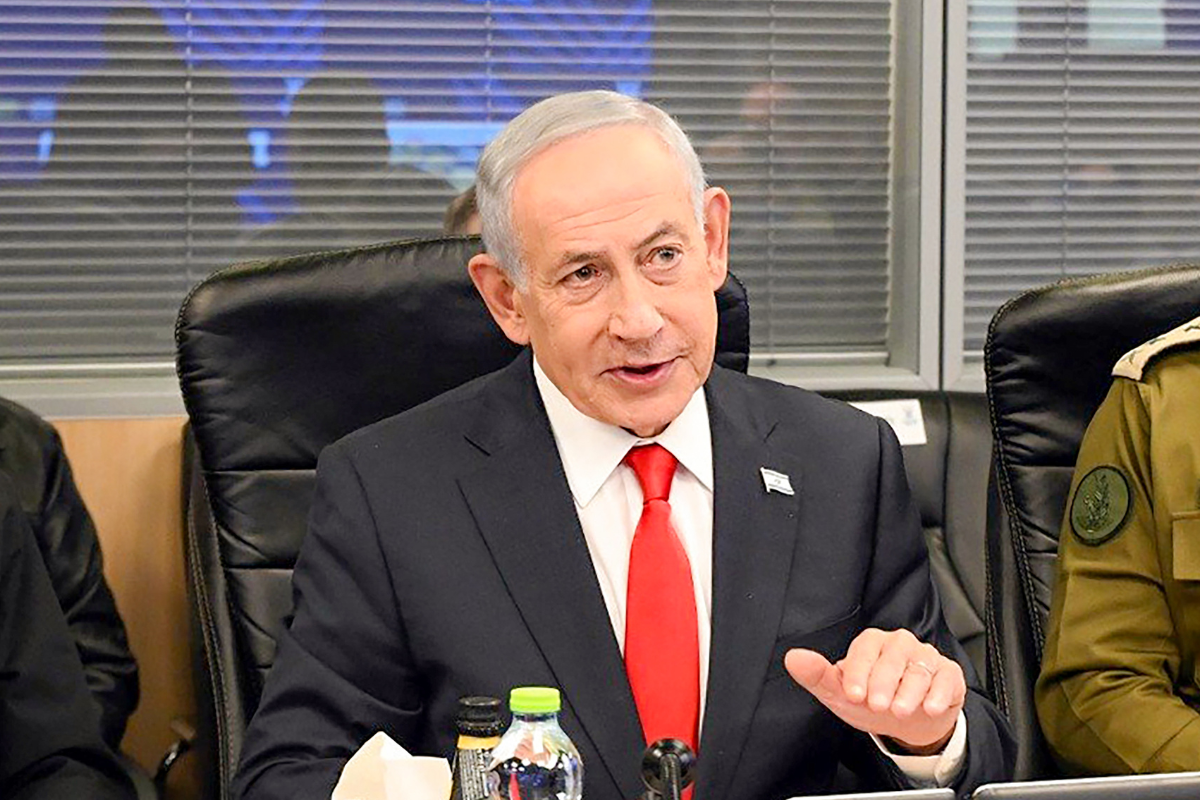
Israel’s tactical shift toward a conditional ceasefire in Lebanon does not represent a cessation of hostility, but rather the translation of kinetic military superiority into a structured diplomatic enforcement mechanism. Standard geopolitical commentary frames this development as a binary choice between war and peace. A rigorous strategic analysis reveals it is a calculated transition from active degradation to enforced containment. The objective is to establish an asymmetric security architecture where Israel retains unilateral enforcement rights while transferring the operational burden of compliance to international and Lebanese state actors.
The strategic logic governing Prime Minister Benjamin Netanyahu’s directive to halt strikes under specific conditions relies on a three-part framework: baseline degradation, structural conditionality, and verified enforcement zones. Understanding this framework requires moving past political rhetoric and analyzing the hard security trade-offs, operational bottlenecks, and structural vulnerabilities inherent in the proposed arrangement.
The Triad of Deterrence Operational Parameters of the Ceasefire
The diplomatic framework proposed by the Israeli security cabinet is built upon three non-negotiable operational pillars. Each pillar addresses a specific security failure identified during the breakdown of United Nations Security Council Resolution 1701 after the 2006 conflict.
1. Verification and Freedom of Action
The primary Israeli requirement is the codification of unilateral enforcement rights. In traditional diplomacy, a ceasefire implies mutual restraint monitored by a neutral third party. The current Israeli strategy rejects this model, demanding explicit or tacit authorization to resume kinetic operations if violations are detected. This effectively transforms the ceasefire into a pause in active maneuvers, contingent on the adversary's total compliance with demilitarization.
2. Geographic Exclusion Zones
The core territorial requirement dictates the complete absence of armed non-state actors south of the Litani River. This geographic buffer—approximately 30 kilometers from the Blue Line—is designed to eliminate direct line-of-sight anti-tank guided missile (ATGM) threats to northern Israeli communities. The presence of the Lebanese Armed Forces (LAF) and the United Nations Interim Force in Lebanon (UNIFIL) is treated not as a security guarantee, but as a administrative layer to fill the vacuum left by retreating forces.
3. Supply Chain Interdiction
A critical flaw in previous containment strategies was the failure to disrupt the land and air corridors supplying advanced weaponry across the Syrian border into Lebanon. The Israeli framework introduces a strict counter-proliferation mandate. This involves continuous surveillance and the right to strike logistics hubs along the Lebanese-Syrian border, treating rearmament during the ceasefire period as an immediate casus belli.
The Cost Function of Continued Kinetic Operations
The decision to offer a conditional ceasefire is driven by a calculated cost-benefit analysis regarding military resource allocation and strategic endurance. Military objectives are subject to the law of diminishing returns; continuing high-intensity operations yields declining strategic utility relative to the escalating costs.
Total Strategic Cost = C_material + C_economic + C_coalition + C_friction
Where:
C_material: The depletion rate of precision-guided munitions and interceptor stockpiles for air defense systems.C_economic: The systemic strain on domestic GDP caused by the prolonged mobilization of reserve forces, which pulls high-value labor out of the technology and industrial sectors.C_coalition: The political friction generated with key Western allies, specifically regarding humanitarian logistical constraints and regional stability.C_friction: The inherent risk of mission creep, where tactical successes in southern Lebanon fail to translate into further political leverage, exposing ground forces to asymmetric attritional warfare.
By shifting the conflict from active engagement to a conditional pause, Israel attempts to lock in its tactical gains—specifically the destruction of entrenched border infrastructure and the neutralization of command command structures—without incurring the compounding costs of an open-ended occupation.
Structural Vulnerabilities and Enforcement Friction
The viability of this strategic framework is limited by several systemic dependencies that lie outside of direct Israeli control. A realistic assessment must account for these structural bottlenecks.
The first limitation rests on the operational capacity of the Lebanese Armed Forces. For the ceasefire architecture to function without constant Israeli intervention, the LAF must act as an internal security guarantor capable of denying territory to heavily armed non-state actors. Historically, the LAF has lacked both the material capability and the political mandate to execute missions that risk internal sectarian conflict. Expecting the LAF to enforce a strict demilitarized zone assumes a radical transformation in Lebanese state authority that is unsupported by current institutional metrics.
The second bottleneck involves the international oversight mechanism. Relying on an expanded UNIFIL or a newly formed Western monitoring coalition introduces significant bureaucratic delay. In a high-stakes security environment, the time elapsed between identifying a violation, verifying it through international channels, and executing a remedy creates a dangerous operational lag. Israel’s insistence on unilateral enforcement rights is a direct attempt to bypass this structural delay, though doing so inherently threatens the diplomatic legitimacy of the broader agreement.
The Geopolitical Trade-offs
| Strategic Variable | Active Military Engagement | Conditional Ceasefire Framework |
|---|---|---|
| Northern Border Security | High tactical denial via active operations; persistent civilian displacement. | Strategic risk mitigation; allows controlled return of displaced populations. |
| Resource Allocation | High consumption of munitions and active-duty reserve personnel. | Conservation of military capital; reorientation toward secondary strategic theaters. |
| Regional Alliance Dynamics | Escalating friction with Western partners; risk of wider regional escalation. | Alignment with international diplomatic initiatives; stabilization of regional partnerships. |
| Adversary Status | Continuous physical degradation alongside asymmetric adaptation. | Structural containment; tests the adversary's internal political cohesion under pressure. |
The Regional Reorientation
The shift toward a conditional framework in Lebanon cannot be analyzed in isolation from the broader regional architecture. Stabilizing the northern front serves a clear geopolitical objective: it allows for the redistribution of strategic focus and military assets toward the primary source of regional instability.
By establishing a verifiable buffer zone in Lebanon, Israel reduces the immediate tactical threat to its northern border, thereby freeing up intelligence, surveillance, reconnaissance (ISR) capabilities and elite strike formations. This resource optimization is critical for maintaining long-term readiness against deep-theatre threats and managing complex containment strategies elsewhere in the region. The ceasefire is not a concessions-based peace; it is an exercise in strategic economy of force.
The immediate tactical requirement for regional actors is to monitor the deployment patterns of the Lebanese Armed Forces along the Litani River corridor. The critical metric of success will not be the signing of a diplomatic text, but the establishment of a real-time, independent verification system capable of detecting infrastructure rehabilitation. If the international monitoring mechanism fails to demonstrate immediate, verifiable enforcement within the initial phase of deployment, the operational framework dictates an immediate return to kinetic degradation as the primary method of boundary maintenance.