The migration of French football talent to Mexico’s Liga MX represents a calculated economic and athletic arbitrage rather than a series of isolated sporting anomalies. While mainstream sports journalism attributes this trend to cultural adaptation or individual sentimentality surrounding André-Pierre Gignac’s tenure at Tigres UANL, an analytical breakdown reveals a structural alignment of market forces. Mid-tier European players face intensifying financial suppression and squad saturation within UEFA’s ecosystem, while top-tier Mexican clubs possess capital surpluses and structural vacancies for high-physicality, tactically disciplined profiles.
This talent corridor operates on a clear strategic calculus. By entering the Mexican market, French players secure compensation packages that outpace the financial capabilities of mid-to-lower table Ligue 1 clubs, while maintaining access to highly competitive sporting environments, continental exposure, and a direct geographical runway to the 2026 FIFA World Cup.
The Gignac Precedent and the Proof of Concept
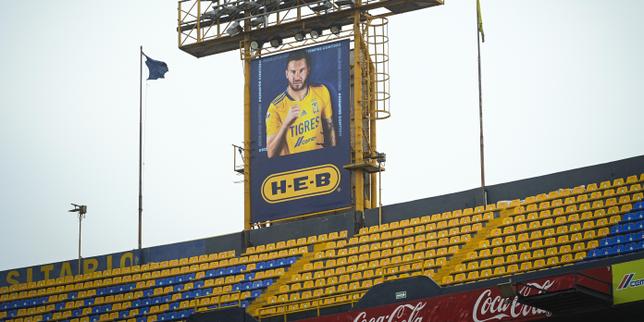
The baseline model for this migration was established by André-Pierre Gignac’s transfer to Tigres UANL in 2015. To quantify the success of this precedent, the market must look past raw goal scoring metrics and analyze the structural value creation for both the club and the player. Gignac’s transfer altered the risk-reward ratio for European talent considering non-UEFA leagues by validating three distinct operational variables.
Capital Preservation and Net Compensation Asymmetry
In Ligue 1, high marginal tax rates substantially compress a player's net earnings. A player earning a gross salary of €3 million in France retains a fraction of that figure after accounting for national income taxes and social security contributions. Liga MX franchises, backed by major corporate conglomerates such as CEMEX (Tigres) or FEMSA (Monterrey), structure compensation packages that often optimize net take-home pay through tax-efficient corporate mechanisms or direct net-salary guarantees. For a player in their late 20s or early 30s, this transition represents a significant maximization of their remaining career valuation curve.
Brand Equity and Capital Monopolization
Gignac did not merely occupy a roster spot; he decentralized the traditional media focus away from Mexico City clubs (Club América, Cruz Azul) toward the northern state of Nuevo León. This shift created a compounding commercial return. The player captured localized marketing rights, merchandise percentages, and long-term post-career brand integration, establishing a blueprint that younger French players now seek to replicate.
Sporting Integrity Preservation
Historically, leaving Europe meant entering retirement leagues where a player's competitive sharp edge degraded rapidly. Liga MX features a high-intensity, high-altitude playing environment that demands elite physical output. Gignac's sustained high performance, culminating in a club World Cup final appearance and continued national team considerations early in his Mexican tenure, proved that moving to Mexico did not equate to athletic irrelevance.
This proof of concept shifted the perception of Liga MX from an exotic career finale to a highly viable corporate and athletic alternative for French players who find themselves trapped in the middle class of European football.
The Macro-Economic Divergence: Ligue 1 vs Liga MX
To understand why French footballers are increasingly receptive to Mexican offers, one must analyze the structural financial distress currently characterizing French club football. The French football economy is fundamentally fragile, highly dependent on volatile broadcasting rights and player trading profits to achieve budgetary equilibrium.
The collapse of high-value domestic television rights agreements in recent cycles forced the Ligue de Football Professionnel (LFP) to accept significantly lower media revenues than initially projected. Excluding the elite capital reserves of Paris Saint-Germain, the average Ligue 1 club operates under severe budgetary restrictions monitored rigidly by the Direction Nationale du Contrôle de Gestion (DNCG). The DNCG enforces strict wage-to-revenue ratios, effectively capping the wage growth of mid-tier clubs like Marseille, Lyon, Rennes, and Nice, and forcing lower-tier clubs into austerity.
The financial reality of a mid-table French club involves low liquidity, heavy reliance on selling academy assets to balance books, and a structural inability to offer long-term financial security to players entering their peak earning years.
Conversely, the elite tier of Liga MX operates under a completely different economic paradigm. The Mexican league does not utilize a rigid, centralized financial fair play mechanism comparable to UEFA’s or the DNCG’s models. Financial capacity is determined by parent company liquidity and corporate sponsorships.
- Corporate Backing: Teams like Tigres and Monterrey are backed by multi-billion dollar industrial giants. This corporate integration ensures a steady stream of capital independent of traditional stadium or domestic TV revenue.
- Commercialization Power: The North American market, driven by the massive purchasing power of the Mexican diaspora in the United States, inflates the commercial value of Liga MX matches. Friendly tournaments, exhibition tours, and official competitions like the Leagues Cup generate high-margin US dollar revenues that flow directly back to Mexican club treasuries.
When a Mexican club competes with a French club for a player in the €2 million to €4 million annual salary bracket, the Mexican club possesses a structural advantage. They can offer longer contract durations, guaranteed net payouts, and sign-on bonuses that French clubs simply cannot sanction without violating domestic financial regulations.
The 2026 World Cup Strategic Accelerator
The timing of the current migration wave is heavily synchronized with the upcoming 2026 FIFA World Cup, hosted jointly by the United States, Mexico, and Canada. This tournament acts as an accelerator for talent migration due to two primary factors: infrastructure investment and scouting visibility.
Mexico’s selection as a co-host has triggered substantial capital expenditure across stadium infrastructure, training facilities, and sports science departments. French players moving to Liga MX are entering facilities that rival or exceed those of mid-tier European clubs. Estadio BBVA in Monterrey and Estadio Azteca in Mexico City offer world-class operating environments. This infrastructure mitigates the physical risks typically associated with moving outside of Europe's top five leagues.
Furthermore, the geographic proximity to the world's most lucrative sports market changes the visibility dynamics for these players. Major League Soccer (MLS) and Liga MX have increasingly integrated their competitive calendars through the Leagues Cup. This tournament places Mexican-based players directly in front of US-based scouts, sporting directors, and commercial sponsors.
For a French player, Liga MX is no longer an isolated geographic pocket. It is the premier competitive platform in the host region of the next World Cup cycle. The media attention, corporate sponsorship activations, and general footballing hype centered on Mexico between now and 2026 guarantee an uncharacteristic level of global exposure. A player performing at an elite level in Monterrey or Mexico City during this window captures a premium on their personal brand that would be impossible to achieve while playing for a lower-profile team in the French provinces.
Structural Risks and Career Velocity Bottlenecks
A rigorous analysis requires evaluating the systemic risks inherent in this talent transfer strategy. The transition from European football to Liga MX is not a guaranteed upward trajectory; it contains specific structural bottlenecks that can decelerate a player's career velocity if managed poorly.
Environmental and Physiological Adaptation Costs
Liga MX presents unique physiological challenges that are entirely absent in Western Europe. Multiple teams operate at extreme altitudes. Mexico City sits at over 2,200 meters above sea level, and Toluca exceeds 2,600 meters. The atmospheric pressure differentials alter ball aerodynamics and place immense cardiovascular strain on athletes unaccustomed to these conditions.
The domestic calendar is also divided into two short tournaments per year: the Apertura and the Clausura. This structure eliminates the traditional long-term building phases of a European season. It demands immediate performance under intense physical duress, compounded by extensive travel times across vastly different climate zones. Players who fail to adapt within the first six weeks face rapid marginalization due to the short-term results-oriented nature of the tournament structures.
The Non-EU and Foreign Player Quota Bottleneck
Liga MX rules strictly govern the number of "Formados en México" (Players Formed in Mexico) versus foreign players allowed on a matchday roster. This regulatory cap creates an internal zero-sum game within squad construction.
A foreign player commanding a high salary is under constant pressure to deliver immediate, quantifiable output. If a French signee suffers a dip in form or a prolonged injury, the club cannot afford to patiently integrate them back into the lineup. The financial and regulatory cost of holding an underperforming foreign asset often leads clubs to aggressively seek termination, loan arrangements, or squad exclusion to free up a foreign registration slot for the next transfer window.
The Eurocentric Scouting Bias
While visibility within the CONCACAF region increases, visibility regarding the French National Team (Les Bleus) drops significantly. The French football federation and national team coaching staff operate with an deeply rooted Eurocentric bias. Except for generational icons or unique situations, playing outside of UEFA’s top divisions drastically reduces a player’s probability of national team selection.
A younger French player moving to Mexico for financial optimization effectively compromises their international aspirations in exchange for club-level security. The career trajectory becomes localized to the Americas, limiting future liquidity back into top-tier European clubs who remain skeptical of evaluating Liga MX statistical outputs against European defensive standards.
The Strategic Forecasting of the Corridor
The expansion of the French talent corridor into Mexico is projected to follow a highly predictable trajectory over the next structural cycle. As the financial divergence between Ligue 1 and Liga MX widens, the profile of the migrating player will shift. The market will see a transition from older, legacy players seeking a final lucrative contract to prime-age assets (24–28 years old) who view the Mexican league as a highly liquid, competitive stepping stone.
Mexican sporting directors have recognized that French academies consistently produce a surplus of physically dominant, tactically literate players who lack the technical elite status required for Real Madrid or Premier League rosters, but who possess attributes that can dominate Liga MX matches. The acquisition strategy is shifting toward systematic scouting of Ligue 1’s under-compensated mid-tier.
The final strategic play for elite Mexican franchises involves leveraging this French presence to build global brand equity ahead of 2026. By embedding French talent into their sporting cores, clubs like Tigres and Monterrey are positioning themselves as transatlantic brands, capitalizing on the international media attention that will flood the country. The migration is no longer an experiment inspired by Gignac; it is an established, institutionalized pipeline operating on clear principles of financial optimization and geographic advantage.