The Russian Federation’s accusation that the United States is fabricating an "Iranian threat" to facilitate regime change is not merely a diplomatic protest; it is a clinical observation of Information Environment Preparation (IEP). In modern statecraft, the displacement of a sovereign government requires the systematic construction of a threat narrative that justifies extraterritorial intervention. This process operates through three distinct structural layers: the validation of intent, the manufacturing of a casus belli, and the neutralization of regional deterrents.
The Architecture of Threat Fabrication
To understand the Kremlin’s position, one must analyze the Operational Logic of Regime Change. This is a multi-phase strategic framework used to transition a state from a "diplomatic outlier" to a "security existentialist."
- Semantic Anchoring: The target state is redefined through specific nomenclature. By labeling Iran’s ballistic missile program as an offensive nuclear delivery system—regardless of current enrichment levels or warhead telemetry—the U.S. creates a permanent state of "imminent risk."
- Kinetic Justification: Once the anchor is set, any regional activity by the target (e.g., Iranian influence in Iraq or Yemen) is categorized not as standard geopolitical competition, but as "malign aggression."
- Legal Circumvention: The "threat" is used to bypass traditional international law. If a threat is framed as "imminent" and "unconventional," the necessity for UN Security Council approval is deprioritized in favor of "coalitions of the willing."
The Strategic Triad: Russia, Iran, and the United States
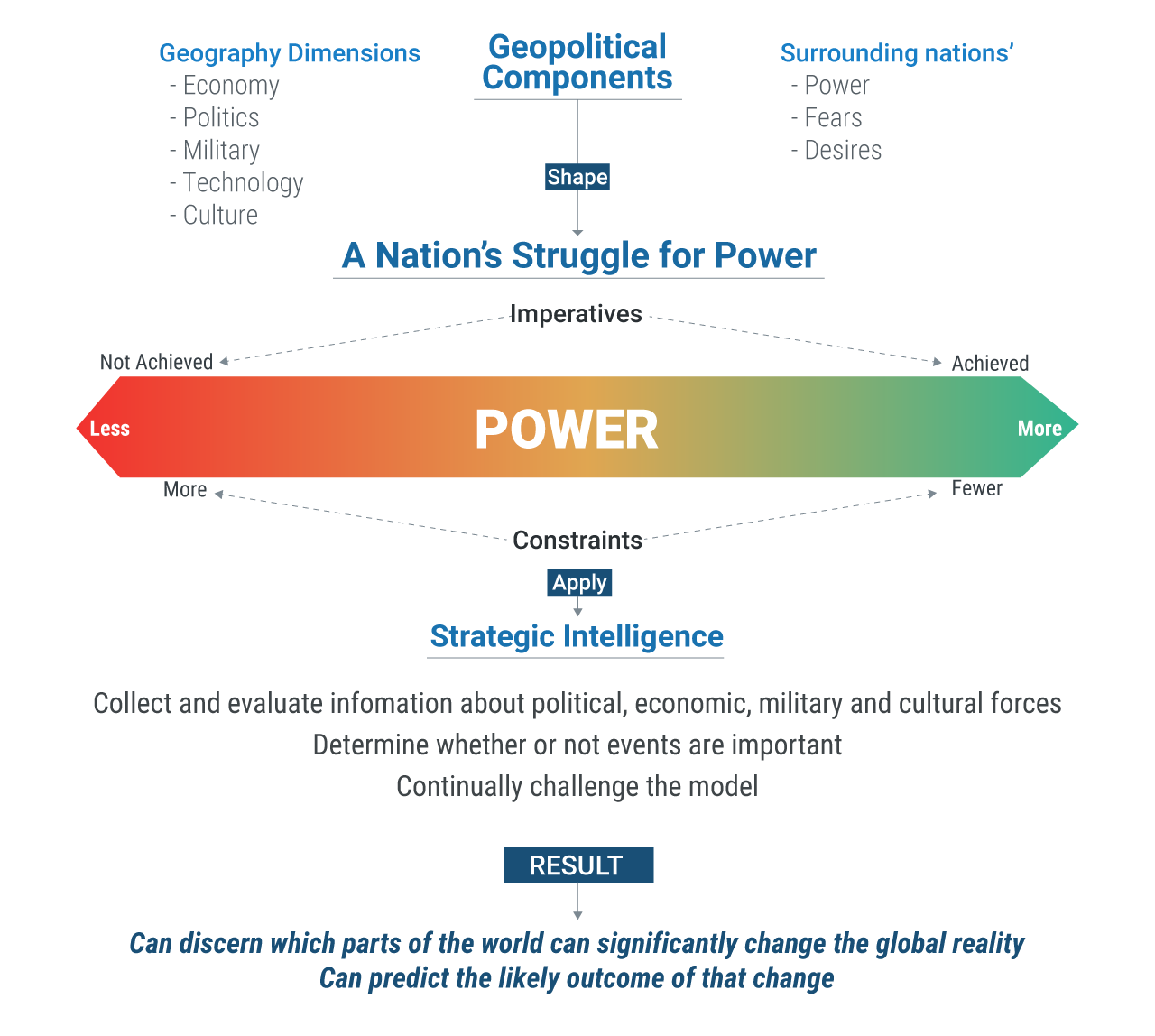
The tension described by Moscow is a byproduct of a zero-sum game involving three competing strategic imperatives. Russia's defense of Iran is less about ideological alignment and more about Buffer State Preservation.
The Russian Calculus: Geographic Depth
For Moscow, Iran represents the southern anchor of the "Near Abroad." A pro-Western regime in Tehran would complete the encirclement of Russian interests in the Caucasus and the Caspian Sea. Russia views U.S. accusations as a mechanism to destabilize the North-South Transport Corridor, a critical economic artery that bypasses Western-controlled maritime routes.
The U.S. Calculus: Hegemonic Maintenance
The United States operates on the principle of Regional Hegemony Denial. The primary objective is to prevent any single power from controlling the energy flow of the Persian Gulf. By framing Iran as a rogue actor, the U.S. maintains a justification for its massive military footprint in Qatar, Bahrain, and the UAE. This presence is the "sunk cost" of global dollar hegemony, as the security of energy pricing remains tied to U.S. naval dominance.
The Iranian Calculus: Asymmetric Survival
Iran’s "threat" is, in technical terms, a strategy of Forward Defense. Lacking a modern air force or conventional parity, Iran utilizes a network of non-state actors and missile technology to create a "deterrence through instability" model. This creates a feedback loop: the more the U.S. threatens regime change, the more Iran invests in asymmetric capabilities, which the U.S. then cites as further evidence of the "invented threat."
The Economic Cost of Sanctioned Reality
The accusation of "inventing a threat" has a tangible financial dimension. Sanctions are the primary weapon of non-kinetic regime change, but they require a moral or security-based justification to be enforced globally.
- Secondary Sanctions Risk: By labeling Iran a global threat, the U.S. forces third-party nations (China, India, Turkey) to choose between Iranian energy and the U.S. financial system.
- Market Distortion: The "Iran Threat" adds a permanent risk premium to global oil prices. This volatility benefits high-cost producers and allows for the continued expansion of U.S. shale, which requires higher price floors to remain CAPEX-viable.
The Role of Signal Intelligence and Disinformation
A critical component of Russia’s claim involves the Weaponization of Intelligence. In the digital age, the "invention" of a threat does not require the creation of false data from thin air. Instead, it involves the selective amplification of raw signals.
The "Intellectual Extraction" phase involves taking low-confidence intelligence—such as a localized military exercise or a decrypted communication between mid-level officers—and presenting it as a high-confidence indicator of a planned strike. This creates a Dilemma Action for the target: if Iran ignores the U.S. buildup, it risks a surprise attack; if it mobilizes in defense, that mobilization is filmed and broadcast as proof of aggressive intent.
Technical Barriers to Verification
The fundamental friction in this dispute is the Verification Asymmetry.
- The Nuclear Threshold: The IAEA (International Atomic Energy Agency) provides technical data, but "threat" is a political interpretation of that data. 60% enrichment is a technical fact; whether that 60% indicates a "peaceful program" or a "nuclear breakout" is a subjective strategic assessment.
- Cyber Attribution: Many of the "attacks" cited as evidence of the Iranian threat are cyber-based. The technical difficulty of 100% accurate attribution allows for the fabrication or misdirection of digital signatures to frame a state actor for a third party’s operations.
The Strategic Endgame: Regional Realignment
The current friction indicates a shift from a unipolar to a multipolar enforcement model. Russia’s vocal defense of Iran signals the formation of a Counter-Hegemonic Bloc. This bloc utilizes "Sovereignty Defense" as its primary rhetorical tool, arguing that the U.S. definition of "international norms" is actually a set of flexible rules designed to facilitate the removal of non-compliant governments.
This leads to a bifurcation of global security:
- The Atlanticist Model: Security through intervention, preemption, and liberal democratic expansion.
- The Eurasian Model: Security through Westphalian sovereignty, non-interference, and authoritarian stability.
The "Iran Threat" is the primary laboratory where these two models are currently clashing.
Strategic Recommendation for Regional Stability
Maintaining equilibrium in the Persian Gulf requires a departure from the "Regime Change vs. Total Deterrence" binary. Stability will only be achieved through a Mutual Security Architecture that addresses the underlying cost functions of all parties.
The objective must be the establishment of a Technical Verification Corridor. This involves:
- Standardizing the definition of "aggressive posturing" to include specific troop movements and cyber-activity signatures.
- Decoupling economic sanctions from political "threat" narratives, moving instead toward a performance-based lifting of restrictions based on third-party verified military de-escalation.
- Acknowledging the Russian "security of depth" requirement by formalizing the non-alignment of specific buffer territories.
Failure to transition to this structured engagement model will result in a "Self-Fulfilling Prophecy Trap." By treating the invention of a threat as a legitimate tool of statecraft, the U.S. ensures that Iran eventually becomes the very threat it was accused of being, forcing a kinetic confrontation that neither the global economy nor regional security can sustain. The move is to pivot from threat-based narratives to interest-based transparency, neutralizing the "invented" element through rigorous, multi-lateral technical oversight.
Would you like me to analyze the specific economic impact of the North-South Transport Corridor on Russian-Iranian trade volumes?