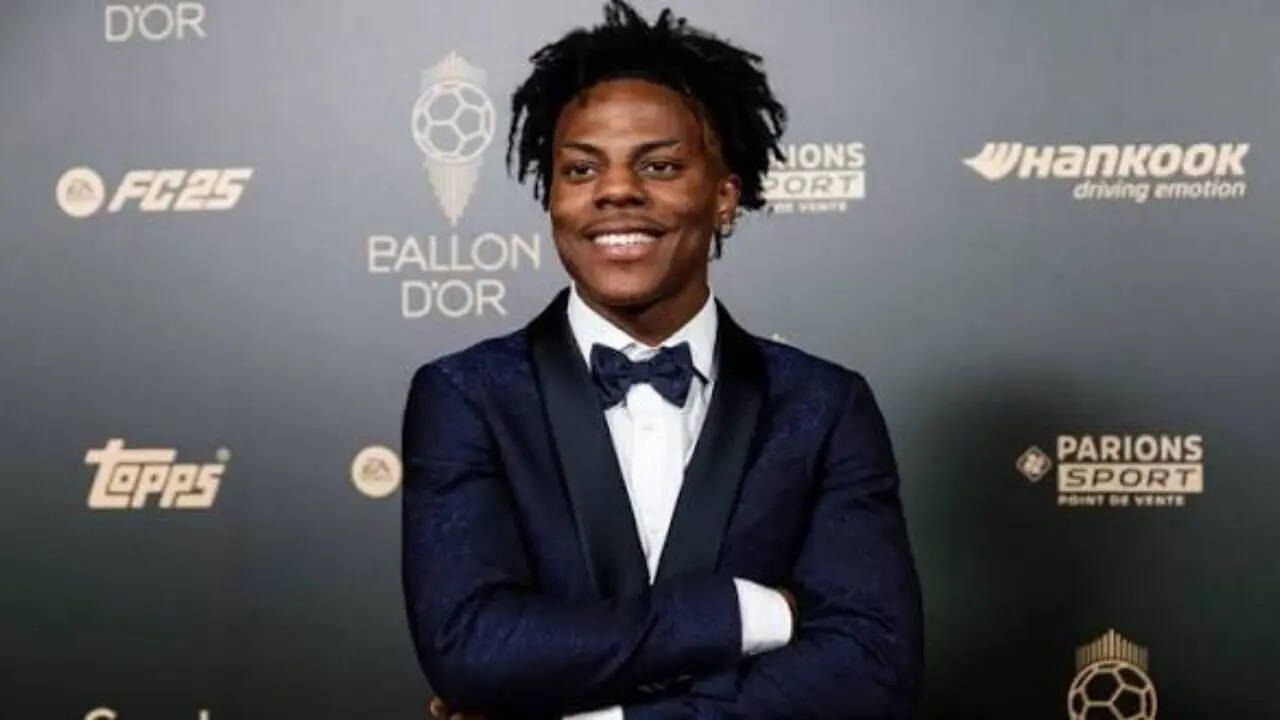
The physical altercation between Darren "IShowSpeed" Watkins Jr. and WWE Superstar LA Knight represents more than a viral crossover; it is a calculated exercise in Brand Friction Theory. By introducing a high-volatility digital creator into a scripted, high-impact athletic environment, both entities capitalize on the blurring lines between performance art and genuine physical risk. The injury sustained by Watkins—a result of being thrown mid-livestream—serves as a stress test for the operational logic of modern "creator-athlete" collaborations.
The Convergence of Dual-Incentive Structures
The WWE and the creator economy operate on fundamentally different risk-reward architectures that, when merged, create a volatile third space. Understanding this event requires breaking down the incentives of each stakeholder:
- The Creator (IShowSpeed): Operates on a "Liveness" premium. His value is tied to the perception of unscripted, chaotic spontaneity. For Watkins, the physical toll of a stunt is the currency used to purchase "authenticity" from an increasingly cynical audience.
- The Organization (WWE): Operates on "Controlled Chaos." The WWE is a precision-engineered machine designed to look dangerous while maintaining maximum safety through rehearsed choreography (kayfabe).
- The Audience: Demands a "Break in the Matrix." They are looking for the moment where the script fails or where the stakes transcend the predetermined outcome.
When LA Knight threw Watkins, the collision was not just physical; it was a collision of these three frameworks. The resulting injury—real or exaggerated—validates the event for the audience because it fulfills the "Price of Admission" for high-stakes content.
The Kinematics of Professional Wrestling vs. Amateur Engagement
The primary failure point in these crossovers is the Competency Gap. Professional wrestlers undergo years of training in "taking a bump"—the art of dispersing kinetic energy across the largest surface area of the body to prevent localized trauma.
The physics of the throw executed by LA Knight can be broken down into three stages of impact:
- Potential Energy Accumulation: The moment of the lift, where the recipient loses all agency and becomes a passive object.
- The Velocity Phase: The acceleration toward the canvas or floor.
- Energy Dissipation: The moment of contact.
A trained athlete uses a "flat back" landing to minimize pressure on the spine and cranium. A creator like Watkins, regardless of his athletic background, lacks the muscle memory for professional-grade dissipation. When the body hits a surface without this technical preparation, the energy is absorbed by the skeletal structure and soft tissues. The injury reported by Watkins is the logical outcome of applying professional-grade force to a non-professional recipient. This creates a liability bottleneck for organizations: how much "realism" can they afford before the risk to the guest asset outweighs the promotional gain?
The Architecture of the Modern Viral Event
The incident was not an accident of geography; it was the result of Strategic Proximity. To understand why this event achieved such high saturation, we must look at the structural components of the broadcast:
1. The Multi-Platform Feedback Loop
The event happened on a livestream, meaning the audience saw the "raw" feed before the WWE's polished, multi-cam production could sanitize it. This creates a sense of "First-Person Discovery." The viewer feels they have witnessed something the "establishment" didn't fully control, even if the interaction was broadly planned.
2. The Credibility of Consequence
In a digital economy saturated with deepfakes and staged "pranks," physical pain is one of the last remaining markers of truth. The injury functions as a proof-of-work mechanism. By getting hurt, Watkins signals to his fan base that his commitment to the "bit" is absolute, thereby increasing his long-term social capital.
3. Cross-Demographic Liquidity
WWE seeks to lower the average age of its viewership, while Watkins seeks to move from the "streamer" silo into the "mainstream celebrity" silo. The crossover acts as a bridge. LA Knight’s role as the "enforcer" reinforces the WWE's brand of toughness, while Watkins' role as the "victim" reinforces his brand as the fearless, if slightly reckless, underdog.
Risk Management and the "Work-Shoot" Paradox
In wrestling terminology, a "work" is scripted, and a "shoot" is real. The Watkins-LA Knight incident sits in the Hybrid Zone. This zone is where the most valuable intellectual property in sports entertainment is currently being generated.
However, this strategy carries significant operational risks:
- The Insurance Barrier: As these crossovers become more frequent, the cost of insuring a non-contracted guest against professional-grade physicality will skyrocket.
- Brand Dilution: If the guest is treated too gingerly, the "hardcore" WWE audience rejects the segment as "soft." If the guest is treated too roughly, the creator’s audience views the WWE as a bully or an unsafe environment.
- Algorithmic Volatility: Platforms like YouTube and Twitch have varying tolerances for depictions of physical harm. If an injury is too graphic, the very content designed to go viral may be demonetized or suppressed by safety filters.
The Technical Execution of the "Throw"
Analyzing the footage through a biomechanical lens reveals the specific mechanics of the injury. LA Knight’s execution was technically sound from a wrestling perspective—he utilized his core strength to generate lift and ensured a clear flight path. However, the variable that cannot be accounted for in a "live" environment is the recipient's Inertial Response.
If Watkins tensed his muscles or attempted to "catch" himself with his arms (a natural human instinct), he increased the likelihood of a joint dislocation or a fracture. In professional wrestling, the recipient must remain "loose" until the moment of impact. The injury is a direct consequence of the Instinctive Resistance of an untrained participant.
The Economic Impact of the Injury
We can quantify the value of this injury through the lens of Attention Yield.
- Short-term Spikes: The immediate 24-hour window post-impact sees a massive influx of "Clip Culture" consumption. These are 15-60 second snippets shared across TikTok, X, and Instagram.
- Mid-term Retention: The "Injury Update" video. This is a secondary content pillar where Watkins discusses the pain, shows medical reports, or wears a brace. This generates a second wave of engagement with higher watch times and higher ad rates.
- Long-term Narrative: The "Rematch" or "Revenge" arc. The injury provides a logical foundation for Watkins to return to WWE programming in the future. Without the injury, the segment is a one-off. With the injury, it becomes a story.
The injury is, paradoxically, the most "productive" part of the interaction. It transforms a fleeting moment into a durable narrative asset.
Strategic Recommendations for Future Crossovers
To optimize the ROI of these high-risk collaborations while mitigating terminal brand damage, organizations must move toward a Phased Integration Model.
- The Buffer Zone: Use intermediaries. Rather than direct physical contact with a top-tier star immediately, creators should interact with "safe" hands—veterans known for their ability to protect opponents.
- The Prop Requirement: Utilize external objects (tables, chairs, or padded areas) to create the illusion of higher impact while providing a more predictable landing surface than the floor or the ring canvas.
- The Pre-emptive Narrative: Build the medical storyline before the physical contact. If the audience expects a "collision," the actual physical force required to satisfy them is lower.
The incident between IShowSpeed and LA Knight is a precursor to a new era of entertainment where the boundary between the digital avatar and the physical body is erased. The injury is not a failure of the system; it is a feature of the new attention economy. The only way to maintain the "Realism Premium" is to occasionally pay the "Physical Tax."
The strategic play for the WWE is clear: they must lean into the "Unsafe" reputation of their stars while simultaneously tightening the technical protocols behind the scenes. For creators like Watkins, the play is to continue leveraging their physical safety as a bargaining chip for mainstream relevance, knowing that in the digital age, a bruise is a badge of authenticity that no CGI or script can replicate.