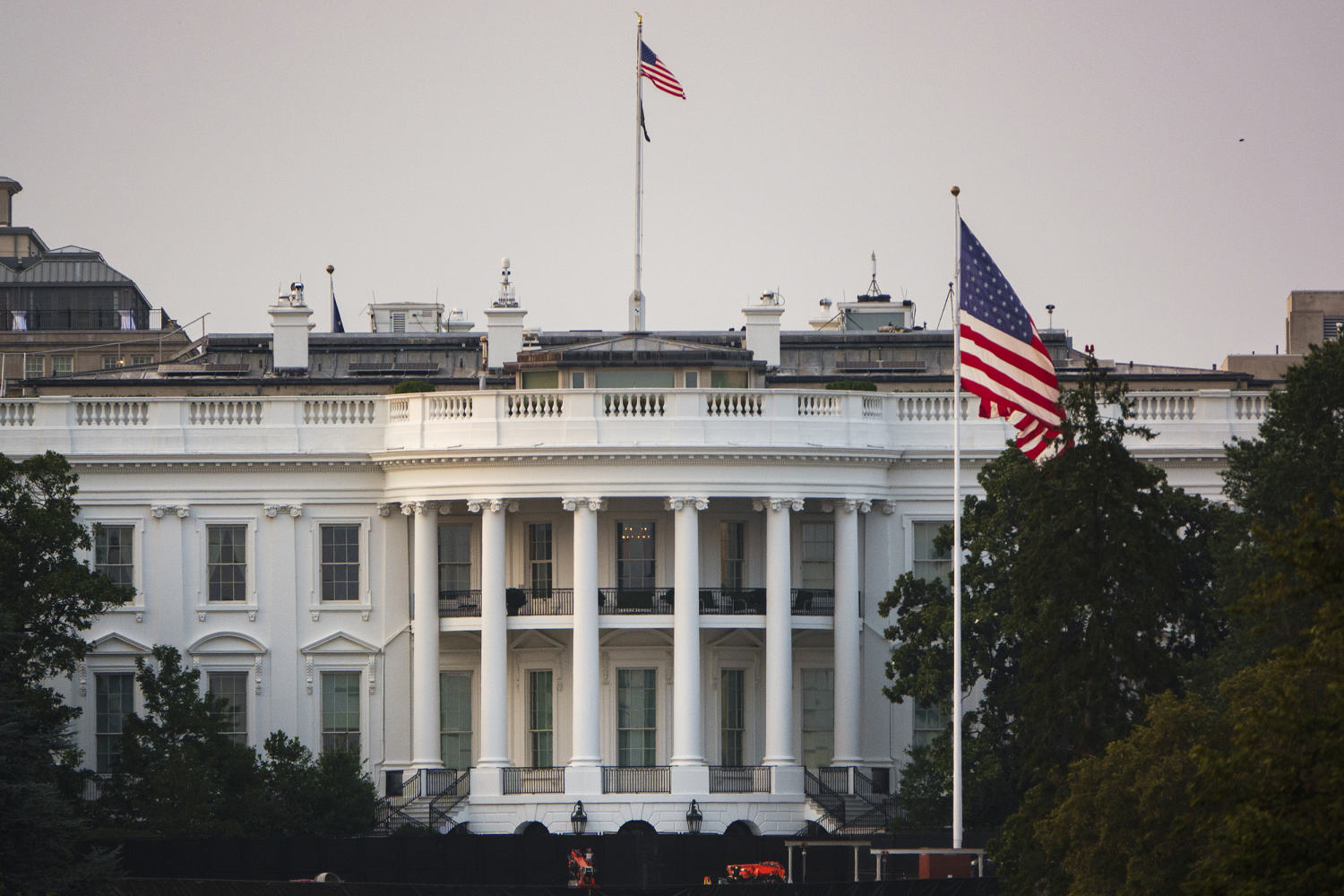
According to reports from the Department of Homeland Security (DHS) and coverage by major news outlets, a Venezuelan man who stated that voices told him to kill Donald Trump was arrested near the White House. Standard reporting on incidents like this follows a predictable, formulaic script. It highlights the nationality of the suspect, quotes the most alarming soundbite from the arrest affidavit, and implies either a systemic collapse of border enforcement or a uniquely unprecedented moment of political violence.
Both of those interpretations are overly simplistic. When media coverage reduces a complex security incident to a clash between immigration policy and sensationalist true-crime tropes, it obscures the actual mechanics of executive protection, threat assessment, and public safety. Don't miss our previous coverage on this related article.
To understand what actually happened near the White House—and what happens dozens of times every year without making national headlines—you have to strip away the partisan framing and look at how protective intelligence actually operates.
The Illusion of the "Unprecedented" Threat
Legacy news outlets thrive on novelty. Framing an arrest near the Executive Mansion as a shocking, isolated anomaly drives clicks, yet the empirical reality of threats against U.S. presidents tells a completely different story. If you want more about the history of this, NBC News provides an in-depth breakdown.
The U.S. Secret Service Protective Intelligence and Assessment Division (PIAD) investigates thousands of threats and suspicious individuals every single year. According to long-standing research by the Secret Service’s National Threat Assessment Center (NTAC)—most notably the foundational Exceptional Case Study Project conducted by researchers Robert Fein and Bryan Vossekuil—individuals who approach or attempt to attack public figures rarely fit the profile of a sophisticated ideological operative or a state-sponsored assassin.
Instead, the data consistently shows that the overwhelming majority of individuals detained near protected sites are experiencing acute, untreated mental illness, often accompanied by auditory hallucinations or grandiose delusions. When a suspect tells arresting officers that "voices" instructed them to harm a political leader, security professionals do not view that through the lens of international geopolitics. They view it as a classic clinical presentation of command hallucinations.
By leading with the suspect's nationality alongside the threat against a high-profile political figure, conventional reporting conflates two entirely separate policy domains: border security and psychiatric crisis intervention. While immigration status is a factual detail of the arrest record, treating it as the primary explanatory variable ignores decades of behavioral threat assessment data showing that domestic citizens and foreign nationals exhibiting severe psychosis follow nearly identical behavioral pathways when fixating on public figures.
How Protective Rings Actually Work
Another major flaw in standard reporting is the implication that an arrest "near the White House" represents a near-miss catastrophe. This misunderstands the architecture of modern executive protection.
The White House complex is not defended by a single fence; it is protected by concentric rings of physical, technological, and human surveillance that extend blocks beyond the perimeter.
- The Outer Perimeters: Long before an individual reaches the black wrought-iron fencing on Pennsylvania Avenue or Lafayette Square, they are observed by uniformed Secret Service officers, Metropolitan Police, plainclothes counter-surveillance teams, and automated behavioral detection systems.
- Behavioral Indicators: Security personnel are trained to spot baseline deviations—individuals loitering with unusual fixation, muttering to themselves, carrying atypical bags, or approaching checkpoints without clear purpose.
- Early Interdiction: The fact that the individual was intercepted, questioned, and arrested before breaching the inner perimeter is evidence of the system functioning precisely as designed, not evidence of its failure.
In protective intelligence, an arrest outside the gate is a routine interdiction. Yet, because the public rarely sees the daily logs of the Uniformed Division, a single press release from DHS or the U.S. Attorney's Office gets magnified into a national crisis.
The Contagion Effect of Sensational Headlines
There is a well-documented downside to how news organizations cover these arrests, and it goes beyond simple inaccuracy. Criminologists and forensic psychologists have spent decades studying the "contagion effect" in targeted violence.
When media outlets broadcast the exact verbal statements of a delusional individual—specifically highlighting that claiming to hear voices targeting a president guarantees immediate national fame—they inadvertently create a behavioral script for other unstable individuals. Research published by the National Threat Assessment Center emphasizes that publicizing the specific grievances or delusions of would-be attackers can act as an accelerant for copycats seeking notoriety or validation for their internal compulsions.
Responsible reporting requires balancing the public's right to know about security incidents with an understanding of how publicity interacts with severe mental illness. Repeating verbatim threats in headlines serves neither public safety nor nuanced political discourse.
What the Public Should Actually Ask
When news breaks of an arrest near a protected official, the standard public reaction splits immediately along partisan lines. One side demands sweeping changes to immigration enforcement; the other dismisses the incident entirely or focuses solely on political rhetoric. Both reactions miss the structural issues that actually govern safety around public officials.
A more productive line of inquiry focuses on the intersection of public space, mental health infrastructure, and federal jurisdiction:
- How are federal and local agencies coordinating mental health interventions? Washington, D.C., like every major metropolitan area, experiences high rates of untreated severe mental illness among individuals living on the streets or traveling into the city during acute episodes. The Secret Service frequently acts as a de facto first responder to psychiatric crises simply because the White House sits in the middle of a dense urban center.
- What happens after the arrest? Most individuals detained for making verbal threats near the White House are not sentenced to decades in maximum-security prisons. Many are found incompetent to stand trial and are remanded to federal medical centers, such as FMC Butner, for psychiatric stabilization. Understanding the legal pipeline—from initial criminal complaint under 18 U.S.C. § 871 (threats against the President) to forensic psychological evaluation—provides a far more accurate picture of the justice system than sensational headlines ever could.
- Are threat assessment teams adequately resourced to track escalation? The most dangerous individuals are rarely the ones shouting at uniformed officers outside a fence. They are the ones who engage in quiet, methodical planning—acquiring weapons, conducting surveillance, and avoiding contact with law enforcement until the moment of an attack. Over-indexing media attention and political outrage on disorganized, overtly delusional individuals can distract from the quieter, more calculated threats that require deep investigative resources.
The Limits of a Purely Clinical View
Focusing strictly on behavioral threat assessment and clinical psychology has its own blind spots. Critics of this approach rightly point out that the motive behind a security breach does not change the physical lethality of a weapon if an individual manages to bypass outer perimeters. Whether an attacker is driven by calculated political extremism, foreign espionage, or untreated schizophrenia, the kinetic risk to protectees and bystanders remains identical.
Furthermore, dismissing immigration or vetting failures entirely when a foreign national is involved ignores legitimate questions about how individuals enter the country and whether records of prior violent behavior or severe psychiatric history are adequately shared across international borders. A comprehensive security posture cannot afford to ignore border vetting any more than it can afford to ignore domestic mental health failures.
The real issue is precision. Conflating a disorganized psychiatric crisis with an organized political assassination plot degrades public understanding of both phenomena. When every incident near the White House is flattened into a partisan talking point, the public loses sight of how security actually works—and what real threats actually look like.