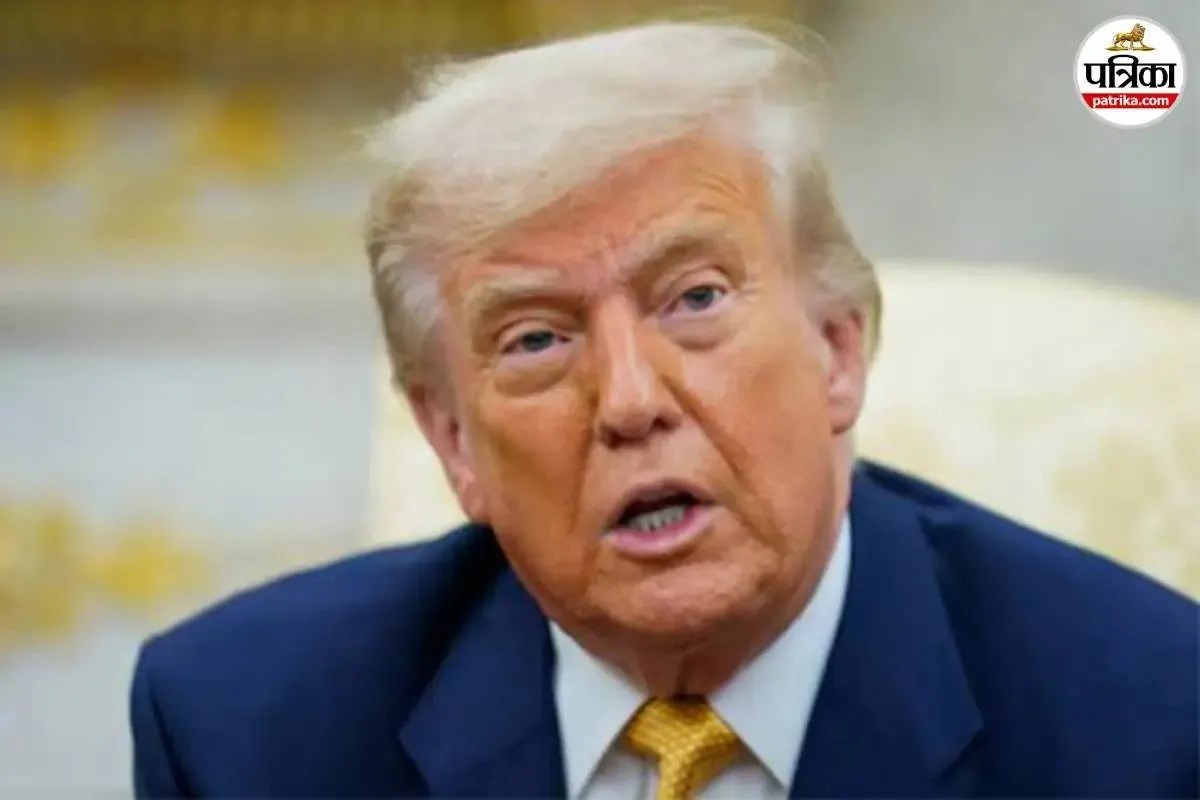
The global foreign policy establishment is having another collective panic attack. Mainstream headlines are screaming about Donald Trump’s latest rhetorical missile aimed at Tehran, quoting his ultimatum that Iran must either sign a deal or face a finished job. The commentary follows a tired, predictable script: analysts warn of an imminent regional conflagration, legacy media decries the breakdown of traditional diplomacy, and self-proclaimed experts predict an unavoidable march toward war.
They are missing the entire point.
The lazy consensus treats presidential rhetoric as a literal statement of military intent. It views international relations through the rigid lens of twentieth-century statecraft, where an ultimatum is the final step before the bombers take off. But treating a transactional property developer turned politician like a classic neoconservative hawk is the fundamental error of modern political analysis.
Trump’s threats of total destruction are not a prelude to war. They are a substitute for it.
The Mirage of the Neocon Trump
For decades, the Washington foreign policy apparatus—the collective group of bureaucrats, think-tank fellows, and defense contractors often called "the Blob"—has operated on a specific doctrine. That doctrine dictates that threats must be measured, incremental, and backed by a willingness to commit trillions of dollars to nation-building and regime change.
When Trump bypasses this framework to issue a raw, maximalist threat, the establishment panics because they assume he plans to use the establishment's playbook to enforce it. They think he wants to invade. They think he wants regime change in Tehran.
Having analyzed the mechanics of economic warfare and Middle Eastern geopolitical shifts for over fifteen years, I have watched Washington repeatedly miscalculate the relationship between presidential posturing and actual troop movements. The data tells a completely different story than the headlines.
During his first administration, Trump’s "maximum pressure" campaign was accompanied by some of the most aggressive anti-Iran rhetoric in American history. Yet, when Iran shot down an expensive American Global Hawk drone in 2019, Trump called off a retaliatory military strike at the last minute. Why? Because ten minutes before the scheduled strike, he asked for a casualty estimate, decided 150 dead Iranians was disproportionate to an unmanned drone, and walked away. A real hawk does not cancel a strike over a casualty estimate. A real hawk looks for an excuse to climb the escalation ladder.
Trump is fundamentally a non-interventionist merchant operating under an isolationist framework. He views foreign military deployments as a bad business deal where America spends blood and treasure to protect shipping lanes and borders for countries that do not pay their bills. The bombastic rhetoric is designed to achieve a psychological edge without spending a single dime on fuel for aircraft carriers.
The Mechanics of Corporate Bluffing on a Global Stage
To understand why the "deal or destruction" ultimatum is misunderstood, you have to understand the corporate negotiation tactic known as the "Crazy Ivan" or the intentional projection of irrationality. It is a modernized version of Richard Nixon’s Madman Theory, but stripped of ideological baggage and applied like a Manhattan real estate negotiation.
In a standard geopolitical negotiation, state actors use predictable, calibrated leverage. They threaten targeted sanctions, or they move a destroyer two hundred miles closer to a coast. The problem with calibrated leverage is that your opponent can calculate the exact cost of defiance. Iran’s leadership knows precisely how to absorb a 5% increase in economic pressure or a standard diplomatic rebuke. They have built an entire state survival apparatus around enduring calculated pain.
When Trump introduces an uncalibrated, absolute threat—"make a deal or we finish the job"—he breaks the opponent's spreadsheet. He forces the adversary to calculate the risk of an irrational actor doing the unthinkable.
Look at how this plays out mathematically in risk assessment models. If Iran calculates a 95% chance that a US president will follow standard diplomatic protocols, they will continue their regional proxy operations with impunity. If they believe there is even a 5% chance that the person in the White House might actually order a catastrophic military strike because his ego was bruised on social media, their risk premium skyrockets.
The threat is the strategy. The goal is to force Tehran back to a bilateral negotiating table where Washington holds every card, not to actually launch an invasion that would tank the global economy and destroy Trump’s domestic political capital.
The Failure of the Sanctions Obsession
The mainstream media loves to focus on the immediate economic impact of sanctions, pointing to the collapse of the Iranian rial or the drop in official crude exports as proof that the strategy is working. This is another misreading of the mechanics of the Iranian state.
Sanctions do not cause regimes to collapse; they cause regimes to consolidate.
When you cut a nation off from the global financial system, you do not empower the moderate, Western-leaning middle class. You destroy them. You wipe out the private merchants, the tech entrepreneurs, and the civil society actors who rely on international commerce. The only entities capable of surviving a total economic blockade are state-backed syndicates, smuggling networks, and military organizations like the Islamic Revolutionary Guard Corps (IRGC).
The IRGC thrives under sanctions because they control the black market. They control the ports, the cross-border smuggling routes into Iraq and Turkey, and the shadow fleets that sell discounted oil to independent refineries in China. By tightening the economic vise without offering a clear, transactional exit ramp, traditional sanctions simply entrench the most hardline elements of the regime.
The contrarian truth is that Trump’s approach recognizes this reality better than the liberal internationalist approach. The Joint Comprehensive Plan of Action (JCPOA), signed in 2015, was built on the premise that integrating Iran into the global rules-based order would gradually alter its behavior. It was an ideological project. Trump’s approach is entirely cynical and transactional. He does not care about altering Iran's internal behavior, improving their human rights record, or fostering a democratic awakening in the Middle East. He wants a signed piece of paper that limits their nuclear ambitions and regional missile proliferation in exchange for sanctions relief, allowing him to declare a victory and completely exit the theater.
The Real Danger Is Not the President
If the threat of war is a bluff, does that mean the situation is safe? Absolutely not. But the danger is not coming from the Oval Office tweets. The danger comes from the permanent bureaucracy in Washington misinterpreting the theater.
The real escalatory loop happens when the military establishment, European allies, and regional partners take the maximalist rhetoric literally and begin shifting their posture to match it.
Imagine a scenario where a mid-level American naval commander in the Persian Gulf, primed by months of headlines about an impending conflict, misinterprets a routine maneuver by an Iranian fast-attack craft. In a hyper-tense environment where everyone believes the president wants war, that commander is far more likely to open fire than he would be during a period of conventional diplomacy.
Once blood is spilled, the transactional nature of the strategy collapses. The president is forced by domestic political pressure to defend American troops, the Iranian regime is forced by its survival narrative to retaliate, and both sides are dragged into a conflict that neither leader actually wanted.
The media’s insistence on framing every ultimatum as a sign of impending madness creates the very environment where accidental escalation becomes possible. By reporting on a standard negotiation tactic as if it were a declaration of World War III, they create a feedback loop of panic that limits diplomatic flexibility.
The Broken Premise of the "People Also Ask" Queries
If you look at what the public is asking about this conflict, the flaws in the mainstream narrative become even more obvious. People want to know: "Will Trump go to war with Iran?" or "Can Iran defeat the US military?"
These are the entirely wrong questions.
The question isn't whether the US can defeat Iran in a conventional war. Of course it can. The US military can destroy any conventional force on earth within weeks. The real question is: "Can the US economy survive the aftermath of a war with Iran?"
The answer is a resounding no. Iran does not need to win a naval battle in the Persian Gulf to defeat America. They simply need to sink a few commercial tankers or plant naval mines in the Strait of Hormuz, through which 20% of the world’s petroleum passes.
If the Strait of Hormuz closes for even two weeks, global oil prices shoot past $150 a barrel. Global supply chains shatter. Inflation, which has already battered Western economies, would skyrocket to unprecedented levels. The stock market would suffer a historic correction.
Trump knows this. He watches the Dow Jones Industrial Average like a hawk watches its prey. His entire political brand is built on economic prosperity and domestic growth. The idea that he would willingly jeopardize the US economy—and by extension, his own legacy—to fight a bloody, protracted war in the Middle East defies everything we know about his priorities.
Stop Reading the Script
If you want to understand the future of US-Iran relations, you have to stop reading the script provided by legacy defense analysts.
Stop assuming that an ultimatum means the end of diplomacy. In a transactional world, an ultimatum is the official beginning of the negotiation. The louder the threats, the closer the parties are to testing each other's true bottom lines.
The current panic over the "finish the job" rhetoric is just history repeating itself. We saw this exact playbook with North Korea in 2017. The media warned that "fire and fury" would lead to a nuclear holocaust. Pundits drew up evacuation plans for Seoul. Months later, Trump was walking across the Demilitarized Zone, shaking hands with Kim Jong Un, and signing a vague, symbolic peace agreement.
The strategy worked not because Trump intended to drop a nuclear bomb on Pyongyang, but because he convinced Kim Jong Un that he just might be crazy enough to do it.
Tehran is currently running the same calculations. They are weighing the economic pain of their current isolation against the unpredictable risk of a Washington administration that refuses to play by the established rules of the diplomatic game. They are not preparing for an inevitable war; they are figuring out how much they need to concede to get a deal that ensures their survival.
The corporate media will continue to miss this dynamic because they are addicted to the narrative of constant crisis. They will parse every word of the next ultimatum, interview retired generals who predict doom, and lament the death of traditional statecraft.
Let them panic. The reality is far more cynical, far more calculated, and entirely focused on the art of the deal. Treat the rhetoric as theater, follow the economic indicators, and ignore the warmongering commentary from people who haven't updated their geopolitical models since 1991.