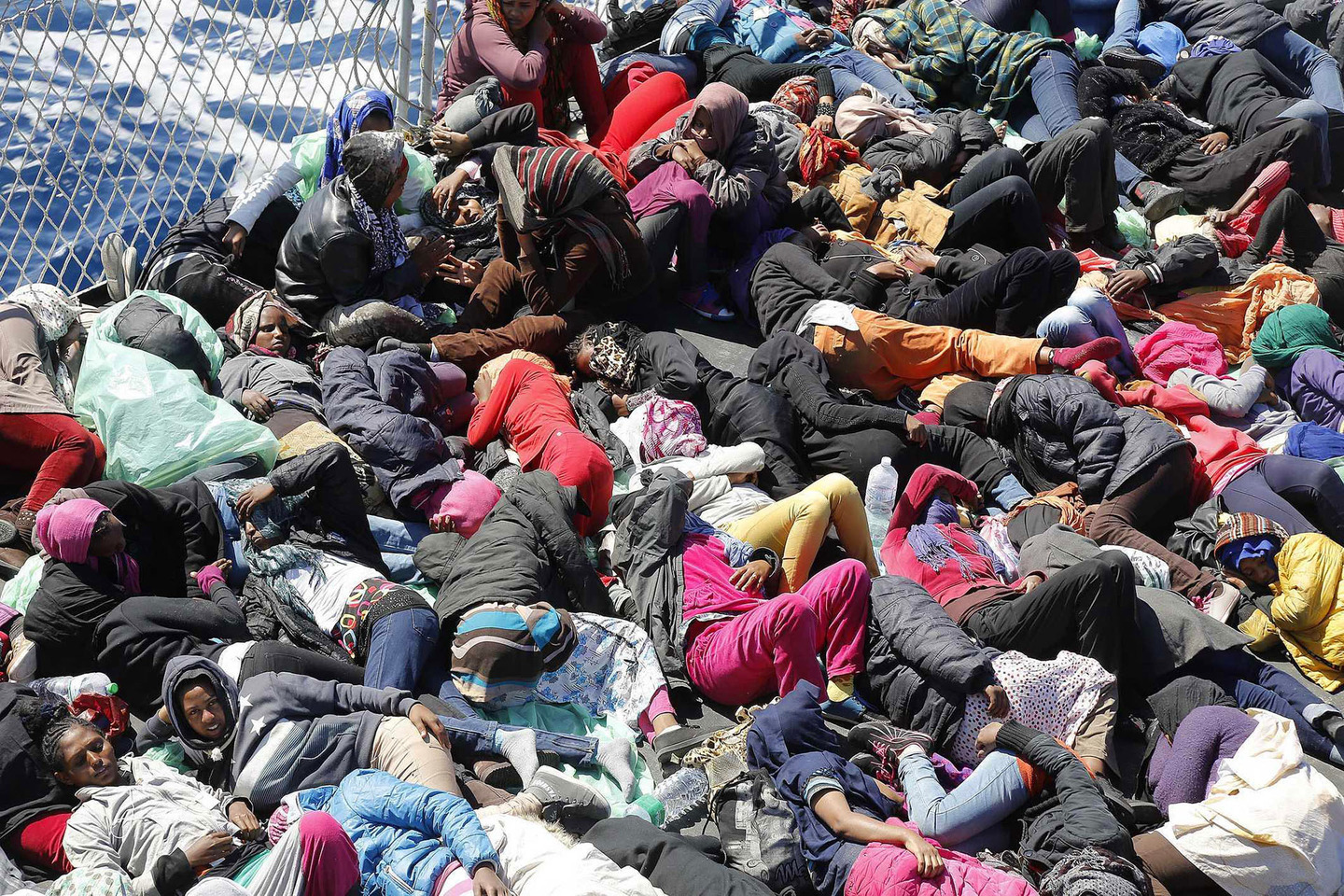
The standard media script for Mediterranean tragedies is as predictable as it is useless. A rubber dinghy deflates off the coast of Sabratha. Seventeen bodies are recovered. Nine are missing. The news cycle spends forty-eight hours performing a ritual of "thoughts and prayers" mixed with vague condemnations of human traffickers. Then, we go back to ignoring the structural incentives that make these deaths inevitable.
Stop calling these "tragedies." A tragedy is an accident. What is happening in the Central Mediterranean is a calculated outcome of European border architecture.
The mainstream narrative treats the Libyan Coast Guard as a savior and the smugglers as the sole villains. This is a fairy tale for the naive. If you want to understand why people keep dying in the water, you have to stop looking at the shipwrecks and start looking at the spreadsheets in Brussels and Tripoli.
The Outsourcing of Moral Liability
For a decade, the European Union has operated on a doctrine of "externalization." The logic is simple: if you pay a third party to do the dirty work, your hands stay clean. By pouring millions into the Libyan Coast Guard, the EU didn't create a search-and-rescue apparatus. They created a maritime interception force.
I have tracked the movement of these funds. They don't go toward life jackets or better navigation training. They go toward high-speed patrol boats used to pull people back to detention centers that human rights observers have repeatedly described as "hellscapes."
The competitor articles love to quote Libyan officials lamenting the lack of resources. It’s a performance. The scarcity is the point. When you create a legal vacuum where NGOs are criminalized for performing rescues and state actors are paid to be "selective" about their intervention, you aren't trying to save lives. You are trying to increase the "cost" of the journey until it becomes a deterrent.
Except, deterrence doesn't work on the desperate. It only increases the body count.
The Smuggler-State Symbiosis
We are told that smugglers are shadowy monsters operating in the dark. In reality, the line between a "human trafficker" and a "local militia commander" in Western Libya is often non-existent.
The industry insider truth that nobody wants to admit? The very people the West funds to stop the boats are often the ones launching them. It’s a circular economy of human misery.
- The militia launches a boat (Profit).
- The militia (as the Coast Guard) "rescues" the boat (EU Funding).
- The migrants are put in detention (Extortion/Forced Labor).
- The cycle repeats.
When seventeen people die at sea, it’s not a failure of the system. For the facilitators on the ground, it’s just a broken shipment. For the politicians in Europe, it’s a data point used to justify even more "security" spending.
The Math of Risk
Let’s look at the physics of the journey. A standard inflatable boat used by smugglers is designed to hold 30 people safely. They routinely pack 120 into them.
The formula for buoyancy isn't a suggestion:
$$F_b = \rho V g$$
Where $F_b$ is the buoyant force, $\rho$ is the fluid density, $V$ is the submerged volume, and $g$ is gravity.
When you exceed the weight limit by 400%, you are betting against basic fluid mechanics. The smugglers know this. The migrants often don't. But more importantly, the patrolling authorities know exactly where these boats are likely to fail based on fuel consumption and engine quality. They watch them on radar. They wait until the boat enters or leaves specific jurisdictions before deciding if "rescue" is politically expedient.
The NGO Criminalization Myth
The most toxic "lazy consensus" is that NGO rescue ships act as a "pull factor." The argument suggests that if you have ships waiting to save people, more people will try to cross.
The data proves this is a lie.
Studies from the European University Institute and various maritime monitors show that the number of departures is tied to weather conditions and the political stability of Libya—not the presence of the Ocean Viking or Sea-Watch.
When you remove the NGOs, the deaths don't stop; they just happen in silence. We only know about these 17 deaths because someone survived to tell the tale. Imagine the thousands who disappear without a single tweet from a Tripoli spokesperson.
Stop Asking for "Better Cooperation"
People also ask: "Why can't Libya and Italy just cooperate better?"
They are cooperating perfectly. The current state of affairs is the result of high-level cooperation. The Memorandum of Understanding between Italy and Libya is doing exactly what it was designed to do: prevent people from reaching European soil at any cost.
If you actually wanted to stop the deaths, you wouldn't buy more patrol boats. You would:
- Establish Humanitarian Corridors: Remove the market for smugglers entirely by providing a legal, checked path for asylum.
- End the Detention Economy: Stop funding entities that use migrants as leverage for more EU aid.
- Decouple Rescue from Migration Policy: Search and rescue should be a blind humanitarian obligation, not a tool for border management.
But we won't do that. Because the "tragedy" of 17 dead migrants is politically easier to manage than the "crisis" of 1700 legal arrivals.
The bodies in the Mediterranean are the physical manifestation of a policy that values "border integrity" over the preservation of life. Every time a news outlet reports these deaths as an "unfortunate accident," they are helping the perpetrators cover their tracks.
Stop mourning the deaths if you aren't willing to dismantle the infrastructure that requires them.
The sea isn't the killer. The ink on the contracts is.