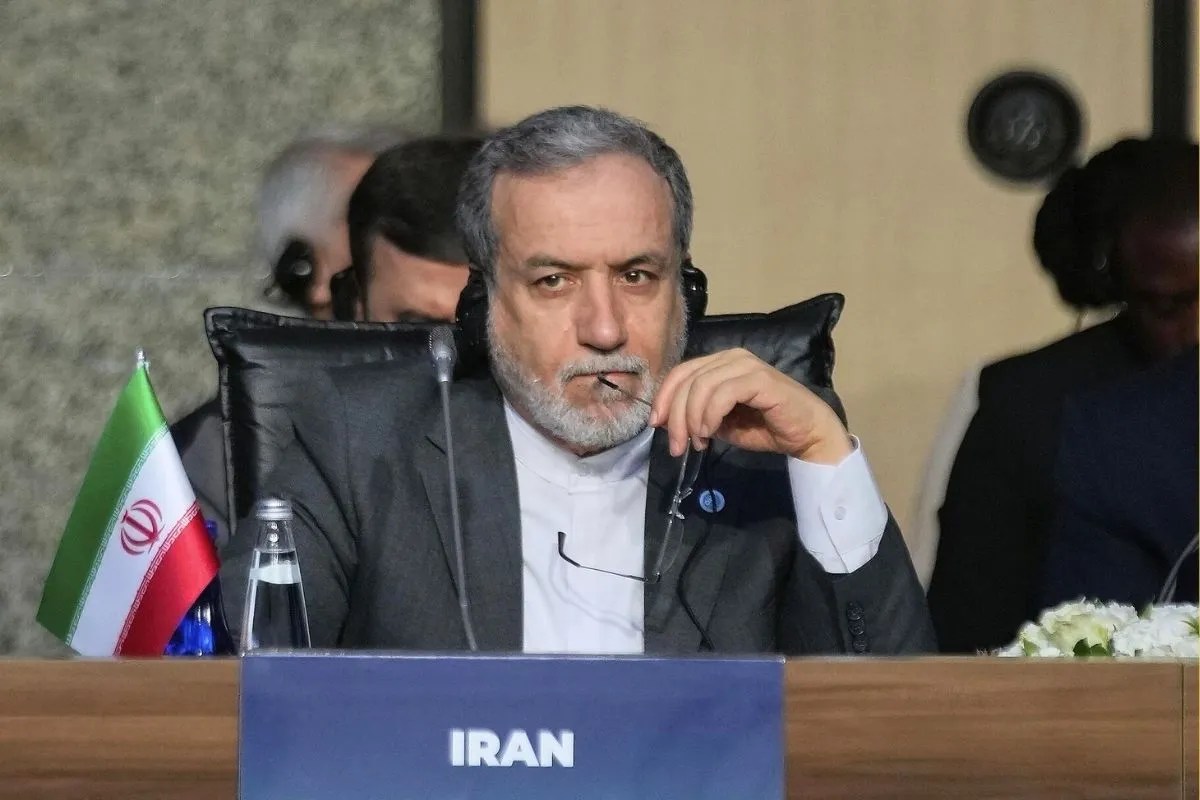
The air in the diplomatic corridors of the Middle East does not smell of ink and old paper. It smells of jet fuel, scorched earth, and the metallic tang of adrenaline. When Abbas Araghchi, Iran’s Foreign Minister, speaks to the cameras, he isn’t just delivering a press release. He is trying to hold back the tide.
Imagine a man standing on a shoreline while the tide comes in, not in gentle laps, but in towering, grey walls of water. Behind him is a nation of eighty-five million people. Farmers in the Khuzestan plains, students in Tehran’s bustling cafes, and grandmothers in Esfahan who have already lived through one "War of the Cities." They know what the whistle of a falling missile sounds like. They haven't forgotten.
Araghchi’s recent statements are not mere political posturing. They are the frantic signals of a navigator realizing the ship is heading for the rocks. He recently welcomed initiatives to prevent an all-out escalation, specifically signaling that Iran is "prepared to stop the war." This isn't the fiery rhetoric of a revolutionary seeking martyrdom. This is the calculated, desperate language of a pragmatist who sees the math of modern warfare and realizes the sum is always zero.
The Invisible Ledger of War
Diplomacy often feels like a game of high-stakes poker played in a dark room. We see the chips—the drones, the hypersonic missiles, the iron domes—but we rarely see the hands of the players. The facts are cold: tensions between Iran and Israel have moved from a "shadow war" of assassinations and cyber-attacks to direct, kinetic confrontation.
When a missile is launched, the cost isn't just the millions of dollars spent on the hardware. The cost is the silence that follows. It is the shuttering of shops. It is the parent who decides not to send their child to school because the sky feels heavy. Araghchi knows that every day of "brinkmanship" leeches the lifeblood out of a regional economy already gasping for air.
He spoke clearly: Iran does not want a wider war. Yet, he paired this with the standard caveat of being prepared for one. It’s a delicate dance. If you look too eager for peace, you look weak. If you look too eager for war, you invite it. He is walking a razor’s edge, trying to convince the international community—and his adversaries—that there is a dignified exit ramp that doesn't involve a cratered landscape.
The Human Cost of a Miscalculation
Consider a hypothetical family in a suburb of Haifa or a neighborhood in Shiraz. They don't care about the intricacies of the "Axis of Resistance" or the tactical advantages of a pre-emptive strike. They care about the hum of the refrigerator. They care about the upcoming wedding of a cousin.
To these people, Araghchi’s words are a thin thread of hope. When he says Iran is open to de-escalation, he is effectively trying to lower the blood pressure of an entire geography. But the problem with de-escalation is that it requires two hands to clap. While Tehran signals a willingness to pull back, the regional machinery of war is already in high gear.
History shows us that wars rarely start because everyone wants them. They start because one side thinks the other is about to start one. It is a feedback loop of fear. Araghchi is attempting to break the loop by stepping into the light and stating, quite simply, that the fire has grown too hot.
The Weight of the Past
To understand why this moment feels so heavy, we have to look at the scars. Iran is a country that remembers the 1980s with visceral clarity. They remember being isolated. They remember the chemical weapons. They remember the "sacred defense."
This historical memory informs every word Araghchi utters. He isn't just a minister; he is a veteran of a system that views the world through the lens of survival. When he talks about "stopping the war," he is talking about preventing a repeat of a decade that broke a generation.
The current tension isn't just about borders or nuclear centrifuges. It’s about the fundamental right to exist without the constant, crushing weight of an impending explosion. The "initiatives" he mentions—mediated by neighbors who are equally terrified of a regional firestorm—are the only tools left in the box.
A Sky Full of Question Marks
What does "prepared to stop" actually mean in the dialect of diplomacy?
It means the price of the status quo has become higher than the price of compromise. It means the back-channel messages from Cairo, Doha, and Muscat have finally painted a picture that is too grim to ignore. The technicalities of the conflict—the range of a Fattah missile or the thickness of a bunker—are secondary to the psychological reality.
Everyone is tired.
The soldiers are tired of the alerts. The politicians are tired of the threats. The civilians are tired of holding their breath. Araghchi’s outreach is a recognition of this exhaustion. He is testing the waters to see if the other side is as tired as they are.
The tragedy of the situation is that even with a willing messenger, the message can be lost in the noise of a thousand sirens. A single errant drone, a misunderstood radar blip, or a commander with an itchy trigger finger can render a week of diplomatic signaling irrelevant in seconds.
Araghchi is shouting into a hurricane. He is saying that the bridge is out ahead, that the road is dangerous, and that there is still time to turn around. He is using the language of the state to express the deepest desire of the individual: to wake up tomorrow and see a sky that is empty of anything but clouds.
The cameras eventually turn off. The Foreign Minister retreats into the hushed rooms of the ministry. But outside, the sun sets over a region that is waiting for a sign that the message was received. The stakes aren't measured in territory or influence anymore. They are measured in the heartbeat of a child sleeping in a city that hopes the sirens won't wake them tonight.
The silence that follows a diplomat’s plea is the loudest sound in the world. It is the sound of a million people waiting to see if the person on the other side of the fence is going to lower their gaze, or tighten their grip.