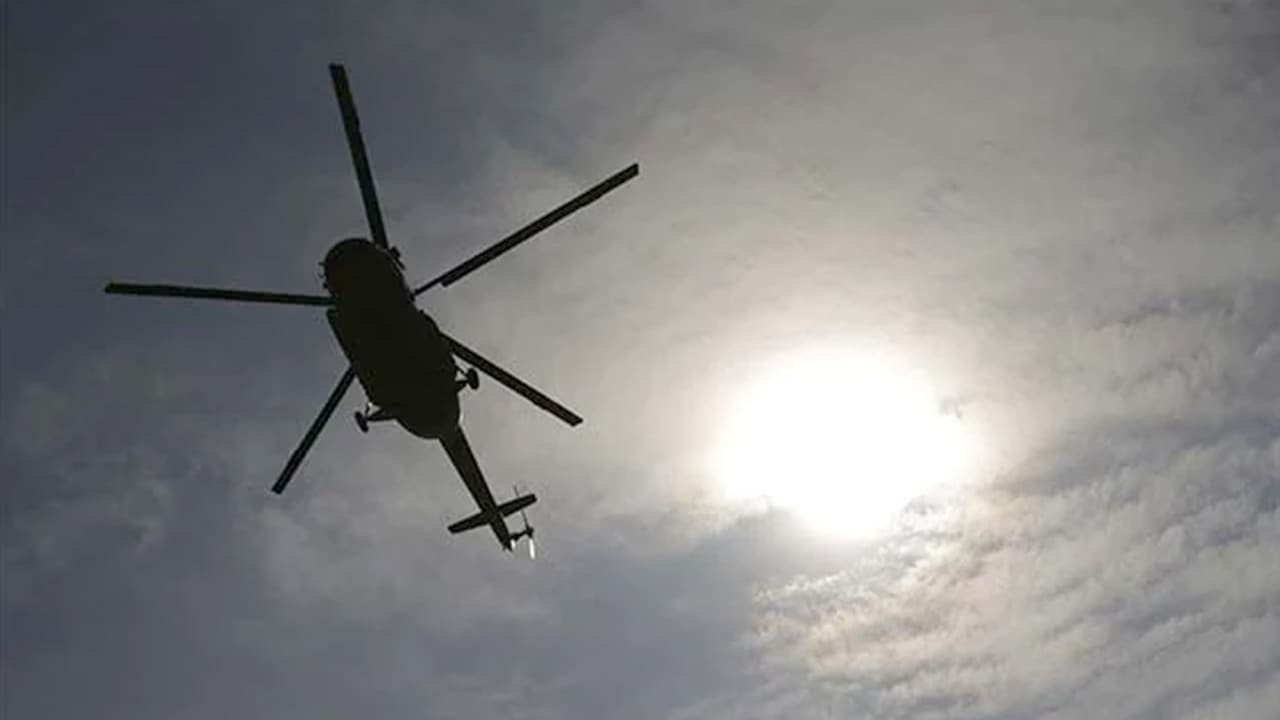
Another helicopter just hit the water off the coast of Miami, leaving one dead and two injured. Cue the predictable, copy-paste local news cycle. Reporters stand on a dock, point at the bay, recite a sterile police blotter, and assure the public that the FAA and NTSB will investigate to determine what went wrong.
That narrative is dangerously lazy.
When a rotorcraft drops out of the sky in South Florida, treating it like an isolated mechanical mystery misses the entire point. The real story is not a broken bolt or a sudden gust of wind over Biscayne Bay. The real story is a predatory, under-regulated sightseeing and charter industry operating in one of the most congested, unforgiving low-altitude airspaces in North America.
I have spent over a decade analyzing aviation safety data and watching commercial operators cut corners to protect razor-thin profit margins. Every time a tour or charter helicopter goes down near a major coastline, the industry trots out the same tired talking points about aviation's overall safety record. They lump heavily regulated commercial airlines—which haven't had a major fatal U.S. crash in over a decade—into the same bucket as Part 91 and Part 135 rotorcraft operators flying fifty-year-old airframes at 500 feet over salt water.
Comparing a Boeing 787 to a Miami sightseeing chopper is like comparing a freight train to a dirt bike.
The Part 91 Loophole Nobody Talks About
If you book a helicopter tour over South Beach, you probably assume the pilot and the aircraft are subjected to the same grueling federal oversight as a commercial airline. You would be dead wrong.
Under Federal Aviation Administration rules, nonstop sightseeing flights that take off and land at the same airport within a 25-nautical-mile radius are exempt from strict Part 135 commercial charter standards. Instead, they operate under Part 91—the exact same loose regulatory framework designed for private hobbyists flying a Cessna on a Sunday afternoon.
Here is what that means in practice:
- Lower Pilot Experience: A commercial pilot with just 250 hours of total flight time can legally fly paying tourists over densely populated beaches and open water.
- Reduced Maintenance Oversight: Part 91 operators do not face the rigorous, mandatory unannounced FAA inspections and strict maintenance tracking required of true commercial carriers.
- No Safety Management Systems (SMS): Unlike airlines, most small helicopter tour companies are not required to maintain formal hazard-reporting systems or fatigue-management programs.
- Zero Overwater Equipment Mandates: Unless the operator voluntarily pays for them, a tour helicopter flying miles off the Miami shoreline does not legally need pop-out emergency floats or life rafts.
Think about that. You can buy a ticket at a kiosk on Ocean Drive, strap into a piston-engine Robinson R44 helicopter with zero flotation gear, and hover over shark-infested, choppy Atlantic waters with a 22-year-old pilot building hours to pad their resume for an airline job.
The National Transportation Safety Board (NTSB) has been screaming about this exact loophole for years. Following the catastrophic 2018 FlyNYON crash in New York’s East River—where five passengers drowned because they were strapped into supplemental harnesses they couldn't unbuckle—the NTSB begged the FAA to close the Part 91 sightseeing exemption. The industry lobbied fiercely against it, arguing that stricter rules would bankrupt small businesses.
So the loophole stayed open. And the crashes kept happening.
Why Water Is a Concrete Wall
When people hear a helicopter crashed into a bay rather than a crowded highway, their immediate reaction is relief. At least it hit the water, they think. Water is soft.
To an aircraft moving at 100 knots, water is indistinguishable from asphalt. Worse, once the fuselage breaks the surface, the physics turn lethal in seconds.
Helicopters are inherently top-heavy. The transmission, the engine, and the main rotor mast sit directly above the passenger cabin. The moment a helicopter hits the water—especially if it lacks emergency inflatable pontoons—it immediately rolls upside down.
Imagine a scenario where you are strapped into a tight cabin with a four-point harness. The aircraft impacts the bay. In less than two seconds, your world flips 180 degrees. Freezing, murky salt water rushes through shattered plexiglass. You are disoriented, battered by the impact, blinded by bubbles, and hanging upside down by your seatbelt while the cabin sinks at five feet per second.
Unless you have undergone HUET (Helicopter Underwater Escape Training)—a brutal, disorienting dunk-tank course mandatory for offshore oil workers and military pilots—your brain will freeze. You will claw at your chest for a standard car seatbelt buckle that isn't there, forgetting that aviation harnesses require turning a rotary dial or lifting a central latch.
In dozens of NTSB reports involving coastal helicopter crashes, autopsies reveal a horrifying pattern: the passengers survived the initial impact with only minor bruises, only to drown three feet below the surface because they couldn't unbuckle their belts in the dark.
The Dead Man's Curve Over Biscayne Bay
To understand why low-altitude coastal flying is so uniquely dangerous, you have to understand a basic aerodynamic concept every rotorcraft pilot memorizes on day one: the Height-Velocity Diagram, universally known in the industry as the Dead Man's Curve.
Unlike an airplane, which has wings that generate lift as long as it moves forward, a helicopter relies entirely on its spinning rotor blades. If the engine fails, the pilot must immediately enter a maneuver called autorotation—dropping the collective pitch to let rushing air spin the rotors like a pinwheel, building up enough rotational energy to flare and cushion the landing at the bottom.
Autorotation works brilliantly if you have altitude or airspeed. If you are flying at 2,000 feet at 90 knots and the engine quits, a skilled pilot can glide safely to a landing spot.
Miami sightseeing and photo flights do not fly at 2,000 feet.
Passengers want close-up photos of celebrity mansions on Star Island, yachts on the Intracoastal, and sunbathers on South Beach. To deliver those views while staying below the busy commercial approach corridors of Miami International Airport (MIA), helicopter pilots routinely fly low and slow—often between 300 and 500 feet at speeds under 50 knots.
That puts the aircraft squarely inside the shaded red zone of the Dead Man's Curve. At that altitude and airspeed, if a turbine flames out or a piston throws a rod, the pilot does not have enough height to build rotor RPM, nor enough airspeed to glide to dry land. The aircraft falls like a brick.
Stop Asking If Helicopters Are Safe
Whenever news breaks of a fatal crash like this one, search engines light up with the exact same predictable queries. Let's dismantle the flawed premises behind the questions people actually ask.
Are helicopter tours safe?
That is the wrong question. "Helicopter tours" is not a single safety category. Flying on a twin-engine Sikorsky S-76 operated by a Fortune 500 flight department with two instrument-rated pilots and pop-out floats is extraordinarily safe. Flying in a single-engine piston helicopter operated by a cash-strapped tour company under Part 91 rules is statistically one of the highest-risk activities you can pay for in the United States. According to FAA and U.S. Helicopter Safety Team (USHST) data, the fatal accident rate for civil helicopters hovers roughly five to six times higher per 100,000 flight hours than commercial airlines.
What should I do if a helicopter crashes in water?
Do not try to swim out the moment the aircraft hits the surface. If the rotor blades are still spinning, exiting early means risking decapitation. Keep one hand firmly on a fixed reference point—like the doorframe or the edge of your seat—so you know which way is out once the cabin flips and fills with water. Wait until all violent motion stops and the rotor blades cease hitting the water. Only then do you release your harness, pull yourself out through the window frame, and follow the air bubbles to the surface.
Why don't helicopters have parachutes?
Ballistic whole-airframe parachutes work on small fixed-wing planes like the Cirrus SR22 because the wings sit to the side, leaving clear sky above the fuselage. On a helicopter, a massive spinning metal rotor disc sits directly over the cabin. Firing a parachute upward through the rotor mast would instantly shred the canopy or tangle the lines, turning a recoverable autorotation into a guaranteed fatal drop.
The Uncomfortable Truth About Regulation
Before I let you walk away thinking heavy-handed government intervention solves everything, let's be honest about the downside of the contrarian stance.
If the FAA eliminated the Part 91 sightseeing exemption tomorrow and forced every coastal tour operator to run twin-engine helicopters with full Part 135 compliance and mandatory HUET briefings, ticket prices would triple overnight. Half the small helicopter operators in Florida, Hawaii, and New York would shut their doors by next quarter. Thousands of entry-level commercial pilots would lose their primary stepping-stone jobs, worsening the commercial pilot shortage that already plagues regional airlines.
Safety always carries an economic price tag. Right now, the aviation lobby and local tourism boards have decided that cheap $150 thrill rides and entry-level pilot hours are worth a predictable body count every summer.
How to Actually Protect Yourself Before You Board
You cannot wait for Congress or the FAA to fix the regulatory blind spots in Miami's airspace. If you are going to step onto a helicopter near the coast—whether for a charter, a photo shoot, or a sightseeing flight—you need to audit the operator yourself.
- Ask for their Operating Certificate: Demand to know if the flight is conducted under Part 135 or Part 91. If they say Part 91, walk away.
- Look at the skids: Before you get in, look at the landing skids. If there are no cylindrical black or grey packs strapped to the skids, the aircraft does not have emergency pop-out floats. Never fly over open water in a single-engine helicopter without floats.
- Check the engine count: Single-engine helicopters have zero redundancy. If that one engine fails over Biscayne Bay, you are going in the water. Twin-engine helicopters (like the Airbus H135 or Bell 429) can continue flying safely on one engine.
- Reject aftermarket harnesses: Never allow a tour operator to strap you into a secondary safety harness over your standard seatbelt for "doors-off" photography unless it features a single-action, aviation-certified quick-release buckle that you test yourself on the ground.
Local news will forget about this crash by Friday, moving on to the next traffic jam or hurricane watch while the NTSB spends eighteen months writing a technical report nobody outside the industry will ever read.
The bay doesn't care about tourist brochures, and gravity doesn't grant regulatory exemptions.