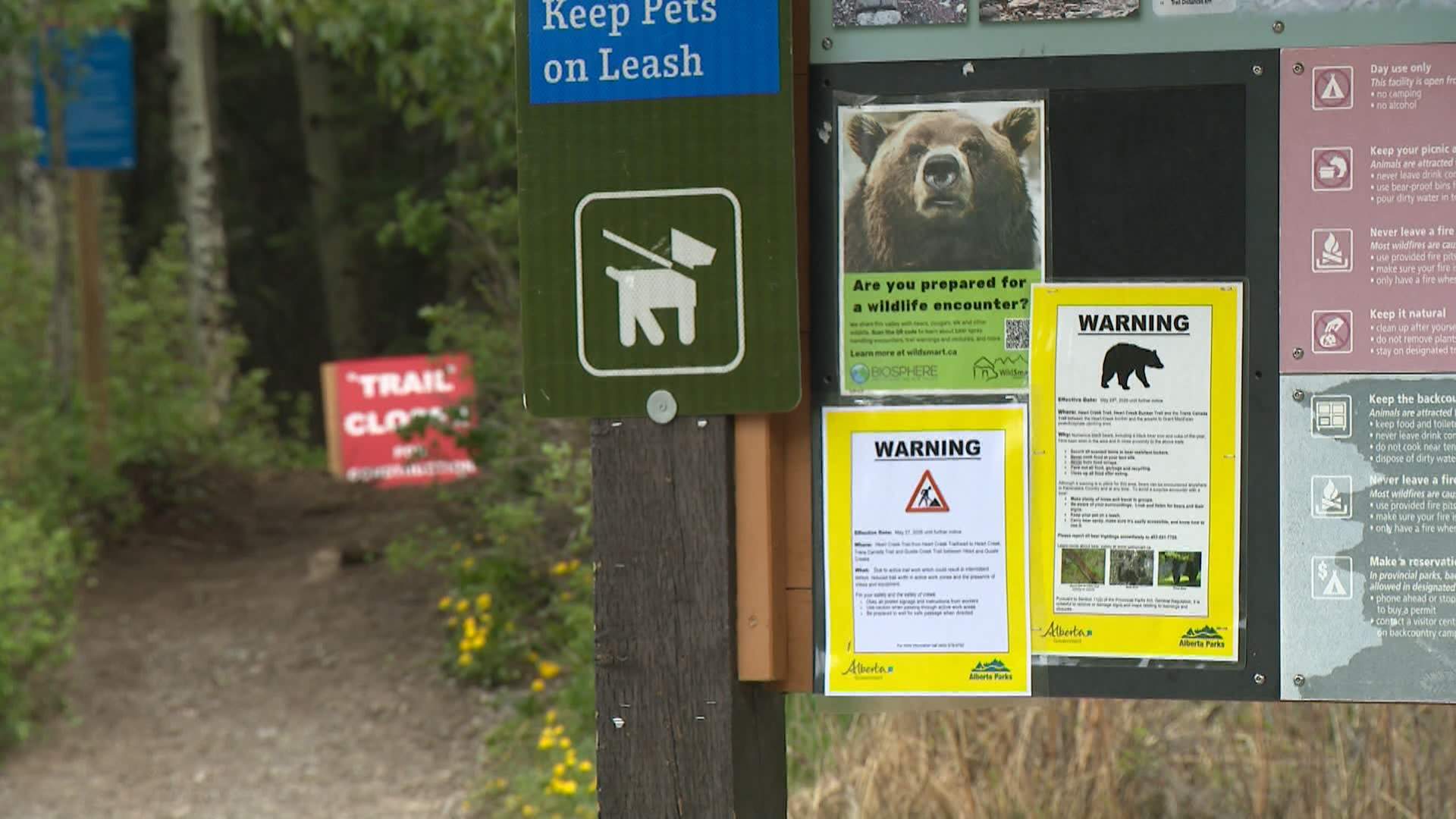
The convergence of seasonal wildlife biology and expanding human recreational footprints has created a predictable structural bottleneck in Alberta’s backcountry corridors. The surge in bear sightings, trail closures, and bluff charges across Banff National Park and Kananaskis Country is not an anomalous spike in wildlife aggression. Instead, it is the direct manifestation of a compressed resource market where humans and apex predators are forced into geographical overlap. Solving this conflict requires moving past generic safety warnings and analyzing the precise mechanisms of seasonal habitat selection, human density metrics, and the failure of low-intensity deterrent systems.
The Spatial Compression Mechanism
The current spike in human-bear interactions is driven by a dual-constraint model: topographic snowpack levels and the caloric requirements of bears post-emergence.
+-------------------------------------------------------------+
|                     ALPINE ELEVATIONS                       |
|           High Snowpack = Zero Forage Availability          |
+-------------------------------------------------------------+
                               |
                               v [Forced Downward Migration]
+-------------------------------------------------------------+
|                      VALLEY BOTTOMS                         |
|   Early Green-up (Dandelions, Grasses) + Riparian Corridors |
|         * High Caloric Density / Low Forage Effort *        |
+-------------------------------------------------------------+
                               ^
                               | [Forced Upward Recreation]
+-------------------------------------------------------------+
|                      HUMAN INFRASTRUCTURE                   |
|       Highwood Pass, Canmore, Trails, Highway Corridors      |
+-------------------------------------------------------------+
The Caloric Deficit Phase
Upon emerging from a five- to six-month hibernation cycle, ursids enter a state of ecological urgency. High-altitude alpine zones remain locked under significant snowpack well into late spring, rendering primary sub-alpine food sources unavailable. This forces both grizzly (Ursus arctos horribilis) and black bears (Ursus americanus) to descend to valley bottoms.
The Riparian Interface
Valley floors thaw first, producing the earliest flush of nutrient-rich vegetation. The highest concentrations of early-season protein and digestible carbohydrates—primarily young grasses and dandelions—are localized along low-elevation riparian zones, alluvial flats, and clearings created by human infrastructure.
The Recreational Concurrency
Simultaneously, the human recreational footprint shifts. Because high-altitude trails are impassable due to snow, hikers, mountain bikers, and trail runners are restricted to the same low-elevation valley bottoms. The Highway 40 corridor, the Bow Valley, and the Kananaskis Village network function as a shared, finite ecosystem. The probability of an encounter is a function of this spatial compression: as the usable land area for both species shrinks to the valley floor, the frequency of intersection rises exponentially.
The Behavioral Economics of Bear Encounters
Human-bear interactions are governed by predictable behavioral frameworks rather than random hostility. Wildlife managers categorize these interactions into two distinct operational profiles: defensive reactions and predatory execution.
Defensive Mechanics
Defensive encounters constitute the vast majority of spring incidents, including recent bluff charges documented near Troll Falls and Mount Shark Road. A defensive reaction occurs when a human breaches a bear’s critical distance threshold—typically compressed further when a sow is protecting cubs or an adult is defending a carcass.
The bear’s primary objective is risk mitigation via intimidation. A bluff charge—characterized by high-velocity acceleration toward the target that terminates short of physical contact—is an energetic investment by the bear to establish dominance and force human retreat.
Predatory Mechanics
Conversely, predatory encounters are non-defensive, deliberate, and exceptionally rare. In a predatory framework, the bear displays focused, quiet tracking behavior, often ignoring vocalizations and intentionally closing distance regardless of human posturing. The structural failure of backcountry users often lies in misidentifying a defensive bluff charge as a predatory advance, leading to incorrect tactical responses.
Deconstructing Deterrent Efficacy: The Acoustic Failure
The standard advice to "make noise" is frequently undermined by a fundamental misunderstanding of acoustic physics and landscape interference.
The Metric Failure of Bear Bells
Passive acoustic devices, specifically commercial bear bells, are mechanically incapable of generating the decibel levels or frequencies required to penetrate backcountry ambient noise. The sound profile of a bell is easily masked by:
- High-velocity mountain winds.
- Riparian acoustic saturation (rushing creeks and rivers).
- Dense sub-alpine forest canopy absorption.
Furthermore, the rhythmic, metallic chime of a bell does not register as an anthropogenic threat to a bear; it lacks the irregular cadence required to trigger an avoidance response.
The Auditory Dominance of the Human Voice
Effective acoustic deterrence requires active, low-frequency, irregular vocalizations. The human voice breaks through ambient environmental white noise far more effectively than mechanical devices. Shouting in a non-rhythmic pattern alerts wildlife to human presence long before the critical distance threshold is breached, allowing the animal to utilize its natural avoidance flight path.
The Asymmetric Physics of Bear Spray Deployment
Bear spray (capsaicin-based aerosol) remains the primary non-lethal tool for halting an active charge, yet its deployment is subject to strict environmental and physical constraints.
   [Wind Vector: Headwind / Crosswind]
                  |
                  v
[User] -------- ( 0m to 4m: Critical Failure Zone ) --------> [Charging Bear]
                        ^
                        |
            [Effective Deployment Window: 6m to 15m]
The Velocity Bottleneck
A charging grizzly can achieve speeds of $15 \text{ m/s}$ ($54 \text{ km/h}$). If a bear initiates a charge from a distance of $30 \text{ meters}$, the user has exactly two seconds to recognize the threat, unholster the canister, remove the safety clip, and deploy the cloud.
The Aerosol Dynamics
The operational geometry of bear spray requires a staggered deployment strategy based on distance:
- The Deterrent Zone ($9\text{m}$ to $15\text{m}$): A brief ($0.5$ to $1$ second) warning blast aimed slightly downward creates an expanding particulate wall. This forces the bear to run through a concentrated barrier of capsaicinoids, targeting its ocular and respiratory pathways.
- The Terminal Zone ($6\text{m}$ to $9\text{m}$): Continuous, sequential blasts aimed directly at the head and snout are required to trigger involuntary blepharospasm (temporary blindness) and respiratory distress.
- The Failure Zone ($0\text{m}$ to $4\text{m}$): At this proximity, the kinetic energy of the bear’s momentum will carry it through the spray cloud even if the physiological effects have initiated.
Systemic Failure Modes
The primary failure points of this system are not chemical, but logistical. Carrying bear spray inside a backpack pocket introduces a fatal latency period into the defensive sequence. If the canister is not mounted on a chest or hip holster, the deployment time exceeds the charge duration, rendering the tool useless.
The second major limitation is aerodynamic interference. Headwinds or severe crosswinds alter the cloud trajectory, potentially blowing the irritant back onto the user or dispersing the active agent before it reaches the target’s trajectory.
Risk Mitigation Protocols for High-Density Corridors
To manage the structural bottleneck in Alberta's backcountry, users must transition from passive awareness to active risk management.
Group Mechanics as a Safety Vector
Data across North American jurisdictions indicates that group size is inversely proportional to the probability of a physical attack. Traveling in tightly grouped cohorts of four or more individuals creates a large visual and acoustic signature that bears actively avoid. Dispersed groups—where hikers are separated by more than $5\text{ meters}$—negate this benefit, as the bear perceives the trail users as isolated, low-threat targets.
Domestic Animal Escalation
Unleashed dogs represent one of the highest compounding risk factors in backcountry trail systems. A dog moving off-trail frequently detects a bear, initiates a defensive or territorial confrontation, and then retreats to its owner when overwhelmed. This effectively draws an agitated predator directly into the human matrix. Absolute adherence to physical leash mandates is a structural prerequisite for trail safety.
Tactical Response Selection
If a confrontation occurs, the strategy must match the bear's behavioral profile:
- In a Defensive Encounter: Stand your ground. Do not run. Running triggers the chase instinct inherent to apex predators. Deploy bear spray when the animal enters the $15\text{m}$ threshold. If contact is made during a defensive charge, drop to the stomach, interlock fingers behind the neck to protect the carotid arteries, and use the backpack as a shield. Remaining still signals to the bear that the threat has been neutralized, causing it to terminate the encounter.
- In a Predatory Encounter: Do not play dead. Aggressively claim space. Utilize trekking poles, rocks, and vocalizations to project physical scale. Maintain continuous deployment of bear spray. If the bear makes contact in a predatory context, fight back with maximum force, targeting the eyes, nose, and respiratory tissues.
Strategic Resource Recommendations
The current management strategy relies heavily on reactive trail closures and public alerts issued by bodies like the Biosphere Institute of the Bow Valley. However, as the population of the Calgary-Bow Valley corridor expands, these reactive measures will trigger diminishing returns.
The long-term resolution of this spatial conflict requires structural interventions from provincial authorities. Wildlife managers must implement a proactive human-use limit pilot project during the critical spring emergence window (April through June). This includes hard caps on trail permits in high-probability foraging zones like the Highwood Pass and specific valleys within Kananaskis Country.
Additionally, infrastructure planning must prioritize the mandatory installation of high-density wildlife exclusion fencing along major transport corridors coupled with a permanent ban on soft-attractant landscaping (such as non-native dandelions and ornamental fruit trees) within municipal boundaries like Canmore. Until access velocity is regulated to match seasonal wildlife constraints, the frequency of high-risk encounters will scale linearly with trail density.