He is known as Old Chen, though he is only forty-four. His hands tell a more accurate story than his birth certificate. The skin across his knuckles is split and stained with the gray dust of dry-mix concrete, a indelible souvenir from fifteen years of raising apartment towers in Shenzhen. If you walk through the glittering tech districts of the south, you are walking on ground Old Chen leveled.
Yet, until very recently, Chen lived like a ghost in the city he helped build.
Every month, he sent eighty percent of his paycheck back to a small village in Sichuan province. He slept on a bunk bed in a dormitory shared with nine other men. He cooked on a single electric burner. He bought nothing that was not absolute necessity. No restaurant meals. No new clothes. No smartphones unless the old one literally shattered.
Chen is one of China’s roughly 300 million migrant workers. Collectively, they represent a population nearly the size of the United States. For decades, they have been the muscle behind the country’s economic miracle, moving from rural hinterlands to urban centers, trading sweat for wages. But they have also been a demographic trapped in a strange economic limbo. They live in the metropolis, but their wallets remain firmly locked in the village.
Economists call this a consumption drag. Chen calls it survival.
The math behind his frugality is simple, brutal, and entirely logical. In China, access to social safety nets—public schooling, subsidized healthcare, affordable housing, and pensions—has historically been tied to a person's hukou, the household registration system. If you have a rural hukou but live in Shanghai, you are effectively a resident alien in your own country. If Chen’s son needed high school education, Chen had to pay exorbitant non-resident fees or send the boy back to Sichuan alone. If Chen got sick, his rural medical insurance covered very little of the high-tech hospital bills in the city.
So, Chen did what any sensible human being would do under the weight of such systemic precarity. He hoarded cash. He saved for the rainy day that felt like it was permanently hovering on the horizon.
This collective anxiety created a profound economic paradox.
For years, global policymakers have urged China to shift its economic engine away from a heavy reliance on property investment, infrastructure spending, and cheap exports toward a domestic consumer-led economy. The goal sounds elegant in an academic paper: get people to buy things. Get them to buy cars, upgrade their home appliances, eat out at restaurants, and take vacations. Turn the domestic market into a self-sustaining powerhouse.
But you cannot build a consumer economy out of people who are terrified of tomorrow.
Consider what happens next when a nation realizes its old growth model is running out of steam. The factories face shifting global demand. The real estate market cools. Suddenly, those 300 million workers are no longer just a labor force; they are the missing piece of the entire economic puzzle. If every migrant worker spent just a fraction more each day, the resulting wave of economic activity would ripple across the entire global supply chain.
The problem was never that the working class lacked desires. They wanted the same things anyone else wants. Chen wanted a soft mattress. He wanted to take his wife to a movie. He wanted to buy a decent winter coat without doing mental gymnastics over his bank balance. The barrier was the invisible wall of institutional risk.
Change, however, is finally arriving, driven not by sudden benevolence but by absolute economic necessity.
A quiet, sweeping overhaul of public services is beginning to dismantle the anxiety that kept Chen's wallet zipped shut. Cities across the country are decoupling vital public services from the traditional residency status. It is a structural shift disguised as bureaucracy, but its impact is deeply human.
Take the issue of vocational training and job stability. In the past, migrant workers were the first to be let go during a downturn, cast adrift with no safety net. New initiatives are establishing standardized, subsidized training programs specifically targeted at urban migrants. They are learning advanced manufacturing techniques, modern logistics management, and digital service skills. This is not just about teaching a man to weld; it is about transforming precarious day-laborers into a stable, upwardly mobile working class with predictable income trajectories.
But the real transformation lies in the realm of basic security.
Imagine the relief of a parent who no longer has to choose between working in the city or raising their child. Municipalities are expanding public school access to include the children of non-local workers, removing the heartbreak of the "left-behind children" phenomenon that has plagued rural China for a generation. At the same time, medical insurance systems are being integrated across provincial lines. A migrant worker can now present a digital health card at a clinic in Beijing or Guangzhou, and the system handles the reimbursement seamlessly, eliminating the terrifying specter of medical bankruptcy in a strange city.
Housing, too, is shifting. The old model offered two choices for migrants: a squalid company dorm or an illegal, cramped partition in a suburban "urban village." Today, state-backed programs are injecting millions of affordable, long-term rental units into major urban areas, specifically reserved for the service sector and construction workers.
When you give a person a secure home, a school for their child, and a doctor they can afford, you change their relationship with money.
The psychological shift in Chen was subtle at first. It started when his local district in Shenzhen offered free health screenings for construction workers. Then came the announcement that his daughter could enroll in a local middle school without the predatory "donation" fees of the past.
One evening last month, Chen did something he had never done in fifteen years of urban life. He walked into an electronics store on a main boulevard, instead of skimming the secondhand market online. He looked at a brand-new television. It wasn't the most expensive model, but it was large, flat, and modern.
He didn't walk out. He bought it.
He also bought a new set of pots and pans for their small apartment. He took his family to a hotpot restaurant where the broth hissed with Sichuan peppercorns, spending more on a single meal than he used to spend on groceries in a week.
Multiply Chen by several million, and the macroeconomic data begins to move. You see it in the rising sales of domestic appliance brands. You see it in the explosion of mid-tier domestic tourism and the growth of casual dining chains. This is the unleashing of pent-up demand, not through artificial stimulus checks or temporary tax holidays, but through the systematic removal of fear.
The transition is far from complete. It is a massive, uneven experiment. Some mega-cities, protective of their resources, still maintain high barriers to entry, while mid-sized cities are throwing their doors wide open. There are bureaucratic frictions, funding shortfalls at the local government level, and generations of ingrained frugality that do not disappear overnight. The habit of saving for catastrophe is a hard one to break.
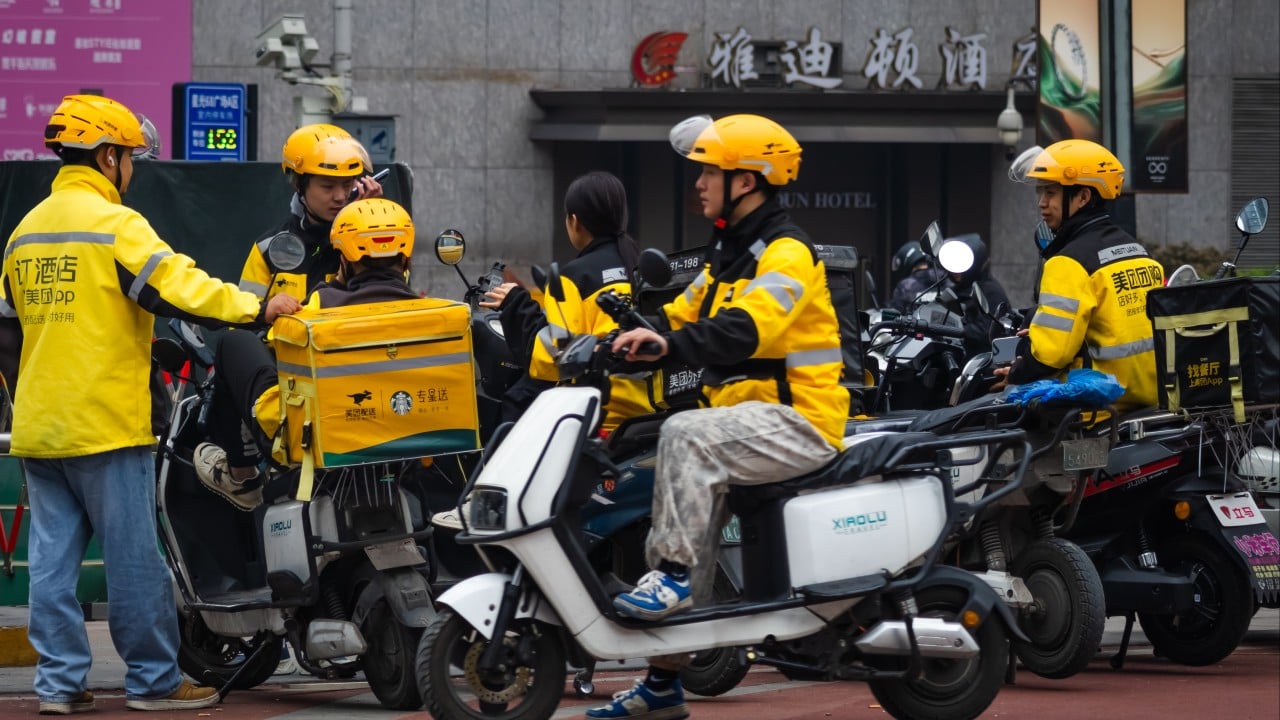
Yet, the direction is clear. The future of the world's second-largest economy no longer hinges solely on massive high-tech chip factories or sprawling mega-infrastructure projects. It hinges on the confidence of the delivery driver, the restaurant waitress, and the bricklayer.
True economic resilience is not built from the top down. It is built from the bottom up, one secure household at a time.
On a recent Saturday night, Chen sat on his new sofa, the blue light of the television reflecting in his eyes. His daughter was at the small table in the corner, doing homework for her new school. The concrete dust was still there under his fingernails, but for the first time since he left his village, Chen looked like a man who belonged exactly where he was sitting.