The Architecture Of Resistance
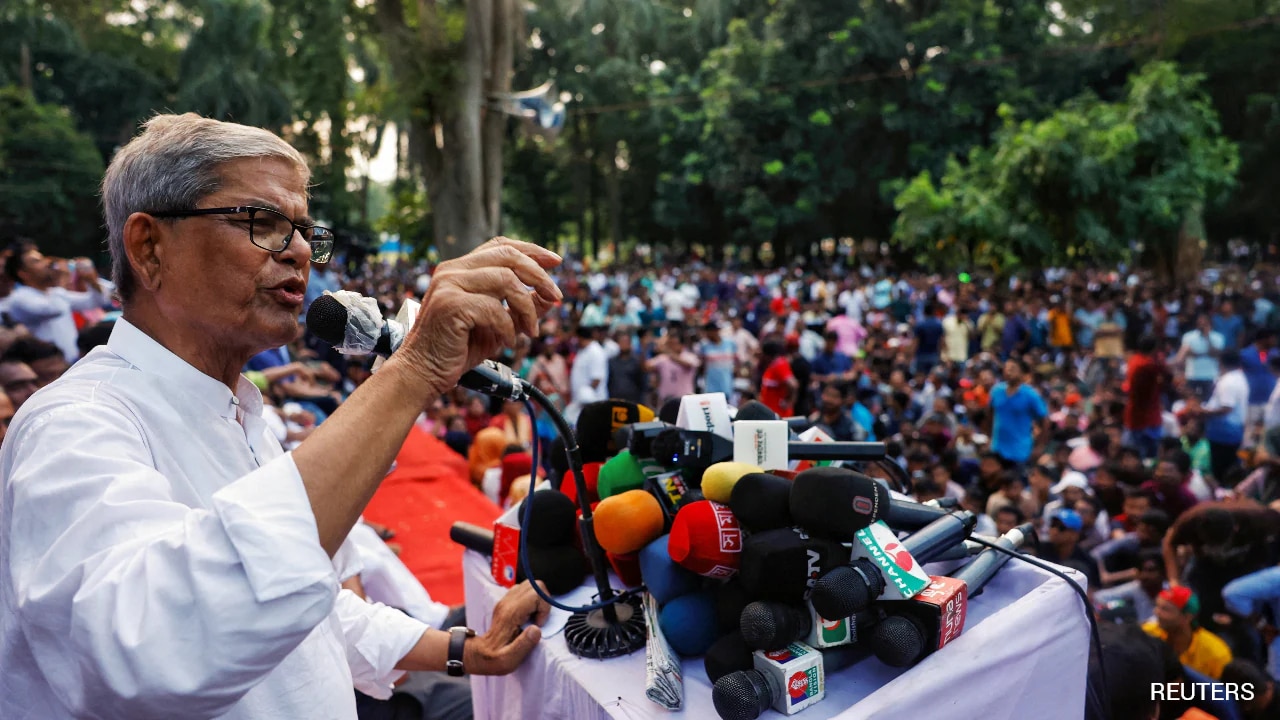
Mirza Fakhrul Islam Alamgir occupies a singular position in South Asian statecraft. As the secretary-general of the Bangladesh Nationalist Party, he has spent decades navigating a hostile operational environment defined by state pressure, mass arrests, and internal party fractures. The mainstream narrative often reduces his career to a simple binary of opposition versus incumbency. That reduction ignores the machinery of survival that keeps anti-government factions functioning when the state apparatus throws its full weight against them.
Understanding Fakhrul requires looking past the podium speeches and examining the structural mechanics of dissent in Dhaka. He is not a charismatic populist cut from the cloth of historic street agitators. Instead, he functions as an institutional shock absorber. When the Bangladesh Nationalist Party faces existential bans, police blockades, or mass judicial filings against its rank and file, Fakhrul manages the internal friction. He absorbs the shock of political collisions and translates erratic street anger into coordinated institutional survival.
Evolution Of A Bureaucrat Politician
Long before he became the face of the primary opposition force, Fakhrul worked as an economics lecturer before entering the civil service. That administrative background shaped his political DNA. While fiery cadres demand immediate escalation, he calculates the logistical toll of sustained confrontation.
This cautious temperament frequently frustrates the party base. Critics inside and outside the Bangladesh Nationalist Party often mistake his preference for negotiated compromise or strategic pauses for weakness. Yet, that institutional caution explains his longevity. In an ecosystem where opposition figures routinely vanish into lengthy imprisonments or exile, Fakhrul maintains a delicate balancing act. He criticizes state overreach sharply enough to satisfy a restive base, yet pulls back precisely at the threshold where authorities would justify a complete dismantling of the party apparatus.
Navigating The Post-Hasina Reality
The political calculus in Bangladesh shifted violently with the mass uprisings that unseated Sheikh Hasina. For years, the opposition operated under a siege mentality. Every rally required running a gauntlet of barricades. Every electoral cycle featured allegations of engineered outcomes and sweeping crackdowns. Fakhrul spent decades arguing that the state had hollowed out democratic institutions, turning the judiciary and law enforcement into partisan instruments.
With the collapse of the Awami League government, the immediate threat of institutionalized persecution receded, but a far more complex challenge emerged. The opposition is no longer bound together simply by shared opposition to a common adversary. Ideological fissures within the broader coalition are widening. Islamist factions, secular student organizers of the recent revolution, and traditional party loyalists are all vying to write the rules of the new political order.
Fakhrul now finds himself trying to transition a party built for underground resistance and survival into an electoral machine capable of governing a polarized nation. The skills required to survive a crackdown do not automatically translate to the delicate art of coalition management and economic policymaking.
The Weight Of Succession And Legacy
Age and health have become persistent factors in the calculus surrounding the veteran politician. Operating under relentless stress for decades takes a heavy physical toll. Yet, the Bangladesh Nationalist Party has struggled to cultivate a clear succession plan that does not rely entirely on the Zia family dynasty.
Fakhrul acts as a bridge between the founding era of the party and a generation of digital-native youth who view conventional political hierarchy with deep suspicion. If he miscalculates this transition, the party risks losing its grip on a changing demographic that demands transparency over tribal party loyalty. The test ahead is not whether he can outmaneuver old rivals, but whether he can institutionalize reform within a political culture historically dominated by personality cults and zero-sum conflict.
The trajectory of Bangladesh hangs on these internal adjustments. Power has shifted away from the streets and back toward the negotiating tables where constitutions and coalitions are forged. Fakhrul remains at the center of that arena, weighing every word against the constant threat of a political fracture.