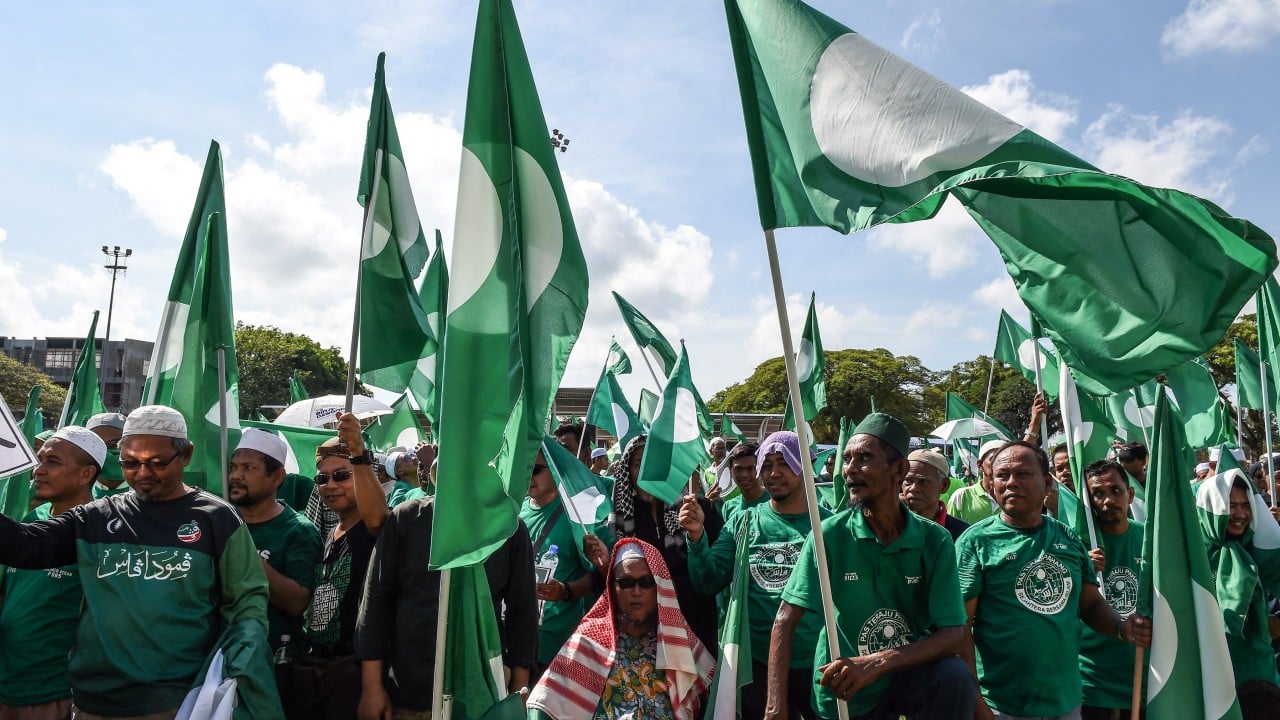
Malaysian politics has a long, exhausting history of stretching religious rhetoric to fit ballot box strategies. When political survival depends on out-conserving rivals, rhetoric often crosses lines that leave voters shaking their heads.
The latest storm erupted when Pan-Malaysian Islamic Party (PAS) secretary-general Takiyuddin Hassan declared that joining or supporting the party practically guarantees a fast-track ticket to heaven. Predictably, the backlash was swift, loud, and entirely unsurprising.
The Problem With Claiming Divine Monopolies
Politicians treating party membership cards like VIP passes to the afterlife is a tired playbook. Critics from across the political spectrum jumped on the remarks, pointing out a glaring theological flaw. Parties do not run the gates of the hereafter.
Former religious affairs minister Mujahid Yusof Rawa publicly slammed the remarks as baseless, arguing that tying divine mercy to a specific political banner shrinks the infinite scope of faith down to petty partisan math. Meanwhile, Amanah vice-president Mahfuz Omar joked that party offices aren't immigration counters handing out heavenly stamps based on a ballot paper.
You can't copyright salvation. When a political entity tries to position itself as the sole authorized distributor of divine grace, it alienates everyone outside the echo chamber. It sends a chilling subtext that Muslims supporting other factions are somehow doomed.
Why This Strategy Keeps Repeating
This isn't a slip of the tongue. It's a calculated maneuver designed to lock down rural Malay-Muslim constituencies by framing political loyalty as a religious obligation.
PAS has pulled versions of this stunt for decades. Decades ago, iconic spiritual leader Nik Aziz Nik Mat argued that choosing an Islamic party led straight to paradise while opposing it meant the opposite. Critics back then, including former prime minister Mahathir Mohamad, pointed out the obvious absurdity of treating political affiliation as a moral shield against wrongdoing.
Yet, the tactic survives because polarization works. Painting elections as an existential battle between absolute good and absolute evil rallies the base. It overrides rational debate about economic policy, inflation, infrastructure, and institutional corruption with raw emotional urgency.
The Real Cost to Public Discourse
Voters deserve better than spiritual coercion disguised as a sermon. When complex governance issues get reduced to binary religious choices, accountability evaporates.
If a party's policies are shielded by divine association, questioning a leader's competence suddenly feels like questioning faith itself. That dynamic lets politicians dodge criticism for administrative failures or ethical lapses.
True public service should stand on tangible results. Communities need leaders focused on creating jobs, fixing public healthcare, tackling cost-of-living pressures, and cleaning up systemic governance flaws. Reducing faith to an electoral currency cheapens both politics and religion.
Voters see right through the theater. Treating the ballot box like a spiritual test might fire up partisan hardliners, but it leaves the broader electorate tired of leaders who weaponize the sacred just to score points.