Every year, the monsoon rains hit southeastern Bangladesh, and every year, we watch the same tragedy play out in the hills of Cox’s Bazar. This July, the predictable disaster struck again. Heavy, relentless downpours loosened the deforested hillsides of the world’s largest refugee settlement, triggering a series of fatal landslides that buried makeshift shelters while families slept and ripped through an Islamic school during study hours.
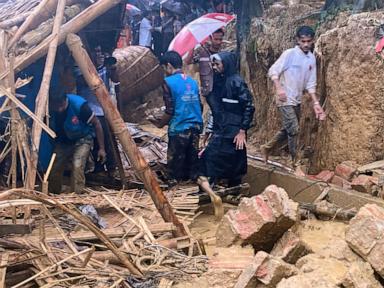
At least 13 Rohingya refugees, mostly children and women, lost their lives within a matter of days. In one horrifying incident on Wednesday, a landslide crushed a madrasa inside the camp complex. Girls were preparing for their lessons when the eastern side of the structure collapsed under a wall of mud. A teacher at the scene, Begum Jahan, described the immediate aftermath as pure chaos. Some escaped with broken limbs, but multiple young girls were buried alive.
It is easy to blame the weather. The Bangladesh Meteorological Department recorded torrential rain and warned of more to come, but the rain is only a catalyst. The real crisis is a structural one, built on overcrowding, deforestation, and a lack of permanent, safe infrastructure for over 1.2 million people.
The Impossible Geography of the Camps
When hundreds of thousands of Rohingya fled a brutal military crackdown in Myanmar in 2017, they were given temporary refuge on hilly terrain. To make room for the sheer volume of displaced people, vast swaths of forest were cleared.
Trees do more than provide shade; their roots hold soil together. Without them, the steep slopes of Cox's Bazar act like a ticking time bomb every summer.
- Fragile Materials: Most refugees live in makeshift shelters constructed from bamboo and plastic tarps. These structures offer zero resistance against a wall of wet earth.
- High Density: Shelters are packed tightly against one another. When one hill slumps, it creates a domino effect, crushing multiple homes below it.
- Unstable Slopes: Thousands of families remain perched on edges that anyone with basic geological knowledge can see are unsafe.
Local volunteer Jamal Hossain joined emergency services and fellow refugees to dig through the debris after the recent madrasa collapse. Neighbors used whatever tools they had to pull bodies from the mud before official rescue teams could even navigate the blocked pathways. For the people living here, the fear is constant. Every time the sky darkens, they know the ground beneath them could give way.
Relocation Limits and the Repatriation Deadlock
In the wake of the latest deaths, Bangladeshi authorities deployed loudspeakers, volunteers, and community leaders to push for immediate evacuations. More than 1,000 refugees were quickly moved from high-risk slopes to safer, temporary structures within the camp network.
But relocation is not as simple as it looks on paper. Refugee Relief and Repatriation Commissioner Mohammed Mizanur Rahman noted that many refugees are deeply reluctant to leave their makeshift homes. When you have lost your country, your community, and your family, even a fragile bamboo hut represents a shred of stability. Moving means starting over again in an already overcrowded space.
"We fled Myanmar to escape persecution. Now I've lost my family here too, and I don't know what lies ahead for me." — Ali Ahmed, Rohingya refugee who lost three family members.
Bangladesh has shouldered a massive humanitarian burden for years. The government has repeatedly called on the international community to facilitate a safe, dignified repatriation process back to Myanmar. However, that prospect looks more distant than ever. Renewed, violent fighting in Myanmar's Rakhine State between the military junta and the Arakan Army has shattered any hope of immediate return. In fact, authorities are currently on high alert along the frontier, fearing a fresh influx of displaced people trying to cross the border to escape the renewed conflict.
Beyond Temporary Fixes
Awareness campaigns and emergency loudspeaker announcements save lives in the short term, but they do not solve the underlying vulnerability. According to data from the UNHCR, between 2021 and 2026, dozens of refugees have been killed and over 80 injured in similar landslide events.
The cycle will keep repeating as long as millions of people are housed in temporary plastic tents on deforested mud slopes. With the Sangu and Matamuhuri rivers currently flowing above danger levels and flooding cutting off local transport lines across southern districts, the entire region is pushed to its absolute limit.
If you are looking for immediate actions to understand or support the crisis on the ground, focus on the structural reality.
- Support localized emergency response: Organizations like the Bangladesh Red Crescent and local Rohingya volunteer networks are the true first responders when landslides hit. Funding their equipment and medical supplies directly impacts survival rates during the first golden hour of a collapse.
- Advocate for sustainable engineering: Temporary tarps are no longer a viable six-year strategy. Pressure needs to remain on international aid agencies to implement slope stabilization projects, retaining walls, and reforestation initiatives within the camp boundaries.
- Acknowledge the political reality: Relocation within Cox's Bazar is a band-aid. True safety for the Rohingya requires a coordinated geopolitical push to resolve the conflict in Rakhine State so that repatriation can actually become a reality. Until then, the international community cannot treat this as a seasonal weather story. It is a predictable human crisis.