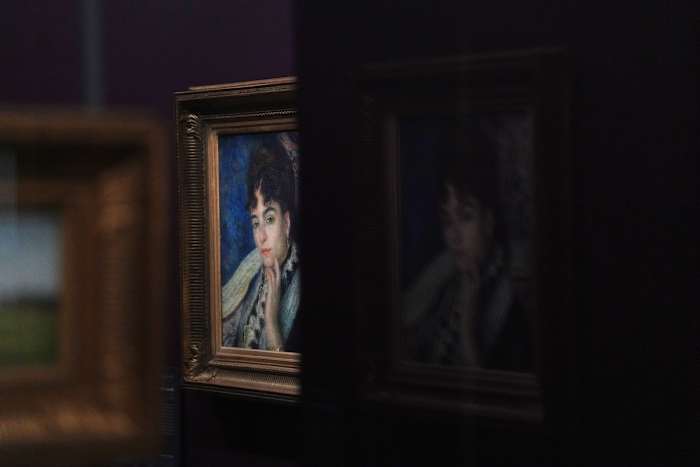
The Louvre just opened a new gallery for Nazi-looted art and the art world is patting itself on the back like it just solved world hunger. It’s a performance. It’s a curated display of institutional guilt designed to look like progress while actually preserving the status quo.
France has roughly 2,000 works of art categorized as Musées Nationaux Récupération (MNR). These are pieces recovered in Germany after 1945 that haven't been returned because nobody knows who they belong to. The standard narrative suggests that by putting these items on display in a dedicated space, the French state is being "transparent" and "proactive."
That's a lie.
If you have 2,000 stolen items in your basement and you put ten of them in a glass case in your foyer with a sign that says "I'm looking for the owners," you aren't a hero. You're a hoarder with a PR team. The current restitution model is a failure of imagination and a triumph of bureaucracy.
The Myth of the Proactive Search
The "lazy consensus" among museum curators is that the burden of proof must remain impossibly high to protect "national heritage." They claim they are doing the work, but the math doesn't check out. Since 1951, only about 170 MNR works have been returned. At that rate, the French government will finish clearing its "temporary" backlog sometime in the 24th century.
Institutions love to talk about "provenance research." It sounds academic. It sounds rigorous. In reality, it is often a stall tactic. Curators are trained to protect collections, not dismantle them. Expecting a museum to aggressively find reasons to give away its art is like expecting a shark to advocate for the rights of seals.
I’ve seen how these committees operate behind closed doors. They don't look for heirs; they wait for heirs to find them with a mountain of evidence that survives eighty years of displacement and trauma. If the paper trail has a single gap, the museum keeps the masterpiece. That isn't justice. It’s a windfall for the state based on the effectiveness of Nazi record destruction.
Why "Display as Discovery" is a Scam
The new gallery in Paris is framed as a tool for identification. The logic goes: if we hang it, the heirs will come.
This is fundamentally flawed for three reasons:
- Geography: The descendants of those stripped of their property in the 1940s aren't all hanging out in the 1st arrondissement of Paris. They are in New York, Tel Aviv, Buenos Aires, and London. Putting a physical painting on a wall in France does nothing for a family in Los Angeles who doesn't even know their great-grandfather owned a Matisse.
- The Digital Gap: The French state’s database, Rose-Valland (MNR), is a clunky, archaic mess. If France were serious about restitution, they wouldn't be building new galleries. They would be pouring that money into a high-res, AI-driven global marketing campaign. They should be buying targeted ads on genealogy sites, not painting walls eggshell white.
- The Aesthetic Shield: By placing these works in a high-art context, the museum strips them of their history as stolen goods. They become "objects of beauty" again. This softens the blow. It makes the theft feel like a tragic footnote rather than the primary reason the object is in the building.
The Economic Reality No One Mentions
Art is an asset class. The MNR works, despite their clouded titles, represent millions of Euros in cultural capital and tourism draw.
When a museum "reckons" with its history, it is managing a liability. By creating these dedicated galleries, they satisfy the minimum requirements of the 1998 Washington Principles on Nazi-Confiscated Art. It’s a compliance move. It creates a "safe" space for looted art that prevents the rest of the collection from being scrutinized.
If you want to see the real rot, look at the works that aren't MNR. Look at the "legitimately" purchased works acquired between 1933 and 1945. Many museums refuse to even list those with the same level of scrutiny because those works are part of the permanent collection. They have "clear" titles that were washed through collaborationist galleries and "Aryanized" auction houses.
The Counter-Intuitive Solution: Digital Liquidation
Stop building galleries.
If the French government wants to actually "reckon" with its past, it needs to stop being a custodian of stolen property. Here is a radical, actionable framework that would actually work:
- Establish a Reversionary Trust: Every MNR work should be legally moved out of "national heritage" status and into a private trust. The museum shouldn't own them; they should be "leasing" them from the unknown heirs.
- The 10-Year Sunset Clause: If an owner isn't found within a decade of intensive, tech-forward searching, the works should be sold at public auction. The proceeds shouldn't go to the state. They should go to international Holocaust education or relief funds for displaced persons.
- Reverse the Burden of Proof: If a work has a gap in its provenance between 1933 and 1945, the museum must prove it wasn't looted. If they can't, it’s flagged.
This would be painful. It would mean the Louvre losing some of its walls. It would mean the "universal museum" model might actually have to face the fact that its foundations are built on the debris of 20th-century catastrophes.
The Hypocrisy of "National Heritage"
The most offensive argument used by state museums is that they are "saving" these works for the public. They argue that if a painting is returned to a private heir, it might disappear into a private collection or be sold to a hedge fund manager.
So what?
Justice isn't about ensuring the public gets to look at a Renoir. Justice is about property rights and the reversal of a crime. Using "public access" as a justification for holding onto looted goods is just a sophisticated version of "finders keepers."
When we talk about Nazi-looted art, we are talking about a crime scene. A museum gallery isn't a memorial; it’s a evidence locker that’s charging admission.
The next time you walk through a museum and see a plaque that mentions a "complex history" or "uncertain provenance," realize you aren't looking at art. You are looking at an unsolved theft that the institution has no real intention of solving. They aren't waiting for the heirs. They are waiting for the heirs to die out so the claim becomes a ghost.
Stop praising the gallery. Start demanding the audit.