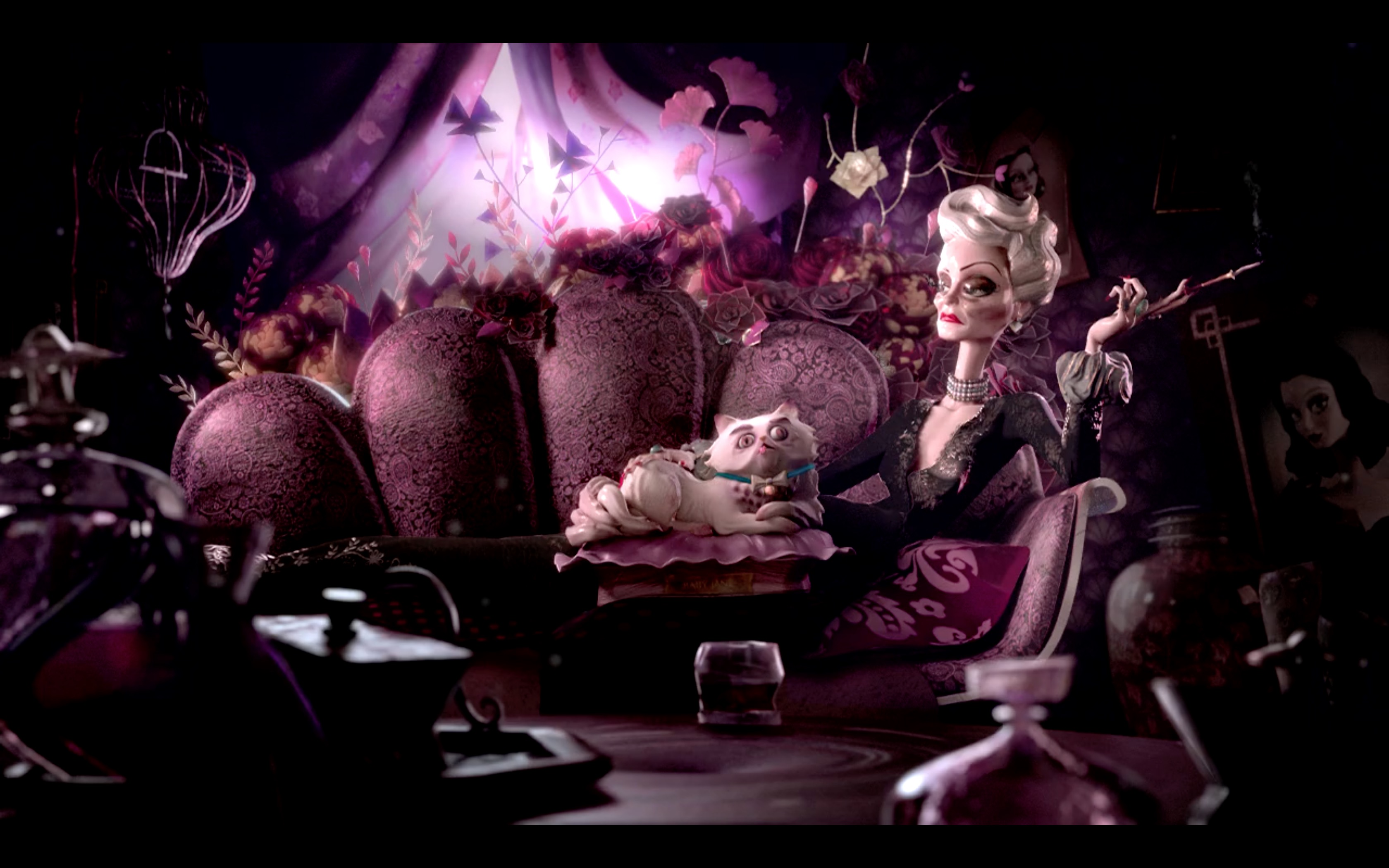
The screen flickers to life, but before the image settles, you hear the voice. It is a voice that carries the weight of forty years of cultural history, a voice that has commanded courtrooms, kitchens, and kingdoms. When Meryl Streep speaks, we don’t just listen. We believe.
For nearly twenty years, Jonathan Franzen’s The Corrections sat on bookshelves like a ticking time bomb of midwestern anxiety. It is a novel about the slow-motion car crash of the American family—the Lambert clan, specifically—and their desperate, fumbling attempt to have one last "normal" Christmas before the patriarch’s mind completely dissolves into Parkinson’s. It is a story about the lies we tell ourselves to survive the people we love most.
Now, Netflix has finally cracked the code. By securing Streep to play Enid Lambert, the production hasn't just cast an actress. They have anchored a ship that spent two decades lost in the fog of "unadaptable" development hell.
The Ghost in the Living Room
Enid Lambert is a woman of iron-clad denial. She lives in St. Jude, a fictionalized slice of the American heartland where the lawns are manicured and the secrets are buried under layers of casserole and repressed desire. Her husband, Alfred, is disappearing. His tremors are no longer just physical; they are the tremors of a collapsing world.
Imagine a woman who has spent fifty years curate-ing a facade of respectability. She is the kind of mother who sends frantic, guilt-ridden emails to her grown children, begging them to come home for the holidays, while simultaneously judging every single life choice they have ever made. She is terrifying. She is heartbreaking. She is Meryl Streep’s greatest challenge since she wore Prada.
This isn't just another streaming series. It is a collision of prestige literature and the undisputed queen of cinema. The stakes are invisible but immense. We are watching the transition of the "Great American Novel" into the "Great Streaming Event," and the bridge between those two worlds is Streep’s ability to make a nagging, frustrated housewife feel like a Shakespearean tragic hero.
The Long Road to St. Jude
To understand why this matters, you have to look at the wreckage of previous attempts. HBO tried this once. They got as far as a pilot directed by Noah Baumbach, starring Ewan McGregor and Maggie Gyllenhaal. It failed. It was too dense, perhaps too cold. The prose of Franzen is famously prickly—it mocks its characters even as it mourns them.
Netflix is betting that the secret sauce isn't just the script, but the face.
When you cast Streep, the tone shifts. You move away from the cynical "literary" adaptation and toward something more visceral. You get the human warmth that a book often hides behind clever metaphors. You see the twitch in the eye when the son mentions he’s losing his job. You feel the silence in the kitchen when the husband forgets where he is. Streep doesn't just play a role; she inhabits the terrifying vulnerability of aging in a country that prizes youth above all else.
A Family of Failures
The Lamberts are us, just amplified and polished by Franzen’s cruel wit. There is Gary, the eldest, a man so successful he is drowning in his own depression. There is Chip, the disgraced academic who thinks he’s a genius but ends up working for a shady corporate entity in Eastern Europe. And there is Denise, the chef whose personal life is a series of beautiful, scorched-earth disasters.
They are all running away from St. Jude. They are all running away from Enid and Alfred.
But the gravitational pull of the family home is inescapable. The series will live or die on the chemistry between these children and their mother. Streep has this uncanny ability to be both the sun and the black hole—the source of life for her children and the force that threatens to swallow their identities whole.
Think about the dinner table. In the book, these scenes are masterclasses in subtext. A comment about the seasoning of a turkey is actually a jagged blade aimed at a daughter’s perceived promiscuity. A request to pass the salt is a plea for a father to recognize his son. In a ten-episode format, these moments can breathe. We aren't rushing to a two-hour climax. We are marinating in the slow, agonizing "correction" of their lives.
The Economics of Prestige
Netflix isn't doing this for the casual binge-watcher who wants background noise while they fold laundry. This is a move for the throne. By pairing Franzen’s prestige with Streep’s gravity, they are aiming for the "Succession" sized hole in the cultural zeitgeist.
They are looking for that specific intersection of high-art and mass-appeal.
The "correction" in the title refers to many things—a stock market dip, a chemical rebalancing of the brain, a parent’s attempt to fix a child’s mistakes. But in the context of 2026, it feels like a correction for the industry itself. After years of chasing superheroes and multiverses, we are returning to the most volatile setting known to man: the suburban dining room.
The Weight of the Performance
There is a specific kind of magic that happens when an actor of this caliber takes on a role that requires them to be unlikable. Enid Lambert is often exhausting. She is small-minded and demanding. But in the hands of a master, that smallness becomes a window into a universal fear.
We are watching a woman realize that her life’s work—her family—is a collection of broken pieces she can’t glue back together.
Streep has always excelled at the "silent scream." It’s the moment when her face remains perfectly still, but you can see the internal architecture of her character crumbling. In The Corrections, she will have hundreds of those moments. She will have to portray a woman who is losing her husband to the void of neurological decay while trying to maintain the fiction that everything is fine.
Everything is not fine. It never was.
The Invisible Stakes
Why does a story about a family in the Midwest matter to someone in London, Tokyo, or New York? Because the Lamberts represent the ultimate human struggle: the desire to be seen for who we want to be, versus the reality of who we are to the people who knew us when we were small.
We all have a "St. Jude." We all have that place we fled, only to realize we carried the seeds of its destruction with us.
The series promises to be a mirror. It asks us if we can ever truly forgive our parents for being human. It asks if we can forgive ourselves for failing to meet their impossible standards.
The production is reportedly leaning into the period details of the late 90s and early 2000s—the cusp of the digital age, the last gasp of a certain kind of American certainty. This provides a lush, tactile backdrop for the drama. We will see the beige computers, the heavy floral curtains, and the specific, muted palette of a world that didn't know the internet was about to rewrite the rules of human connection.
The Final Movement
As the cameras begin to roll, the industry is watching. Is Streep enough to turn a dense, 600-page novel into a global hit?
The answer lies in the eyes.
When you watch the first teaser, don't look for the plot. Don't look for the star-studded supporting cast or the expensive set design. Look at Enid. Look at the way she touches a silver spoon or adjusts a picture frame. There is a lifetime of unfulfilled dreams in those movements.
The Lamberts are coming home. They are bringing their baggage, their resentments, and their desperate, pathetic hope for a "perfect" Christmas. And at the center of it all stands a woman who refuses to admit the ship is sinking, even as the water reaches her chin.
She is Enid. She is Meryl. She is the correction we’ve been waiting for.
In the end, we don't watch these stories to see people succeed. We watch them to see people survive the ordinary, crushing weight of being a family. We watch to see the moment the mask slips. And with Streep, that slip will be the most beautiful thing on television.
The snow is starting to fall in St. Jude. The turkey is in the oven. The children are on their way, clutching their secrets like weapons.
The table is set.
Wait.