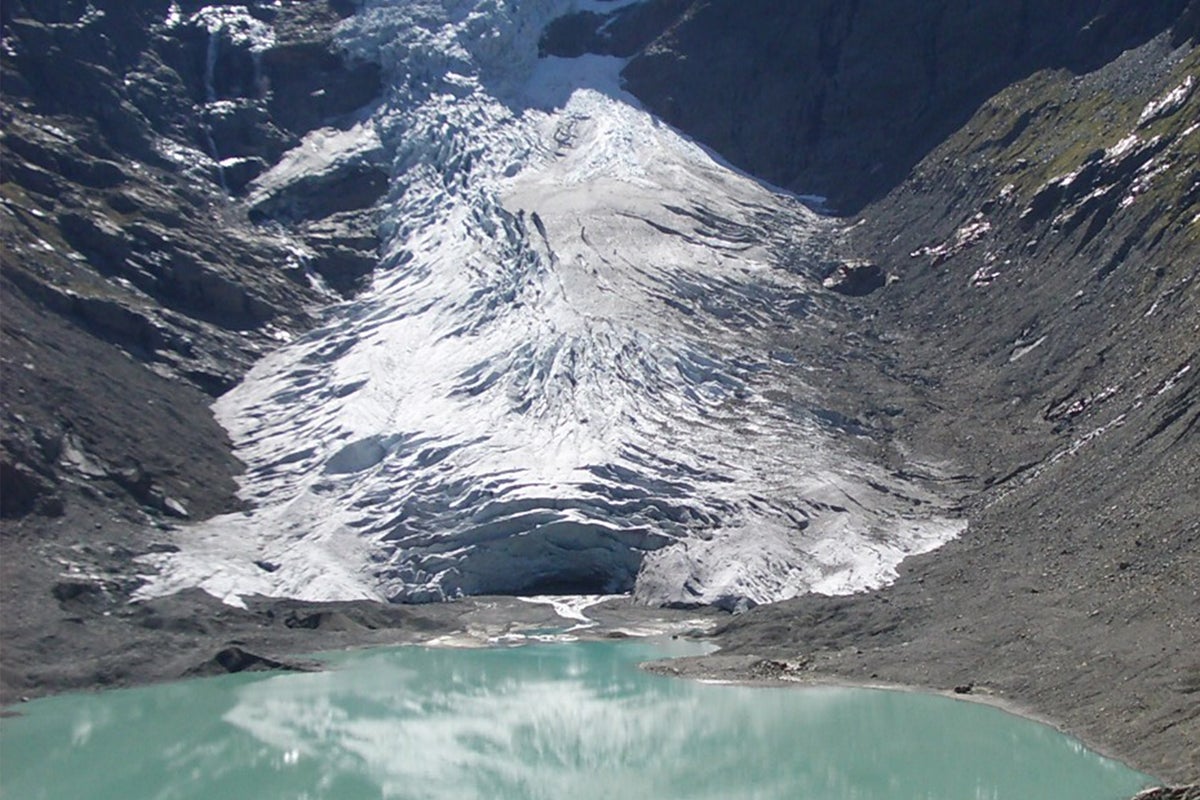
Two Belgian mountaineers who vanished in the Swiss Alps in September 1992 have finally been identified, their remains freed from the receding ice of the Trift Glacier more than three decades later. When a hiker stumbled upon human bones on July 26, it marked another grim entry in a growing catalog of long-lost adventurers returned by a warming planet. For families left in limbo since the autumn of 1992, DNA profiling at the Valais Hospital in Sion brought a definitive, if heartbreaking, end to a thirty-four-year mystery.
Glaciers are active, slow-moving rivers of ice that swallow everything in their path and preserve organic matter like subterranean refrigerators. As global temperatures rise and Alpine ice shrinks at an unprecedented pace, these frozen tombs are opening up. The phenomenon is turning high-altitude rescue squads and forensic pathologists into historians of tragedy, uncovering equipment, aircraft wreckage, and human remains from eras long thought buried forever.
The Mechanics of a Glacier Grave
Ice does not merely cover a body; it absorbs it into a dynamic mechanical system. When a climber falls into a crevasse or gets caught in an avalanche high on a peak like the 4,000-meter Weissmies, the immediate environment is hostile to recovery. Heavy snowfall quickly buries the victim, sealing them beneath layers of packed firn. Over subsequent winters, compressed snow turns into glacial ice, and gravity pulls the mass downward through narrow valleys at rates ranging from a few centimeters to several meters per year.
This movement is remarkably destructive, yet paradoxically protective. The immense weight and grinding pressure of the ice can dismember remains or crush equipment, which explains why search parties using traditional probes often fail right after an accident. However, once the body reaches the deeper, colder layers of the glacier, decomposition halts almost entirely. Soft tissue, clothing, and gear enter a state of cryogenic suspension.
Then comes the descent toward the terminus, or snout, of the glacier. As warmer summer temperatures melt more ice than winter snowfall can replenish, the glacier thins. Internal stresses force trapped objects along internal shear planes toward the surface. By the time a hiker spots a boot, a synthetic jacket, or bleaching bones poking out of the grey-brown slush at the edge of the ablation zone, the glacier has transported those remains vertical miles and horizontal kilometers from the initial point of impact.
Decades on Ice
The case of the two Belgian men—identified in local reports as Marcel Bastyns and Jos Van Deun—follows a hauntingly familiar trajectory for authorities in the southwestern Swiss canton of Valais. In September 1992, the pair left the Weissmies hut aiming for a classic ridge traverse. Weather conditions deteriorated rapidly, trapping them in a whiteout above the tree line. Search and rescue teams launched massive operations back then, utilizing helicopters, trained dogs, and ground crews, but only managed to locate a single discarded rucksack.
Without a body, a missing person case remains open indefinitely. The Valais Cantonal Police maintain missing persons registries dating back to 1925. For decades, these files sat gathering dust in filing cabinets, representing grief frozen in time.
That inventory is now shrinking through morbid excavation. In recent years, retreating ice has surrendered a German mountaineer who disappeared near the Matterhorn in 1986, two young Japanese climbers lost in a 1970 snowstorm, and the wreckage of a Piper Cherokee aircraft that crashed into the Aletsch Glacier in 1968. Each discovery triggers a complex protocol involving local mountain guides, forensic anthropologists, and geneticists.
The Forensic Reality of Ice-Preserved Remains
Recovering human remains from a melting glacier is rarely as simple as lifting a body off the rocks. Ice movement scatters items across wide moraines. A left boot might turn up fifty meters away from a pelvis or a wallet. Forensic teams must scour the surrounding scree and mud to ensure maximum recovery of personal effects, which often provide the first clues to identity before DNA results clear the final hurdle.
Modern forensic DNA profiling has revolutionized these identifications. Thirty years ago, degraded or water-logged biological samples yielded poor results. Today, extraction techniques can isolate viable genetic material from teeth, bone fragments, and preserved tissue samples, matching them against DNA databases populated by relatives who submitted cheek swabs decades ago in distant European cities.
Yet, the science faces severe environmental hurdles. Exposure to ultraviolet light, alternating freeze-thaw cycles on the surface of the melting ice, and scavenging wildlife rapidly degrade organic material once it is exposed to the open air. Mountain guides and hikers who spot remains are instructed to report coordinates immediately rather than attempt amateur recoveries, because a few days of warm summer sun can wash fragile biological evidence down a glacial torrent.
The Human Cost of Climate Shifts
The acceleration of glacial melt exposes a stark irony of modern climate change. While atmospheric scientists track gigatons of lost ice to measure planetary warming, families experience the same crisis on a deeply personal, microscopic scale. The physical landscape of the Alps is literally decomposing, reshaping traditional climbing routes as rock faces destabilize due to melting permafrost, while simultaneously giving up the ghosts of the twentieth century.
For surviving relatives, these recoveries offer a paradoxical resolution. The uncertainty of a disappearance often exacts a heavier psychological toll than confirmation of death. Knowing that a loved one perished doing what they loved, trapped in a pristine wilderness before being gently carried down the mountain by time itself, transforms an open wound into a closed chapter.
As global temperatures continue to climb, emergency services in Alpine nations are preparing for more discoveries. The high mountains are auditing their history, and the ice is giving back everything it ever took.