The smoke hanging over the fields of County Durham and Teesside does not signal ordinary grief. When hundreds gathered to launch colored balloons and ignite flares for the young men who died in the catastrophic wrong-way A66 collision, they also unleashed a darker current of community intimidation that local authorities now struggle to contain.
Nine deaths in six days have fractured the region. It began on a dark stretch of the A66 near Middlesbrough, where a Volkswagen Passat fleeing police careened down the wrong carriageway at terrifying speed, smashing head-on into a patrol vehicle. The impact killed five occupants inside the stolen car—teenagers and young men aged 17 to 23—alongside two brave veteran response officers, PC Matthew Blades and PC Tom Clough.
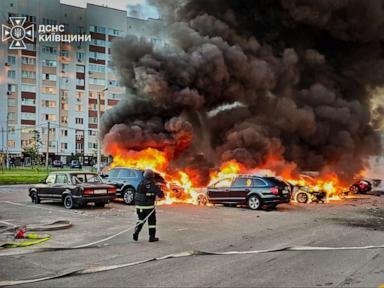
What should have been a period of solemn introspection across emergency services and local neighborhoods instead metastasized into public disorder. As memorial tributes transformed into masked gatherings, vehicles were deliberately torched in open fields, properties were rammed, and regional politicians began utilizing terms like "terrorism" to describe the pervasive climate of fear gripping ordinary residents.
The Anatomy of a Fractured Response
Public mourning rituals in working-class British communities have long served as communal pressure valves. Yet, the sequence of vigils held for the A66 decedents crossed a perilous boundary between remembrance and defiance. Footage broadcast across social media platforms displayed crowds cheering amid thick orange and blue smoke flares, while attendees openly flouted local environmental campaigns and municipal warnings regarding balloon releases.
For the families of PC Blades and PC Clough—who watched half a million pounds flow into charitable funds to honor the fallen officers—the public celebration of individuals whose reckless driving ended two innocent lives felt like an unmitigated insult.
The grief is entirely asymmetric. On one side stands a grieving community mourning public servants who represented the thin line of civic order. On the other side sits a defiant subculture turning perpetrators of dangerous driving into localized martyrs. This friction exposes a deep institutional rot within specific estates where state authority has steadily eroded over decades of localized austerity.
Policing the Breaking Point
Cleveland Police, already running on historic staffing deficits, found themselves thrust into an operational nightmare. The force required an emergency influx of over 200 mutual-aid officers, including specialized firearms units, to suppress the escalating chaos. Superintendents have reportedly worked grueling 20-hour shifts as emergency call volumes spiked to unprecedented highs.
The situation worsened dramatically when secondary tragedies struck. A devastating house fire in Grangetown claimed the lives of a 34-year-old woman, Natalie McDonald, and a seven-year-old child, Valentina Foster, leaving investigators scrambling to determine whether the blaze was tied to the violent underworld dynamics bubbling beneath the surface of the A66 disaster.
When local leaders like Middlesbrough and Thornaby East MP Andy McDonald publicly condemn the breakdown of law and order as a form of domestic terror, they are not exaggerating for political effect. They are voicing the raw terror of shopkeepers and families who feel entirely unsafe walking to local stores. People are locking their doors before dusk, trapped by a sense that criminal networks operate with absolute impunity.
The Dangerous Myth of Accidental Tragedy
Public discourse surrounding the initial crash often founders on semantic arguments over intent. Apologists and distant commentators online frequently frame the disaster as an unfortunate accident born of youthful folly. That argument collapses upon encountering the brutal physics of driving a vehicle onto a dual carriageway against oncoming traffic.
Intentional recklessness of that magnitude strips away the protective shield of the word "accident." When an individual engages in high-speed evasion while utilizing cloned plates, they accept the statistical certainty that their actions may obliterate everything in their path. The tragedy is that the ultimate price was paid not just by those who invited the risk, but by officers executing their sworn duty to protect the public.
The subsequent vigils, complete with stunt driving, burned-out vehicles pushed by tractors, and aggressive posturing by masked youths, act as a public relations campaign for lawlessness. They signal to impressionable generations within deprived post-industrial pockets that anti-social defiance carries zero social penalty.
Rebuilding the Social Compact
Restoring stability to Teesside requires far more than temporary reinforcements from neighboring police forces. Pumping hundreds of temporary officers into a region experiencing acute trauma treats the symptoms while ignoring the structural decay. Decades of economic neglect, hollowed-out social services, and the normalization of an underground criminal economy have created breeding grounds for predatory gang culture.
When community spaces are conceded to masked crowds setting cars ablaze in broad daylight, the social contract is broken. Healing will not arrive via helium-filled tributes or performative defiance on damp fields. It demands an unyielding assertion of the rule of law, ensuring that public safety is never again held hostage by the violent mythology of the streets.