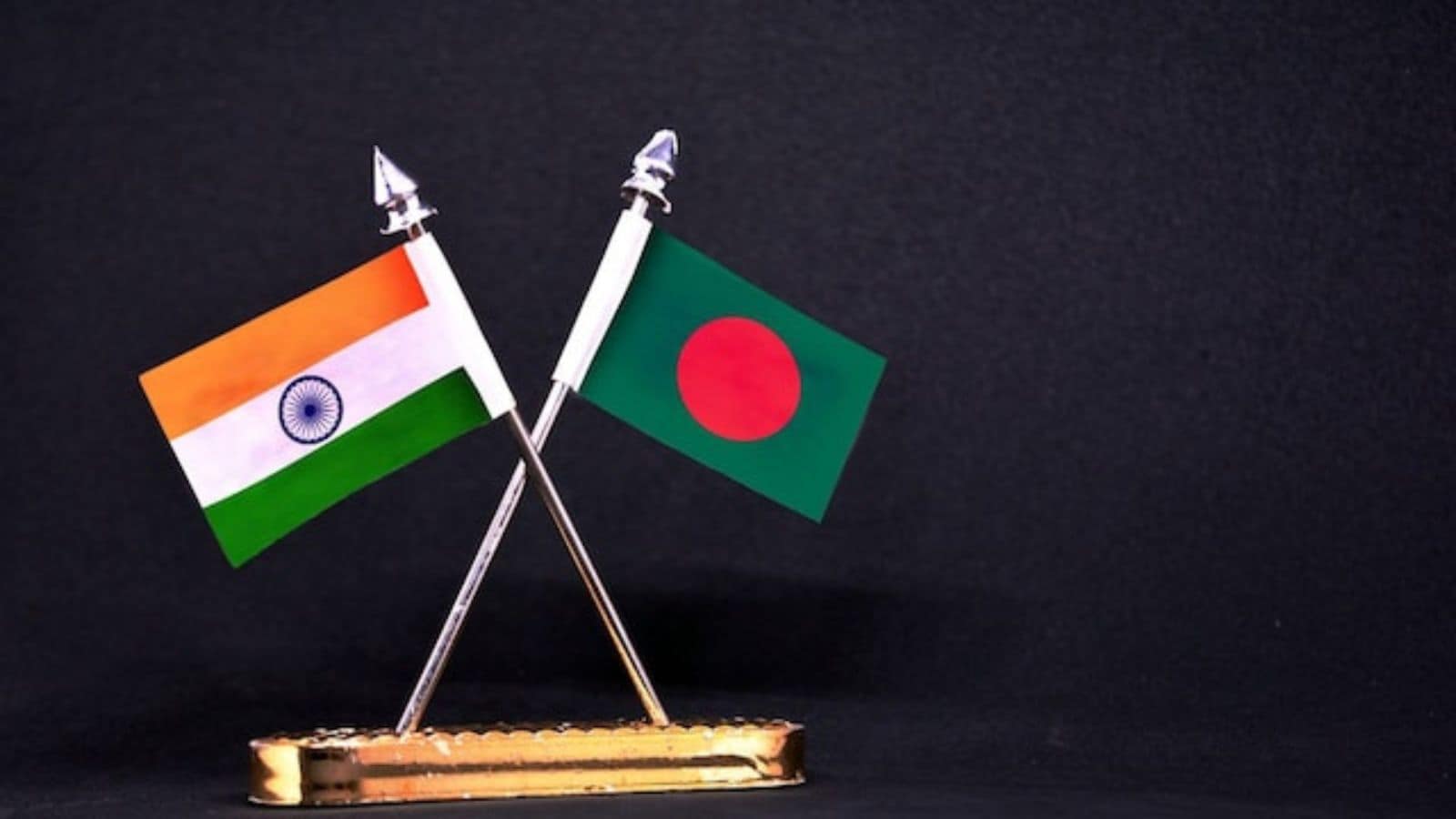
The border does not look like a line on a map. Maps are clean. They are drafted in air-conditioned rooms in New Delhi and Dhaka, where ink dries predictably on white paper.
Out here, in the shifting delta of the Sundarbans and the sprawling plains of Bengal, the border is made of thick, clutching mud. It is made of monsoonal downpours that erase landmarks overnight. It is made of the sound of the Ichamati River slapping against bamboo fishing boats, and the low hum of mosquitoes breeding in the stagnant water between two worlds.
If you stand on the edge of a paddy field in India’s West Bengal, you can look across a narrow, un-fenced ditch and see a farmer in Bangladesh’s Satkhira district smoking the exact same brand of bidi cigarette. You can smell his cooking fire. You can hear his children laughing. For centuries, these people walked the same dirt paths, married into the same families, and traded the same monsoon crops. Then came the lines. Then came the fences. And now, comes the deep, systemic anxiety of a border under pressure.
Recently, the high-ranking officials of the Border Security Force (BSF) of India and the Border Guard Bangladesh (BGB) sat across from one another at a polished conference table. They did not talk about the mud or the shared songs. They talked about geopolitics, intelligence pooling, and coordinated patrols. The dry press releases summarized the meeting in a single, sterile sentence: The two nations agree to step up joint monitoring to curb illegal crossings and manage growing migrant friction.
But to understand what that actually means, you have to leave the briefing rooms. You have to stand in the mud.
The Weight of the Invisible Fence
Consider a hypothetical young man named Rahim. He is nineteen years old. He lives in a small village just outside Jessore, on the Bangladeshi side of the line. Rahim does not care about international treaties or the macro-economics of the subcontinent. He cares about the fact that his family’s small plot of land was swallowed by a changing river three winters ago. He cares about the fact that his mother needs medicine that costs more than his father makes in a month of manual labor.
To Rahim, India is not a foreign superpower. It is a place where a cousin found a job at a brick kiln in Kolkata. It is an open door, or at least, it used to be.
When Rahim decides to cross, he does not do it with a passport. He waits for a night when the moon is choked by monsoon clouds. He pays a local broker—a man who knows which patches of the border fence are still unfinished, where the river currents slow down, and where the shadows stretch the longest.
Now, imagine the man waiting on the other side.
His name is Suresh. He is a BSF constable from Himachal Pradesh, thousands of miles away from his mountainous home. He does not speak Bengali fluently. The air in this delta is heavy, thick with humidity that makes his uniform stick to his skin. He has been standing in the high grass for seven hours, swatting at sandflies, his eyes straining through night-vision goggles that turn the world a ghostly, glowing green.
Suresh is not angry at Rahim. He does not even know him. But Suresh knows that his commanders are under immense pressure from New Delhi to stop the "influx." He knows that any undetected crossing is a failure on his record. He knows that the political climate back home is white-hot with rhetoric about illegal migration, national security, and shifting demographics.
When those two realities collide in the dark—the desperate kid from Jessore and the exhausted soldier from Himachal—the result is rarely diplomatic. It is tragic. For years, this 4,096-kilometer border has been one of the bloodiest in the world. Human rights organizations have documented hundreds of deaths over the last two decades. Most were unarmed farmers, smugglers carrying nothing more dangerous than cattle or cheap clothing, and teenagers who misjudged the distance between two posts.
The Machinery of Coexistence
The new agreements signed between Dhaka and New Delhi are an attempt to stop the bleeding before it triggers a larger geopolitical crisis. But the mechanics of how this works on the ground are incredibly complex.
The core of the strategy relies on Coordinated Border Patrols (CBP). In the past, Indian and Bangladeshi border guards operated in isolation, sometimes leading to misunderstandings, accidental firefights, and mutual distrust. Under the new protocol, patrols are synchronized.
Imagine a grid.
| Border Control Elements | Traditional Strategy | New Coordinated Protocol |
|---|---|---|
| Patrol Communication | Isolated, reactive radio chatter | Real-time, synchronized schedules |
| Intelligence Sharing | Post-incident reports | Pre-emptive data on human trafficking rings |
| Lethal Force Policy | Discretionary, high-casualty history | Commitment to non-lethal weapons first |
| Border Fencing | Unilateral construction | Joint mapping of vulnerable transit gaps |
But data alone does not solve a human crisis. The real friction points are the enclaves and the riverine borders—areas where the boundary lines run directly through the middle of roaring rivers like the Brahmaputra.
When the river floods, the border moves. A sandbar, or char, that belonged to India in May might be swallowed by the current in July, only for a new piece of land to emerge a mile away, technically within Bangladeshi waters. The fishermen who live on these shifting islands are effectively stateless. They wake up in the morning not knowing which country’s laws they are supposed to obey.
If Suresh spots a boat on a shifting char, he now has to contact his counterpart in the BGB before taking action. They share intelligence on known smuggling routes. They track the movement of groups long before they reach the actual fence. The goal is to replace gunfire with bureaucracy.
Yet, bureaucracy is a cold comfort when the drivers of migration remain untouched.
The Gravity of the Delta
Why do they keep coming? Why risk a bullet in the dark or a lifetime in an Indian detention center?
The answer lies in the ground itself. The Bengal Delta is ground zero for the global climate shift. Rising sea levels are pushing saltwater deep into the agricultural heartlands of southern Bangladesh. The soil is turning white with salt. Rice crops are dying in the fields, their roots poisoned by the very water that used to sustain them.
When a farmer can no longer grow food, he becomes a migrant. He does not move because he wants to break the law; he moves because gravity pulls him toward survival.
This is the invisible stake that the official communiqués leave out. No amount of coordinated patrolling can stop a man whose home is underwater. No database of shared intelligence can counter the desperation of a father who cannot feed his children. The border guards are being asked to solve a problem with boots and radios that can only truly be solved with economic adaptation and climate resilience.
It is easy to look at the statistics—the thousands of apprehensions, the tons of seized contraband, the kilometers of barbed wire—and see a problem that has been successfully managed. It is comforting to think that security forces can simply lock a gate and keep the world’s chaos on the other side.
But the border is a living, breathing thing. It is made of communities that were sliced in half by a British lawyer’s pen in 1947, during the trauma of Partition. You cannot undo a thousand years of shared history with a few strands of steel wire.
On a late afternoon near Petrapole, the main land port between the two countries, the daily retreat ceremony takes place. It is a choreographed display of military pride. Soldiers from both sides dress in immaculate uniforms, march with high-kicking steps, and lower their respective national flags as the sun dips below the horizon.
Crowds gather on both sides of the gates to watch. They cheer, they wave flags, they take photos on their smartphones. It is a spectacle of division, clean and orderly.
But just a few miles down the road, where the formal gates end and the marshlands begin, the performance stops. The lights of the border outposts flicker on, casting long, nervous beams across the dark water. The mud waits. Suresh adjusts his gear, looking out into the reeds. Somewhere in the dark, Rahim takes his first quiet step into the water, hoping the new patrols are looking the other way.