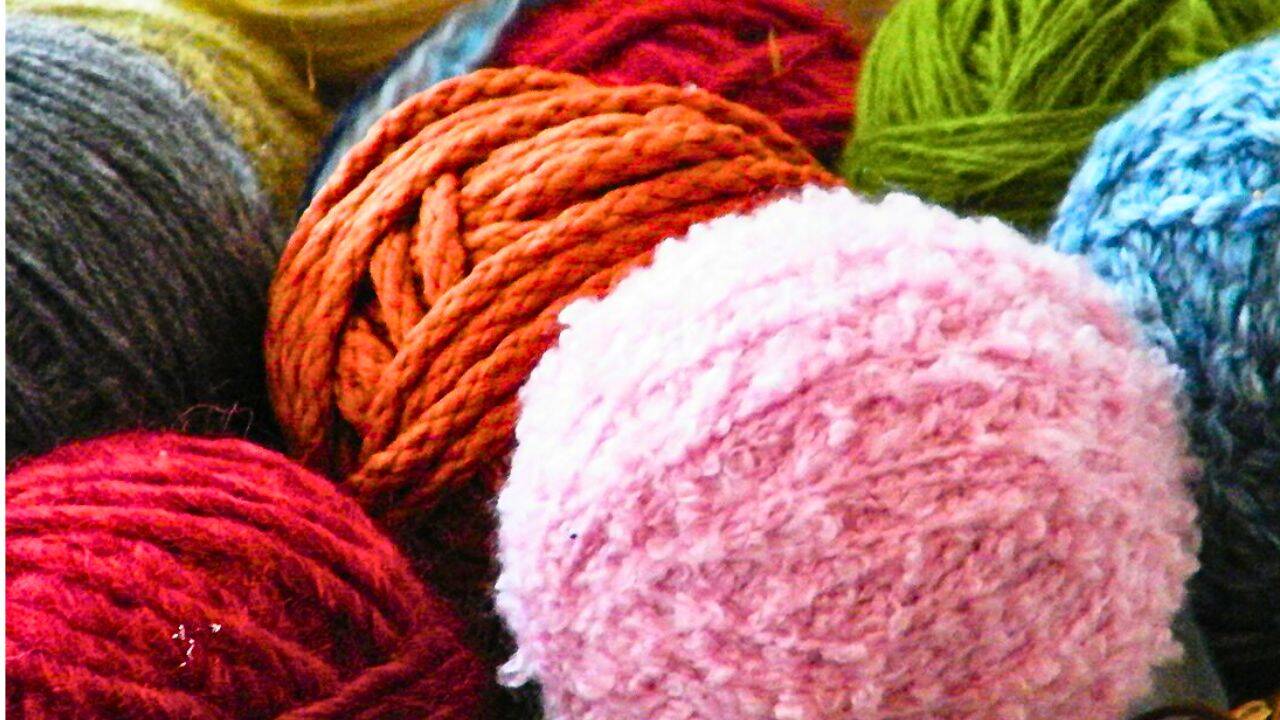
Millions of pounds of low-grade agricultural wool are routinely burned or buried each year because the global textile market rejects them. Materials scientists have engineered a chemical and thermal process to transform this agricultural waste into rigid structural building panels that slash thermal heat transfer. Turning discarded sheep fleece into load-bearing or insulating wall panels offers a compelling environmental narrative, yet scaling this material requires overcoming massive chemical and economic bottlenecks that laboratory press releases consistently omit.
The Economics of Agricultural Waste
Every shearing season generates a mountain of material that costs more to transport than it commands on the open market. Fine Merino wool dominates high-end apparel, leaving coarse, crossbred, and contaminated fleeces labeled as zero-value waste. Farmers across agricultural hubs face a stark choice. They pay steep fees for landfill disposal or they stockpile greasy fleeces in barns where the material rots slowly, creating an environmental nuisance.
The textile industry abandoned these coarser grades decades ago in favor of cheap synthetic alternatives derived from petrochemicals. Acrylics and polyesters flooded the market, undercutting natural fibers on price and structural uniformity. Yet synthetic insulation materials carry a heavy ecological debt. Manufacturing expanded polystyrene foam and fiberglass mats demands intense energy inputs and releases persistent pollutants.
Researchers realized that the intrinsic physical traits of wool—specifically its complex cellular structure and natural crimp—remained intact regardless of its grade or market value. The challenge lay in converting a soft, pliable fiber into a rigid construction element capable of bearing weight and resisting environmental decay without relying on toxic binding agents that defeat the environmental purpose.
Transforming Soft Fleece Into Rigid Panels
The core engineering breakthrough centers on altering the physical matrix of the wool without destroying its thermal properties. Raw wool contains natural lanolin and microscopic scales that trap air efficiently. To turn this fluff into a stiff panel, laboratories apply a combination of thermal pressing and bio-based binding agents.
The process begins with thorough scouring to strip away dirt and excess grease while retaining enough natural oils to maintain the fiber's moisture resistance. Technicians mix the cleaned fibers with a thermosetting resin or a biopolymer adhesive derived from agricultural starches or recycled plastics. This mixture enters a heated hydraulic press where intense pressure and controlled heat cure the resin, locking the wool fibers into a dense, rigid matrix.
The resulting panel possesses surprising structural integrity. Unlike loose-fill insulation that sags over time within wall cavities, these stiff panels maintain their dimensional stability. More importantly, the internal pocket density creates a tortuous path for thermal energy. Heat transfer slows down significantly because the trapped air pockets within the wool matrix resist conduction. Thermal conductivity tests show performance metrics that rival traditional insulation boards while offering superior acoustic dampening.
The Reality of Moisture and Fire Performance
Building materials must survive decades of exposure to humidity, condensation, and temperature swings. Synthetic boards often trap moisture, leading to mold growth and structural rot behind drywall. Wool behaves differently. It is hygroscopic, meaning it absorbs and releases moisture vapor without losing its thermal resistance or structural shape.
When humidity spikes inside a building, the wool panels absorb ambient moisture, releasing latent heat in the process. When the air dries, the material releases the moisture back into the environment. This buffering capability prevents liquid water accumulation inside wall assemblies.
Fire safety presents another critical hurdle for organic building products. Untreated wool burns slowly and possesses a high ignition temperature compared to many synthetics, naturally self-extinguishing when the flame source is removed. However, binding agents introduced during the stiffening process can alter this behavior. Engineers must formulate fire-retardant additives that do not leach out over time or release toxic fumes when exposed to high heat. Meeting stringent commercial building codes requires rigorous burn testing that many experimental bio-panels still fail to pass consistently.
Market Friction and Commercial Viability
Laboratory success rarely translates directly to commercial adoption. The construction sector moves slowly, bound by legacy supply chains and rigid insurance standards.
Standard insulation products benefit from economies of scale built over half a century. Fiberglass plants operate continuously, churning out miles of cheap material at minimal marginal cost. Wool panel production currently operates on a boutique scale. Sourcing raw waste wool requires coordination with hundreds of independent sheep farmers, creating fragmented supply chains that drive up baseline manufacturing costs.
A hypothetical mid-sized commercial building retrofit illustrates the economic friction. Using wool panels might reduce operational heating and cooling energy use by fifteen percent, lowering long-term carbon emissions. Yet the upfront material cost can run double or triple the price of conventional extruded polystyrene foam. Developers working on tight margins routinely opt for the cheaper upfront choice, viewing environmental benefits as a luxury rather than an operational necessity.
Overcoming this resistance demands more than academic validation. It requires policy shifts, carbon credits that accurately price embodied carbon, and industrial processing hubs located close to agricultural centers to minimize transport emissions. Until those supply chain foundations solidify, waste wool panels will remain an ingenious solution searching for a market large enough to absorb them.