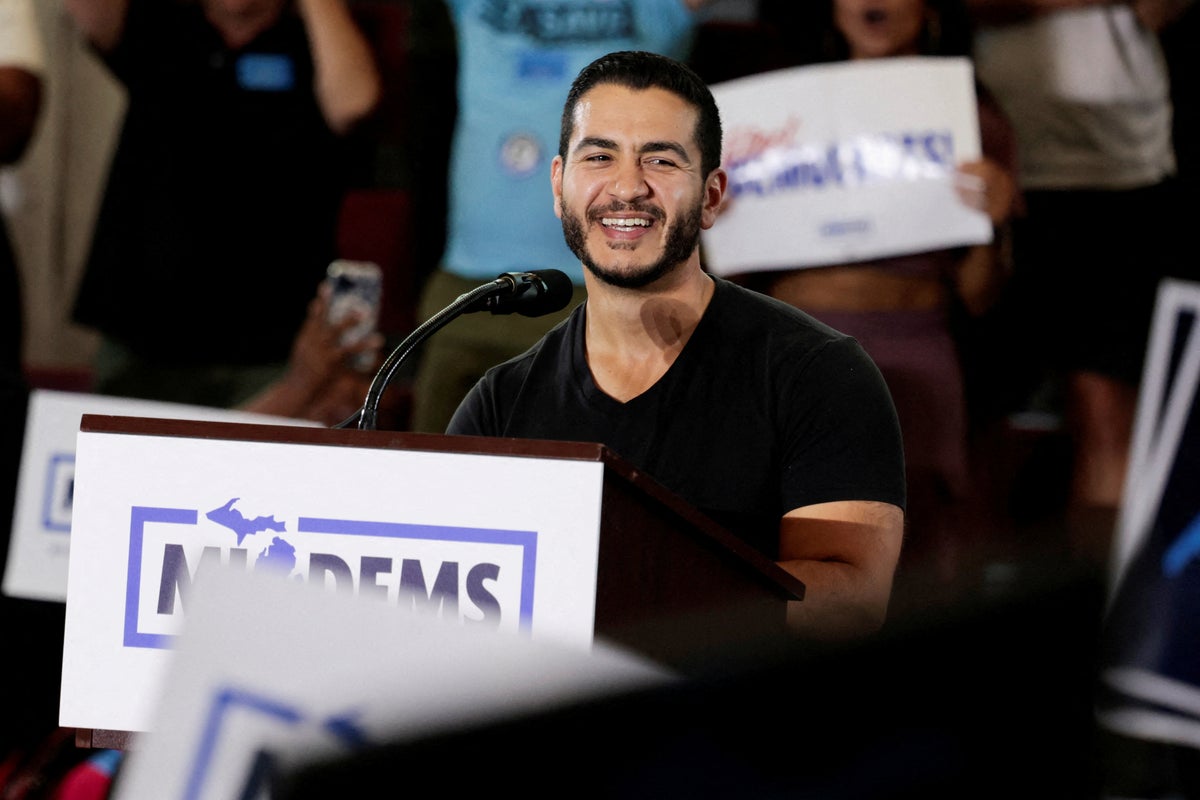
Political label-makers love a neat narrative. When Abdul El-Sayed secured a razor-thin victory in Michigan's fiercely contested Democratic Senate primary, political analysts rushed to fit his campaign into an existing neat box. They called it the Michigan iteration of the "Mamdani playbook," linking his anti-establishment posture and populist economic messaging directly to Zohran Mamdani's municipal success in New York. This lazy shorthand misses the structural reality of midwestern politics. El-Sayed is not running a derivative campaign borrowed from an urban mayoral race; he is executing an independent political calculation born from the specific industrial decay and demographic fractures of Michigan.
To understand why El-Sayed's strategy works, you have to look past the superficial similarities of social media savvy and direct your gaze toward the ground-level economics of the Rust Belt. Zohran Mamdani built his New York coalition on hyper-local municipal grievances: freezing rents, funding public transit, and municipal child care. Those are vital issues for a dense metropolis governed by local transit systems and landlord-tenant laws. Michigan is an entirely different beast. It is a sprawling swing state split between union-backed industrial towns, conservative rural outposts, and a massive Arab-American voting bloc deeply alienated by mainstream party foreign policy.
El-Sayed adapted his platform to address these distinct regional pressures. His messaging focuses squarely on corporate monopolies, billionaire taxes, and the abolition of medical debt. These are economic populist themes that cut across traditional cultural divides.
The Mechanics of Economic Populism in the Rust Belt
For decades, party strategists operated under the assumption that working-class voters in the upper midwest could be neatly partitioned by social wedge issues. That architecture has collapsed under the weight of sustained financial stagnation. When El-Sayed talks about the cost of living, he avoids the academic jargon favored by beltway consultants. He frames economic hardship as the direct result of corporate consolidation and systemic extraction.
This pitch resonates because it matches the lived reality of voters who watched manufacturing jobs vanish overseas while corporate profits soared. By refusing to soften his critique of corporate power, El-Sayed captures a demographic that establishment candidates consistently write off.
Consider how this dynamic played out against his primary establishment opponent, Haley Stevens. Stevens ran a campaign backed by millions in institutional spending and traditional party machinery, leaning heavily on safe centrist talking points. El-Sayed countered with an aggressive digital footprint that bypassed traditional gatekeepers entirely. He posted videos discussing health policy while lifting heavy weights or interacting with local constituents in unscripted settings.
Critics often dismiss these digital tactics as mere mimicry of modern internet-era campaigning. Yet, this digital accessibility serves a specific functional purpose. It humanizes a candidate who holds policy positions that mainstream media outlets frequently frame as radical. When a politician explains single-payer healthcare or a ban on corporate tax subsidies while casually moving iron or joking with local residents, the abstract theory of democratic socialism suddenly feels approachable.
Navigating the Foreign Policy Fault Line
You cannot analyze El-Sayed's primary victory without confronting the elephant in the room: foreign policy and its deep resonance within Michigan's electorate. Michigan hosts one of the largest and most politically organized Arab- and Muslim-American populations in the country. During the previous presidential cycle, this community demonstrated its leverage through the uncommitted movement, signaling that unconditional support for foreign military campaigns would cost Democrats crucial blocks of votes.
El-Sayed did not shy away from this fault line. He made his opposition to unconditional military aid to Israel a central pillar of his platform, using precise language regarding human rights that terrified party centrists. Mainstream opponents tried to paint this stance as a liability that would alienate moderate voters in a general election. Instead, it energized a massive segment of the electorate that felt entirely invisible to the party establishment.
This strategy carries inherent risks. A general election statewide campaign in a pivotal swing state requires threading a needle between progressive base turnout and the anxieties of suburban moderates. The party remains visibly fractured. Nearly half of primary voters backed his establishment rival, pointing to deep anxieties about electability and the candidate's foreign policy positions. Healing those internal wounds will determine whether his movement can sustain its momentum through November.
The Limits of the Copycat Theory
Labeling insurgent left-wing candidates as clones of one another serves a convenient purpose for political pundits, but it obscures the unique local conditions that propel them forward. Mamdani capitalized on the specific municipal frustrations of renters and transit riders in New York City. El-Sayed tapped into the profound economic anxiety and foreign policy disillusionment of a post-industrial swing state.
The success of these campaigns points to a wider structural shift within the Democratic electorate. Voters are increasingly willing to look past conventional institutional wisdom if a candidate offers a coherent explanation for their economic struggles. Whether this populist formula can survive the brutal headwinds of a general election in a purple state remains the defining question for the party's future. The answer will reshape national political strategy long after the ballots are tallied.


