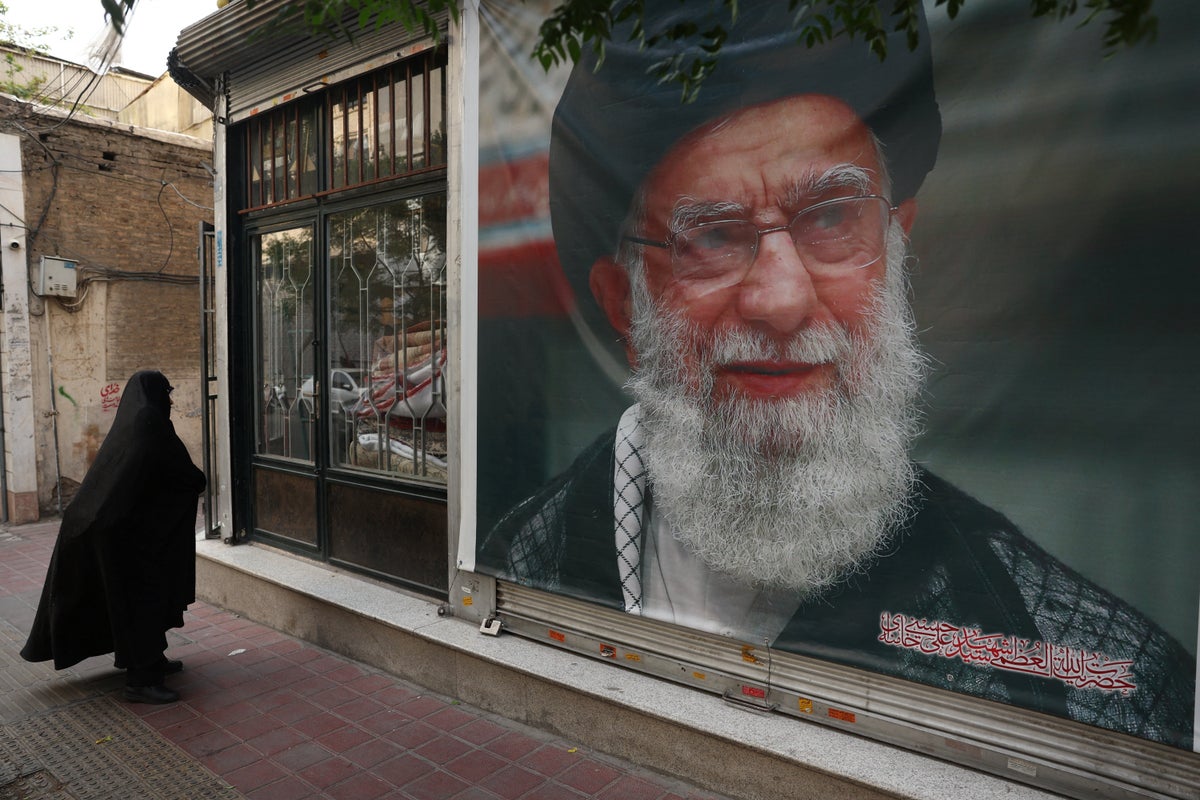
The Islamic Republic of Iran has officially scheduled the state funeral for its late Supreme Leader, Ali Khamenei, to begin on July 4 in Tehran and conclude with his burial in Mashhad on July 9. For a regime that prides itself on lightning-fast, highly public martyrdom rituals, this staggering four-month delay since Khamenei was killed in joint US-Israeli airstrikes on February 28 demands hard answers.
While state-controlled media and Western analysts breathlessly frame this summer timeline as a calculated backdrop for an imminent, historic peace deal with Washington, the reality on the ground inside Iran reveals a much darker, internal crisis. The delay is not a diplomatic theater meant to celebrate a grand compromise; it is a desperate logistics and security buffer zone designed to prevent a fragile, highly contested succession from collapsing into absolute anarchy.
The regime is currently paralyzed by structural fracture. The newly appointed Supreme Leader, Mojtaba Khamenei—who succeeded his father in early March—has not been seen in public since the February bombings, nursing wounds from the very strike that eliminated his father. By scheduling the funeral months away, the Islamic Revolutionary Guard Corps (IRGC) and the hardline clerical establishment are buying critical time to pacify a deeply polarized population, fortify a shattered command structure, and force internal compliance before the inevitable public exposure of a massive state funeral.
The Succession Crisis Behind the Empty Grave
State media claims that the delay was purely a matter of stabilizing the country following the February 28 decapitation strikes. But the deep clerical elite in Qom and Mashhad are fighting a subterranean war over the legitimacy of the office itself.
Mojtaba Khamenei's elevation by the Assembly of Experts was swift, but it lacked the crucial veneer of broad consensus. Hardline elements within the state apparatus are already pushing back against the transition. Just this week, Ahmad Alamolhoda, the influential Friday prayer leader in Mashhad, issued a stark warning stating that no international understanding or state commitment is valid without Mojtaba’s explicit signature. This was not a statement of support; it was a desperate attempt to project an authority that is being actively challenged from within.
+------------------------------------------------------------+
|             THE RECONSTRUCTED IRANIAN TIMELINE             |
+------------------------------------------------------------+
| Feb 28: Decapitation strikes kill Ali Khamenei in Tehran.  |
| Mar 01: State media confirms death; 40-day mourning.       |
| Mar 04: Assembly of Experts hastily appoints Mojtaba.       |
| Apr 07: Brief US-Iran ceasefire holds temporarily.        |
| Jun 11: Draft deal leaks; immediate internal hardline fury. |
| Jun 12: IRGC shuts down transit through Strait of Hormuz.  |
| July 4: Scheduled start of the five-day national funeral.  |
+------------------------------------------------------------+
The physical absence of the new leader compounds this legitimacy vacuum. Rumors regarding the severity of Mojtaba's injuries have circulated through the bazaars and Telegram channels for months. In the Middle East, power must be visible to be absolute. A leader who rules exclusively through paper decrees issued from an undisclosed bunker cannot command the absolute loyalty required to keep the IRGC, the regular army, and various internal security branches aligned. The July 4 date serves as an artificial deadline to get the new Supreme Leader physically fit enough to stand before the cameras without looking weak.
The Illusion of a Washington Compromise
Mainstream reporting has focused heavily on the optics of the July 4 start date, which directly coincides with the 250th anniversary of United States Independence Day. Speculation suggests this choice is an intentional nod toward a pending comprehensive nuclear and security treaty being brokered via Qatari and Pakistani channels.
The structural gaps between Donald Trump’s five strict preconditions and Tehran's red lines are fundamentally unbridgeable. The White House has demanded:
- The immediate delivery of 400 kilograms of highly enriched uranium to American custody.
- The restriction of Iran to just one single operational nuclear facility.
- A permanent ban on nuclear weapons production with intrusive, anytime-anywhere inspections.
Inside the Iranian parliament, the reaction to these leaked terms has been vitriolic. Lawmakers like Mahmoud Nabavian have openly blasted the current draft memorandum as a "pure loss" and a humiliating carbon copy of the 2015 JCPOA. For a regime that has just lost its ultimate ideological anchor, signing a document that permanently strips the nation of its nuclear ambitions while under the explicit threat of American bombardment is political suicide.
The Hormuz Lever and the Strategy of Conflict
If Iran were truly on the precipice of a peaceful diplomatic breakthrough, its military posturing would reflect a de-escalation. The exact opposite is happening.
The IRGC navy recently suspended all civilian transit through the critical Strait of Hormuz, leaving scores of commercial vessels stranded in the Persian Gulf. Clerics in Qom are simultaneously broadcasting a new doctrine of global asymmetric retaliation. Alireza Arafi, the Friday prayer leader in Qom, openly announced that the Red Sea, the Bab al-Mandab, and any geographic point holding American assets are now active zones of confrontation.
This is not the behavior of a state preparing to sign a peace treaty. It is the behavior of a cornered administration using its most potent economic lever—the disruption of global oil supplies—to force a cessation of Western military pressure without having to concede to Washington's humiliating terms. The regime understands that an actual peace deal on American terms would alienate its core ideological base, specifically the hardline paramilitaries who view any compromise with the West as an apostasy against the Islamic Revolution.
A Nation Polarized to the Brink
The most significant threat to the regime during the upcoming July ceremonies is not a foreign missile, but its own people. When news of the February strikes originally broke, the internal reaction was violently split. While regime loyalists collapsed in grief at the Imam Reza shrine, thousands of citizens in cities like Isfahan, Karaj, and Shiraz took to the streets to celebrate the downfall of the old guard, resulting in immediate, lethal crackdowns by security forces.
A massive, multi-day public funeral across Tehran, Qom, and Mashhad presents an extraordinary security nightmare. Millions of people will be funneled into the streets, creating unpredictable crowds where anti-regime protests could spark instantly. By pushing the date out to July, the internal security apparatus has been able to conduct pre-emptive sweeps, arrest prominent dissident voices, and position specialized anti-riot units along the designated funeral routes.
The five-day window from July 4 to July 9 will be the ultimate litmus test for the survival of the clerical state. The regime is betting that it can use the memory of the father to solidify the rule of the wounded son. If the streets remain quiet, the transition will be complete. If the crowds turn, the empty grave in Mashhad may very well become the symbol of a broken system.