The air in the Strait of Hormuz does not just sit; it weighs. It is a thick, saline shroud that sticks to the skin of every sailor, merchant, and coast guard officer patrolling these waters. Here, the world’s most vital energy artery constricts to a mere twenty-one miles wide. On a clear day, you can see the hazy outlines of opposing coastlines, a visual reminder of how small the space is for the massive tectonic forces of global geopolitics to play out.
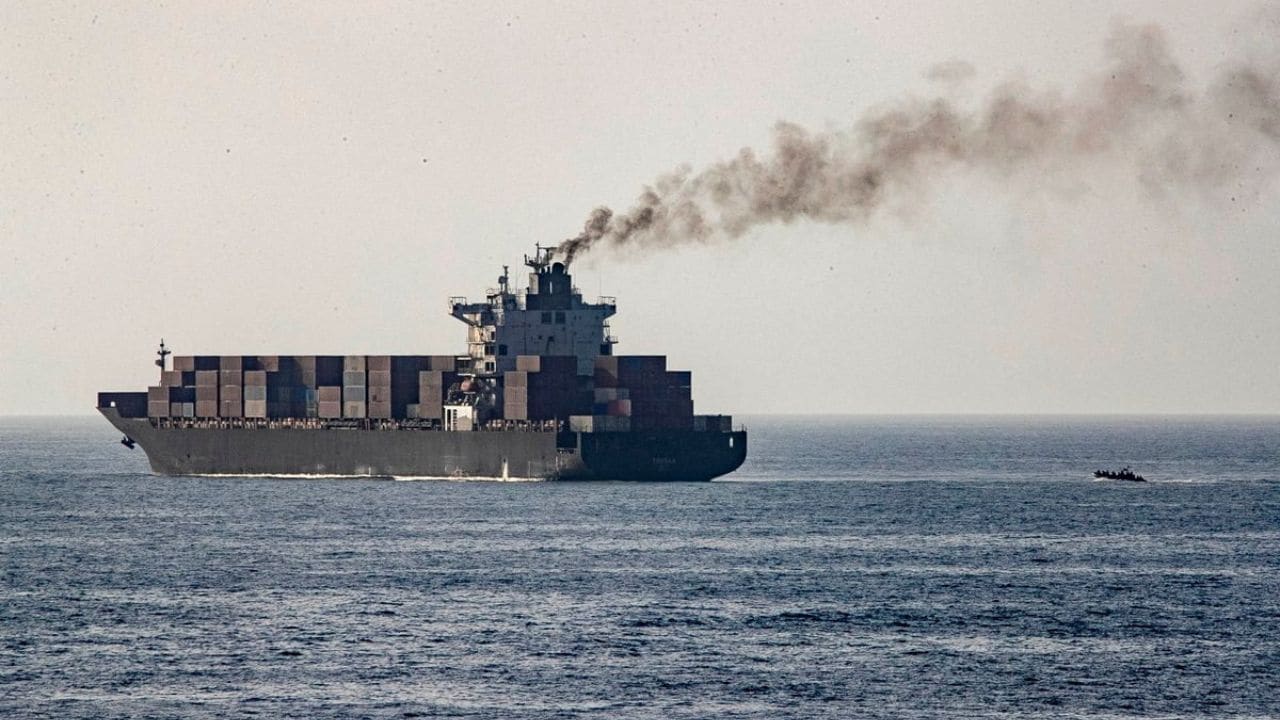
Consider a captain on a Panamanian-flagged VLCC—a Very Large Crude Carrier. He is steering two million barrels of oil through a corridor where one wrong turn or one sudden escalation could spark a global economic seizure. To him, the "news" isn't a headline on a screen. It is the sudden appearance of a fast-attack craft trailing a wake of white foam, or the static-heavy voice on the radio issuing a warning in a language that sounds like a countdown.
This is the reality behind the dry reports of diplomatic friction. When Iran issues a stern warning to the United States Navy to "stay clear," it isn't just rhetoric. It is a pulse check on a heartbeat that keeps the lights on in Tokyo, the factories running in Berlin, and the gas pumps flowing in Ohio.
The Geography of a Chokepoint
To understand the stakes, we have to look at the map not as a drawing, but as a physical constraint. The Strait of Hormuz is the only way out for the oil-rich states of the Persian Gulf. Approximately one-fifth of the world’s liquid petroleum passes through this needle’s eye every single day.
Imagine the global economy as a human body. If the flow of trade is the blood, Hormuz is the carotid artery. A blockage here doesn’t just cause a local bruise; it causes a stroke. This vulnerability is why the presence of the U.S. Fifth Fleet is a permanent fixture in the region, and why Iran views that same presence as an intolerable intrusion into its backyard.
The tension reached a fever pitch following reports that the United States might intervene to assist "stranded" or distressed vessels in these waters. On the surface, it sounds like a humanitarian gesture—a global superpower offering a helping hand to mariners in a dangerous neighborhood. But in the eyes of Tehran, "help" is a Trojan horse. It is seen as an excuse to solidify a permanent military shadow over Iranian territorial claims and sovereign interests.
Two Visions of Order
The conflict isn't just about ships; it’s about who writes the rules of the sea.
The American perspective is built on the principle of "Freedom of Navigation." It is the idea that the high seas belong to everyone and no one. By positioning destroyers and carrier strike groups nearby, the U.S. argues it is protecting the global commons. They see themselves as the world’s maritime police force, ensuring that the "artery" remains open for the benefit of all nations.
Iranian officials see a different picture. To them, the Persian Gulf is exactly that—Persian. They view the U.S. Navy not as a guardian, but as a trespasser from ten thousand miles away. When an Iranian commander tells the U.S. to "stay clear," he is asserting a domestic right to police his own porch.
The friction usually manifests in "unprofessional" or "unsafe" intercepts. Small, nimble boats from the Islamic Revolutionary Guard Corps (IRGC) often buzz much larger American warships, weaving through the waves like hornets. To the American crew behind a multi-billion dollar radar system, it’s a dangerous provocation. To the Iranian sailors, it’s a David-and-Goliath flex, a way of saying: You may have the bigger ship, but we live here.
The Invisible Toll of Uncertainty
While the politicians exchange barbs and the navies shadow one another, there is a third group caught in the middle: the merchant mariners. These are the men and women who actually operate the global supply chain. They are the "characters" in this story who have the most to lose and the least say in the matter.
Think about a deckhand on a liquified natural gas (LNG) tanker. For him, a "warning" from the Iranian Navy isn't a political talking point. It’s an immediate spike in cortisol. It’s the reason his insurance premiums have tripled in the last six months. It’s the reason his family back home watches the news with a knot in their stomachs.
War in the Strait of Hormuz wouldn't look like the sweeping naval battles of the twentieth century. It would be a messy, asymmetric affair involving sea mines, drone swarms, and cyber-attacks. The mere threat of such a conflict is enough to send oil prices into a vertical climb.
When the U.S. offers to help stranded ships, it is responding to a very real history of seizures. In recent years, several tankers have been diverted into Iranian ports under various legal pretexts—unpaid debts, environmental violations, or "retaliatory" measures for sanctioned Iranian oil being seized elsewhere. Every time a ship is boarded by commandos sliding down ropes from helicopters, the fragile trust that holds global trade together frays a little more.
The Paradox of Protection
There is a profound irony in the U.S. offer to assist. By promising to protect ships, the U.S. may inadvertently increase the likelihood of the very confrontation it seeks to avoid.
Each new layer of protection is viewed by the other side as a new layer of aggression. It is a classic security dilemma: actions taken by one state to increase its security are perceived by others as a threat to their own. Iran’s warning to the U.S. to stay clear is an attempt to de-escalate through a show of force—a paradox that defines the modern Middle East.
The "stranded ships" mentioned in recent diplomatic cycles are often caught in a legal and literal no-man's-land. If a ship breaks down or runs into trouble near Iranian waters, who has the right to reach them first? If a U.S. vessel enters those waters to provide aid, does that constitute a violation of sovereignty?
These aren't just questions for maritime lawyers. They are the tripwires that could set off a regional conflagration. The U.S. sees a stranded ship as a vulnerability that needs to be secured; Iran sees it as a domestic matter that requires no outside "help."
The Weight of the Silence
In the quiet moments between the headlines, the Strait of Hormuz remains a place of eerie beauty. The sun sets over the Musandam Peninsula, casting long, golden shadows over the jagged limestone cliffs. For a few hours, the water looks peaceful, almost inviting.
But that peace is an illusion.
Beneath the surface, the sonar pings of submarines and the constant chatter of encrypted radio frequencies tell a different story. The warning from Iran is a reminder that the world’s most important waterway is also its most volatile. It is a place where a single misunderstood signal or a panicked reaction from a young officer on either side could change the course of history.
We often talk about "geopolitics" as if it’s a game played on a board with wooden pieces. It isn't. It’s the sound of a heavy diesel engine idling in the dark. It’s the sight of a gray hull appearing on the horizon where there should be nothing but blue. It’s the realization that our entire modern existence—our heated homes, our plastic goods, our morning commutes—rests on the stability of a narrow strip of water guarded by men who don't trust one another.
The U.S. Navy will continue to sail. The Iranian Coast Guard will continue to watch. And the world will continue to hold its breath, hoping that the warnings remain just that—words shouted across a distance that is far too small for comfort.
On the bridge of a tanker tonight, a captain watches his radar screen. He sees the blips. He knows the stakes. He knows that in these twenty-one miles, there is no room for error, and even less room for help that isn't wanted.
The water remains dark. The ships keep moving. The tension, like the salt in the air, never truly goes away.