The Apollo Nostalgia Trap
NASA just sold the public a ticket to a show that closed fifty years ago. Artemis II isn't a giant leap. It isn't even a small step. It is a high-priced loop around a rock we already conquered during the Nixon administration. While the mainstream media drools over "the first woman and person of color" to head toward the lunar vicinity, they are ignoring the structural rot of the mission itself.
We are spending billions to prove we can still do what we did with slide rules and oversized transistors in 1968. This isn't exploration. This is an expensive exercise in historical reenactment. If Boeing or SpaceX launched a product that merely replicated their 1960s catalog at ten times the adjusted cost, shareholders would burn the building down. But because it has a NASA meatball logo on the side, we call it "inspiration."
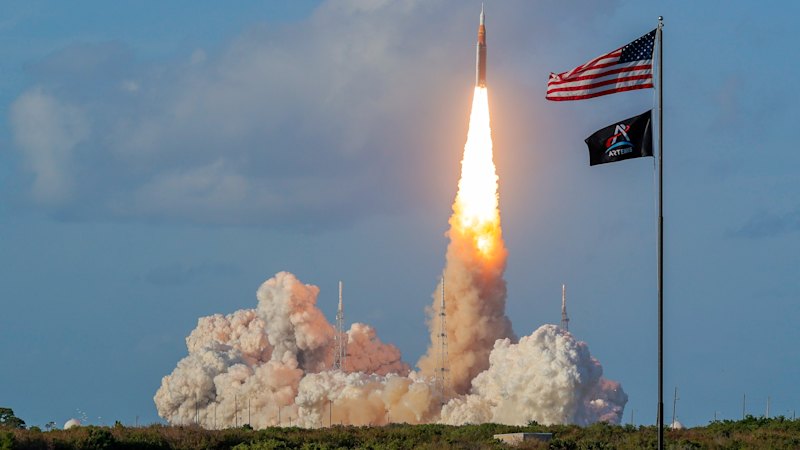
The "lazy consensus" says Artemis II is the necessary precursor to Mars. That is a lie. Artemis II is a political shield designed to justify the existence of the Space Launch System (SLS)—a rocket built from the spare parts of the Space Shuttle graveyard to keep jobs in specific congressional districts.
The SLS Debt Trap
Let’s talk about the math that NASA avoids in its press kits. Every time an SLS rocket clears the tower, the American taxpayer is out roughly $2 billion. That’s just the hardware. It doesn't include the $20 billion plus spent on development.
The rocket uses RS-25 engines. These are the same engines that flew on the Shuttle. They were designed to be refurbished and reused. Instead, NASA is throwing them into the Atlantic Ocean after every single flight. It is the equivalent of flying a Boeing 747 from New York to London and then crashing it into the sea because you can’t be bothered to build a runway.
Contrast this with the private sector. While NASA celebrates "expendability," the industry has moved toward total reuse. By the time Artemis II actually loops the moon, the hardware it uses will be functionally obsolete. We are using a 20th-century architecture to solve 21st-century problems. It is slow. It is brittle. It is spectacularly inefficient.
The Problem With Orion
The Orion capsule is another masterpiece of compromise. It is heavy, cramped, and lacks the radiation shielding necessary for true deep-space transit. For Artemis II, it only needs to keep four people alive for ten days. That’s a camping trip.
The real bottleneck is the European Service Module (ESM). NASA had to outsource the propulsion and life support for its flagship "American" capsule because the domestic budget was cannibalized by the SLS. We have a fragmented supply chain that prioritizes international diplomacy over engineering velocity. When you design a spacecraft to satisfy a treaty rather than a physics equation, you get Orion.
The Lunar Gateway is a Toll Booth to Nowhere
The competitor articles love to mention the "Gateway"—the planned space station that will orbit the moon. They tell you it's a staging point. In reality, it's a speed bump.
There is no physical or orbital reason to stop at a lunar station on the way to the surface. It adds a massive amount of delta-v (velocity change) requirements. Every gram of fuel used to dock with the Gateway is fuel that isn't being used to land or explore.
Why does it exist? Because the SLS is underpowered. It can’t send the Orion and a lander to the moon in one shot. So, NASA invented a "destination" in the middle of nowhere to give the rocket something to do. It’s a solution in search of a problem. If we were serious about a permanent lunar base, we would be shipping habitat modules directly to the South Pole, not building a lonely tin can in a Near-Rectilinear Halo Orbit.
Risk Aversion is Killing Discovery
NASA is terrified. The agency is so scarred by the Challenger and Columbia disasters that it has developed a terminal case of "analysis paralysis." Artemis II is a "crewed flight test." They are sending four humans to do what sensors and computers could do with 99.9% accuracy.
The mission profile is a "free-return trajectory." This means if the engines fail, gravity just whips them back to Earth. It is the safest possible way to go to the moon. But safety is the enemy of speed.
In the 1960s, we took risks. We accepted that space is a frontier. Today, we treat it like a federally mandated HR seminar. We are spending five years "testing" systems that should have been validated in eighteen months. While NASA spends a decade perfecting a single heat shield, the private sector iterates through twenty iterations of stainless steel hulls.
The False Narrative of "The First"
The media is obsessed with the demographics of the Artemis II crew. Diversity is a good thing, but using it as the primary selling point for a $100 billion program is a distraction. It’s "identity theater" used to mask a lack of technical innovation.
Does the moon care about the gender of the person orbiting it? No. Does the physics of a TLI (Trans-Lunar Injection) burn change based on the pilot's background? No.
By focusing the narrative on the people rather than the platform, NASA avoids answering the hard questions:
- Why is this costing $4 billion per year?
- Why is the lander (Starship HLS) not even ready for a flight test?
- Why haven't we developed a nuclear thermal rocket that could actually get us to Mars in three months instead of nine?
We are patting ourselves on the back for being "inclusive" while being technically stagnant.
The Mars Deception
Every NASA press release claims the moon is the "stepping stone" to Mars. This is scientifically questionable at best.
The moon has no atmosphere. It has abrasive, glass-like regolith that destroys machinery. It is a vacuum. Mars has a thin CO2 atmosphere, different gravity, and vastly different thermal challenges. Learning to live on the moon helps you live on the moon. It does very little to prepare you for the seven-month trek to the Red Planet.
If we wanted to go to Mars, we would be building in Low Earth Orbit (LEO). We would be mastering on-orbit refueling—a technology NASA ignored for decades because it made the "big rocket" (SLS) unnecessary. If you can refuel in LEO, you don't need a $2 billion expendable booster. You can use several smaller, cheaper, reusable rockets.
NASA isn't going to the moon to get to Mars. NASA is going to the moon because it’s the only place they think they can get funding for. It’s a mission of convenience, not a mission of conviction.
The Economic Reality of the New Space Race
We aren't in a race with China. We are in a race with our own bureaucracy.
While NASA spends $1.5 million on a single "space-rated" toilet, private firms are 3D printing engine chambers in a week. The cost-plus contract model—the very engine that drives Artemis—is designed to reward delays. The longer Boeing or Lockheed Martin takes to build a component, the more profit they make.
Artemis II is the peak of this "Old Space" insanity. It is the final gasp of a system where the process is more important than the result.
Stop Applauding the Bare Minimum
We have been conditioned to accept crumbs. We see a grainy video of a rocket launch and we cheer because "space is hard."
Space is hard, but it shouldn't be this expensive or this slow. We should have had a permanent lunar base in the 1990s. We should have seen humans on Mars by 2010. The reason we didn't isn't a lack of technology; it's a lack of courage to kill off zombie programs like Artemis.
Artemis II will launch. The crew will go around the moon. They will splash down. There will be parades. And after the confetti is swept away, we will realize we are exactly where we were in 1968, only much poorer and significantly further behind the curve of true innovation.
If you want to see the future of humanity in the stars, stop looking at the SLS. Look at the companies that aren't afraid to blow things up in the desert until they work. Look at the engineers who don't care about congressional districts.
NASA is an insurance company that occasionally launches rockets. The moon is a museum. Artemis II is a tour bus.
Stop treating a circle around the moon as a victory. It’s a lap of honor for a race that ended fifty years ago. Turn the cameras off and start building the tech that actually moves the needle, or get out of the way of the people who will.