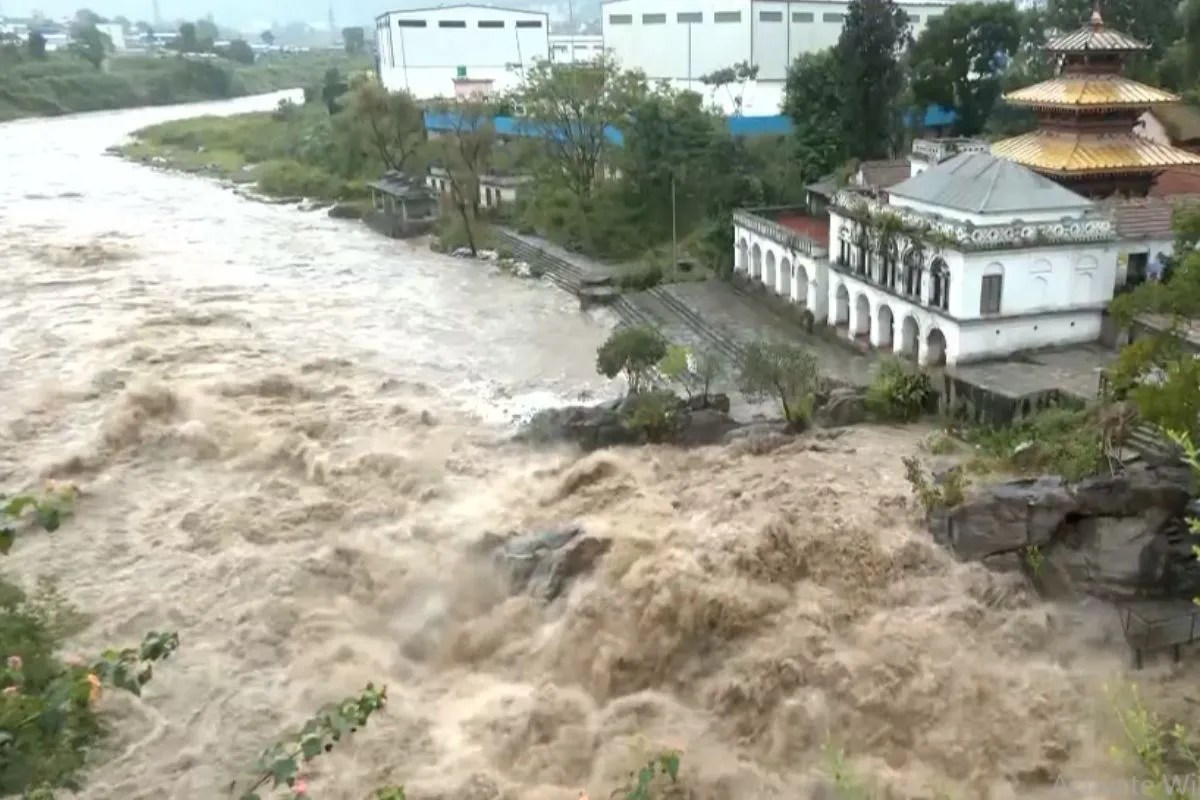
The Bagmati River has risen past critical thresholds yet again, plunging the Kathmandu Valley into a state of high alert and paralyzing vital transport arteries across Nepal. When monsoon rains swell the basin, the immediate reaction from municipal authorities is predictable: emergency warnings, stranded commuters, and temporary relocations. But emergency declarations mask a deeper institutional paralysis. Year after year, the capital region faces the exact same crisis, demonstrating that recurrent flooding is not merely an act of nature, but the direct result of systemic urban mismanagement and unchecked construction along natural drainage corridors.
Heavy precipitation in the surrounding hills funnels massive volumes of water directly into the Bagmati and its tributaries. As water levels approach the danger mark, low-lying settlements in Teku, Thapathali, and Balkhu bear the brunt of the overflow. Major roadways transform into impassable torrents, cutting off essential supply lines and isolating neighborhoods. Commuters find themselves stranded for hours as municipal traffic grids collapse entirely under the weight of accumulated surface water.
Urban planners have warned for decades that the natural floodplains of the Bagmati River have been systematically choked by unmanaged concrete expansion. Real estate pressures and illegal encroachments have steadily narrowed the river's active channel. When a heavy weather system stalls over the central hills, the constricted riverbeds simply cannot handle the discharge volume. Water spills over banks that lack adequate height or structural reinforcement, immediately flooding urban streets that rely on antiquated drainage systems dating back decades.
Beyond the immediate transport gridlock and property damage, the crisis carries severe public health implications. Overflowing sewer lines mix directly with floodwaters, contaminating shallow groundwater wells and creating serious infection risks for vulnerable communities living along the riverbanks. Emergency response teams find themselves overextended, reacting to localized rescues rather than executing a coherent long-term mitigation strategy.
Addressing this cyclical emergency requires moving past emergency advisories and confronting structural realities. Dredging operations and temporary embankment repairs offer only short-term relief before the next heavy monsoon cycle washes them away. True resilience demands strict enforcement of river boundary zones, the restoration of natural retention basins upstream, and a complete overhaul of urban drainage infrastructure in the Kathmandu Valley. Until urban authorities prioritize ecological engineering over rapid, unregulated expansion, the Bagmati River will continue to reclaim its floodplain with devastating regularity.