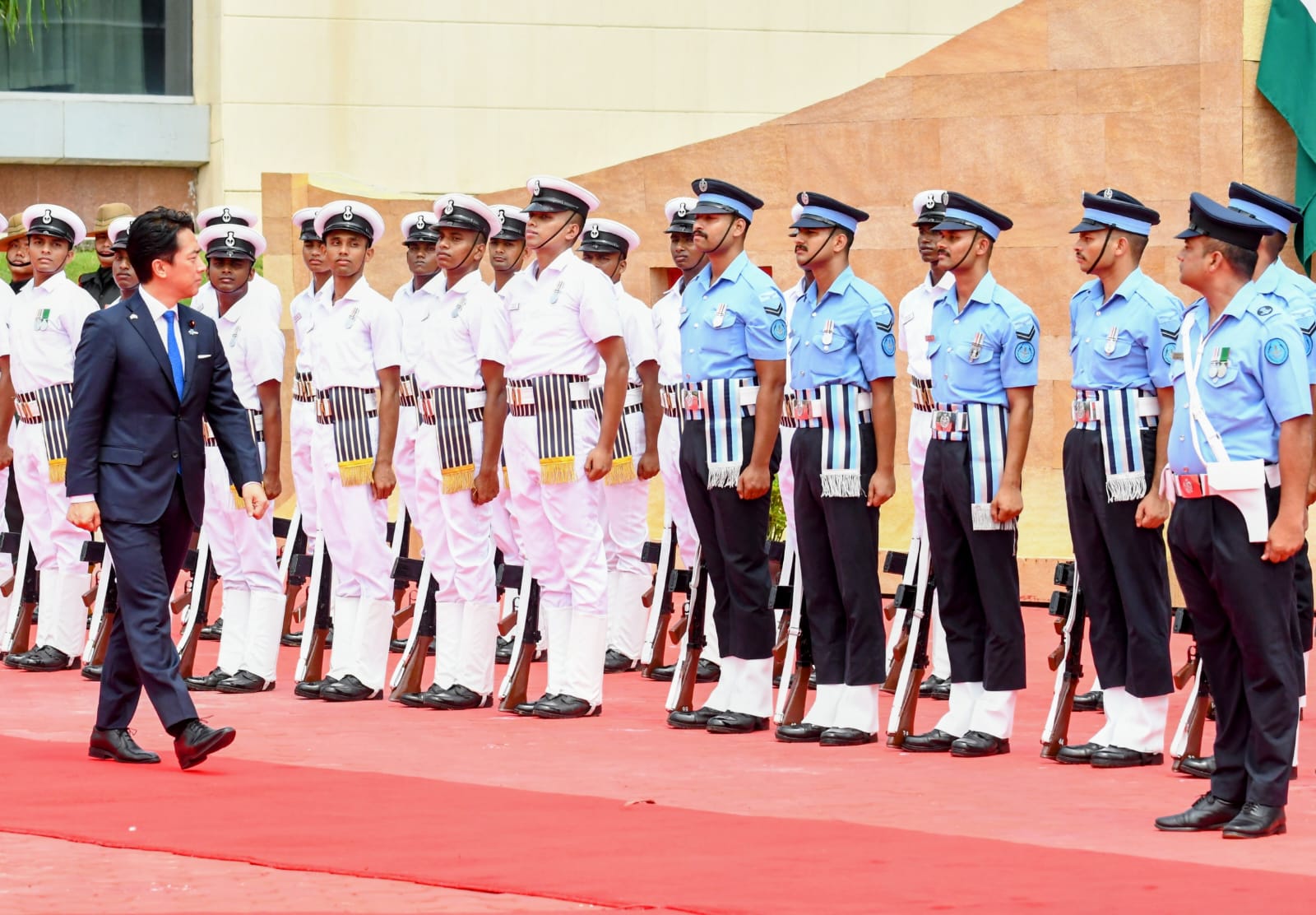
The maritime reality of the Indo-Pacific shifted on August 20, 2026, when India and Japan formalized a Memorandum of Arrangement on Maritime Security Cooperation. While diplomatic communiqués often rely on vague language regarding shared values, this specific agreement signals a transition from passive alignment to active, hardware-focused integration between the Indian Navy and the Japan Maritime Self-Defense Force. By prioritizing reciprocal logistics and the co-development of naval platforms, both nations are constructing a concrete buffer against unilateral territorial expansion in regional waters.
For decades, the relationship between New Delhi and Tokyo remained anchored in economic aid and strategic dialogue. Those days are over. The current environment demands more than joint statements about free and open seas. It requires the physical capability to maintain them. The new arrangement provides the administrative plumbing for this transition, establishing clear protocols for information sharing on maritime domain awareness and search and rescue missions. Yet, the real weight of this document lies in its focus on industrial and operational maintenance.
Consider the implications of reciprocal ship repair facilities. A naval force is only as effective as its ability to remain on station. By granting the Indian Navy and the Japan Maritime Self-Defense Force access to each other’s dry docks and maintenance hubs, both countries extend the operational range of their fleets without needing to build additional domestic infrastructure from scratch. This is a practical, immediate upgrade to their collective capacity to monitor critical sea lines of communication.
The ambition to co-develop naval vessels represents the most complex element of this pact. Historically, Japanese defense technology has been tightly guarded, and India’s shipbuilding sector has struggled with the transition from legacy designs to advanced, indigenous naval architecture. Bringing these two trajectories together under the "Make in India" framework aims to bridge those gaps. It is a gamble on the premise that Japan’s technical expertise can provide the necessary sophistication while India’s expanding production capacity offers the scale required to challenge the sheer volume of naval expansion occurring elsewhere in the region.
The mention of the UNICORN—the shipborne integrated communications antenna system—serves as the first tangible litmus test for this technology transfer. If the project succeeds, it will demonstrate that two bureaucracies, often bogged down by regulatory hurdles and risk aversion, can actually coordinate the movement of sensitive military hardware. Failure, however, would signal that the intent to cooperate remains restricted by domestic political constraints.
Observers often overlook the role of the newly established working group, tasked with oversight at the Director-General and Joint Secretary levels. This is not just a committee for quarterly meetings. It is designed to function as an engine room for policy implementation, forcing alignment across operational, intelligence, and industrial domains. By creating a dedicated channel, the two nations are attempting to bypass the traditional speed of government decision-making, which often lags behind the rapid shifts in maritime security.
The underlying anxiety driving this move is clear. Beijing’s push to alter the status quo through force or coercion has left both nations with few alternatives. India, facing pressures along its land borders and the constant surveillance of its maritime backyard, requires a partner that understands the necessity of long-term naval endurance. Japan, restricted by its post-war constitution but undergoing a significant transformation in its defense posture, needs a partner that possesses a robust, independent, and geographically dispersed naval presence.
This does not imply that the transition will be smooth. Integration between two distinct military cultures, each with its own set of procurement processes and operational doctrines, presents significant friction. There is also the reality of the defense industry itself. India’s domestic defense sector is currently undergoing a massive overhaul, attempting to pivot toward export-oriented production. Convincing Tokyo to entrust high-end technology to an industrial base that is still maturing requires immense political capital.
Furthermore, the focus on unmanned systems and the integration of Special Operations Forces indicates that the partnership intends to move beyond conventional surface warfare. The future of maritime security is increasingly defined by the ability to operate below the threshold of open conflict, utilizing surveillance, drones, and rapid response units to deny an adversary the freedom to maneuver unchallenged.
Whether this pact fundamentally alters the regional balance depends entirely on the pace of execution. Agreements of this nature are frequently signed with grand intentions, only to be buried under layers of technical disagreement or shifting political priorities. The inclusion of clear pathways for ship repair and the emphasis on the UNICORN system suggest that both governments are acutely aware of the "paper tiger" trap. They are attempting to anchor their diplomacy in the physical reality of steel and software.
If the joint development of naval platforms moves from the drawing board to the shipyard, the nature of the India-Japan security relationship will be permanently redefined. It will transition from a secondary strategic partnership into a core pillar of Indo-Pacific stability. The infrastructure is now in place. The success of the venture now rests on the ability of both ministries to sustain the momentum. The era of hesitant cooperation has ended, replaced by the necessity of shared survival.