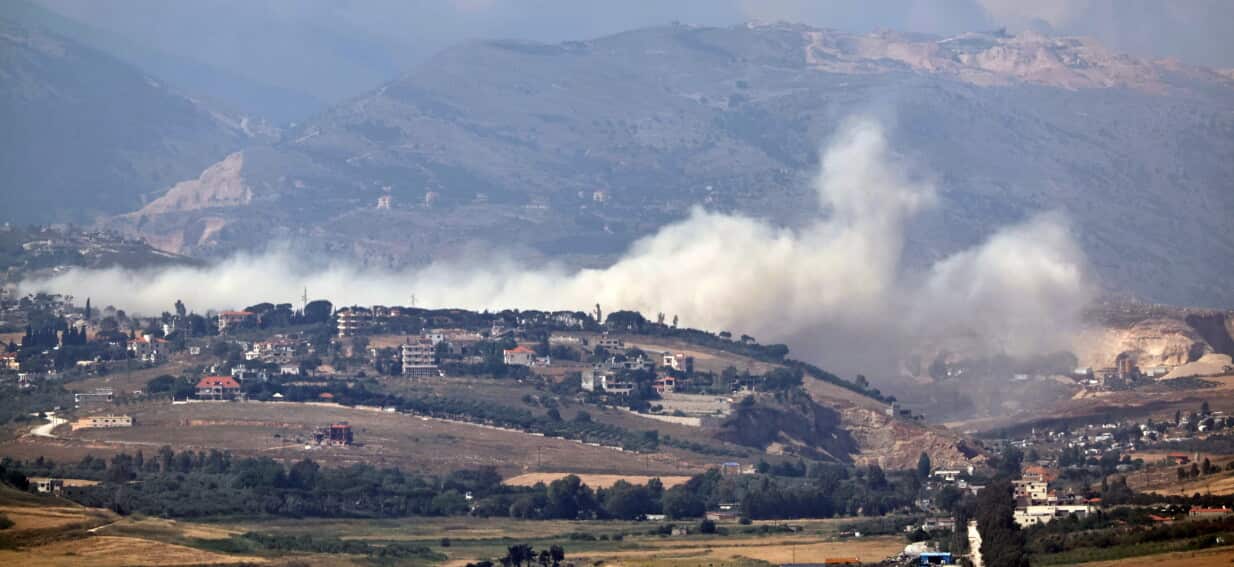
The ink isn't even dry on the latest Middle East truce, and the rockets are already flying. On Monday, Lebanon announced a partial ceasefire between Hezbollah and Israel. Brokered through frantic backchannel diplomacy and announced by U.S. President Donald Trump, the deal sounds great on paper. Israel stops bombing Beirut. Hezbollah stops firing rockets into Israel.
But if you look at what's actually happening on the ground, this agreement is built on sand. Minutes after the announcement, air raid sirens wailed across northern Israel. Meanwhile, the Israeli Defense Forces (IDF) are pressing forward with their deepest ground invasion into southern Lebanon in 25 years.
This isn't a peace deal. It's a temporary pause for breath in a war that's rapidly spinning out of control. If you're trying to understand whether this agreement will actually stop the bloodshed, the short answer is no. Here is exactly why this partial arrangement is structurally flawed and destined to fail.
The Flaw of a Divided War Zone
The central problem with this agreement is its geographic hypocrisy. It treats the sky over Beirut differently than the dirt in southern Lebanon.
According to the terms disclosed by Lebanon’s embassy in Washington, the deal is highly localized. Israel agrees to halt its devastating airstrikes on Beirut and its southern suburbs, specifically the Hezbollah stronghold of Dahiyeh. In return, Hezbollah commits to freezing its rocket, missile, and drone barrages directed at Israeli cities like Haifa and Tiberias.
But look at what the deal leaves out. It completely ignores the active ground war raging south of the Zaharani River.
Right after Trump touted the agreement on social media, Israeli Prime Minister Benjamin Netanyahu threw cold water on the idea of a total halt. Netanyahu made it clear that Israeli ground operations in southern Lebanon will continue. The IDF is actively pushing toward the Zaharani River, capturing strategic high ground like Beaufort Castle.
You can't have a ceasefire that applies to the capital city but permits a full-scale ground invasion 50 miles south. Hezbollah isn't a conventional army that can compartmentalize its forces. If its fighters are being pushed back and killed in the south, the group will inevitably retaliate by hitting Israeli territory, completely violating the core premise of the truce.
Why Both Sides are Using This Break
If the deal is so unstable, why did both sides agree to it? The answer is simple. Both parties need a tactical pause, but for completely different reasons.
For Netanyahu, a partial ceasefire keeps the focus exactly where he wants it: on the physical destruction of Hezbollah's infrastructure along the border. By agreeing to stop hitting Beirut, Israel temporarily relieves some of the intense international diplomatic pressure from Washington and European allies who are horrified by civilian casualties in the capital. It gives the IDF room to secure its "yellow line" operational zone in the south without the diplomatic baggage of constant airstrikes on a major metropolitan city.
Hezbollah is playing a different game. The group has taken a beating since the war erupted on March 2. Their leadership has been targeted, their supply lines from Syria are under constant threat, and their political allies in Beirut are panic-stricken.
Lebanese Parliament Speaker Nabih Berri, who acts as the primary intermediary for Hezbollah since Naim Qassem went into hiding, has been begging for a full ceasefire. Accepting this partial truce is a desperate attempt by Hezbollah to protect its core power base in Beirut while it tries to figure out how to stop the Israeli armor rolling through southern villages.
The Broader Iran War and the Maritime Threat
You can't look at Lebanon in a vacuum. This conflict is inextricably tied to the broader war between the United States, Israel, and Iran. That regional dynamic is exactly why this partial truce won't hold.
Iran is using its proxy network to squeeze global trade as leverage. Just as the partial ceasefire was being finalized, Esmail Qaani, the commander of Iran's Islamic Revolutionary Guard Corps (IRGC) Quds Force, issued a direct threat. He stated that continued Israeli actions in Lebanon would push the "Axis of Resistance" to activate other fronts, specifically threatening to shut down the Bab el-Mandeb Strait.
Consider the economic implications:
- Global Shipping: The Bab el-Mandeb Strait handles nearly 15% of global maritime trade. It is the southern gate to the Suez Canal.
- The Hormuz Precedent: Iran has already severely choked traffic through the Strait of Hormuz, which handles a fifth of the world's oil and LNG supply.
- Economic Shock: Oil prices jumped 4% immediately following these developments. If the Yemen-based Houthis act on Iran's orders and completely close the Bab el-Mandeb, it will force shipping companies to route vessels around Africa's Cape of Good Hope, skyrocketing consumer prices worldwide.
Iran has explicitly stated that it will not allow a permanent peace deal with the U.S. and Israel to move forward unless there is a complete, total cessation of hostilities in both Lebanon and Gaza. By leaving the ground war active in southern Lebanon, this partial deal fails to satisfy Tehran's core demand. As a result, Iran is already threatening to officially tear up the fragile direct ceasefires it has maintained with the U.S. since April.
What Happens Next on the Ground
Diplomats from Lebanon and Israel are scheduled to meet in Washington to discuss expanding this partial framework into something more permanent. Don't hold your breath.
For a ceasefire to work, there must be an enforceable mechanism. Right now, there isn't one. The Lebanese Army is too weak to police the south, UNIFIL peacekeepers are effectively pinned down, and Israel has no intention of pulling its troops back until Hezbollah is completely pushed north of the Litani River.
If you are tracking this conflict, watch the Zaharani River line. If the IDF crosses it, Hezbollah will almost certainly launch heavy rocket barrages deep into central Israel, rendering this partial agreement null and void. Expect a return to full-scale airstrikes across Beirut before the week is out.
The smart move right now is to ignore the optimistic political rhetoric coming out of Washington and prepare for continued volatility in global energy markets and supply chains. This partial truce is a temporary intermission, not the end of the script.